
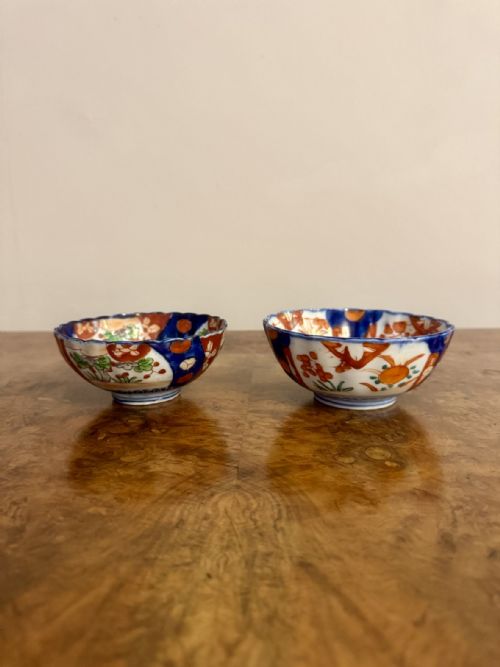


Floral Ceramic Trinket Dish
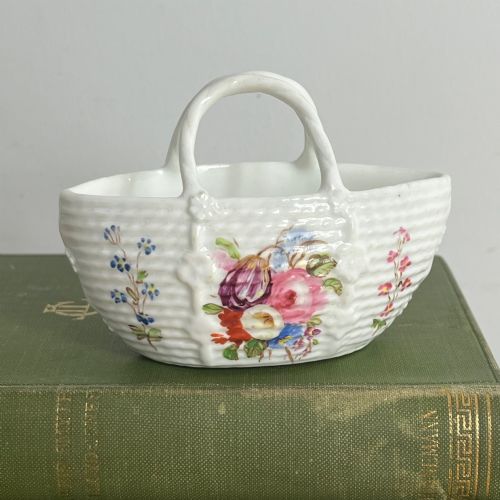
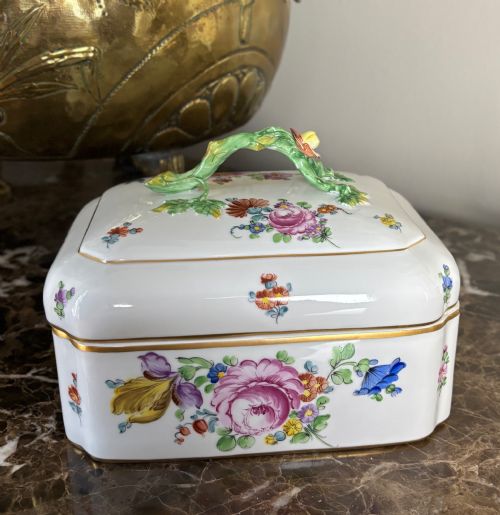
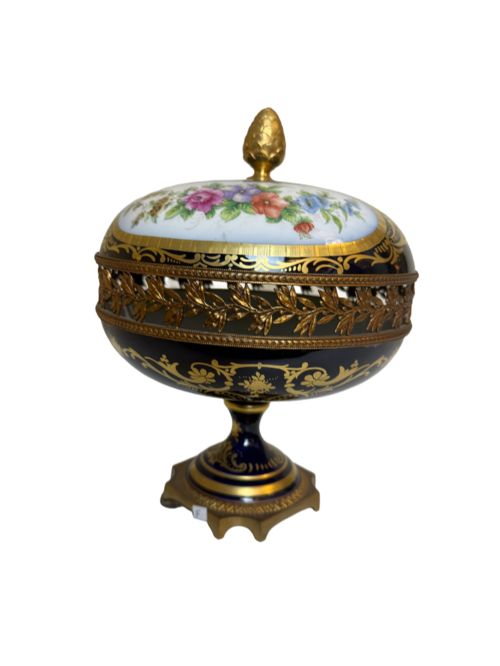
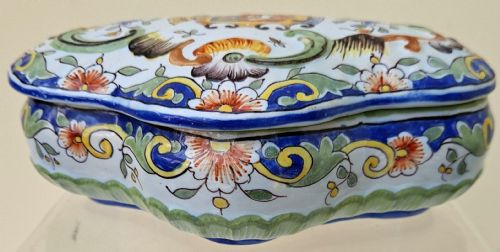
A floral ceramic trinket dish brings painted botanical detail to small storage, offering delicate storage for dressing tables.
Floral Ceramic Trinket Dish
The selection ranges from Flight Barr & Barr Worcester miniature baskets and Rockingham view baskets to Dresden lidded pots and Edwardian Wedgwood shaped dishes. Production spans porcelain and earthenware, often finished with gilt edges or hand-painted botanical motifs.
Most items on this page date from the Victorian and Edwardian eras, incorporating styles from Rococo Revival to Japanese Imari and French Faience. These forms function as small decorative dishes, lidded boxes, and serving trays.
What varies in quality
Quality rests in the precision of the hand-painting, particularly the brushwork on botanical details and the crispness of the gilt edge. Finer pieces demonstrate superior porcelain translucency and delicate modelling in applied floral elements.
The reputation of the manufactory, such as Meissen, Royal Worcester, or Wedgwood, distinguishes standard utility wares from exhibition-grade cabinet pieces. Preservation of the enamel colours and original gilding dictates the standing of each item.
A tiny porcelain basket whispers of Victorian dressing rooms where secret keepsakes rested beneath painted petals.
Flight Barr And Barr·Paul Muller Selb·Royal Crown Derby·Royal Worcester·Wedgwood
The Floral Ceramic Trinket Dish Glossary
- Porcelain
- A hard, white, vitrified ceramic material fired at high temperatures. It forms the translucent body of many nineteenth-century dishes.
- Faience
- Tin-glazed earthenware produced in France and other European centres. It carries opaque white glazes that accept painted decoration.
- Gilding
- The application of gold leaf or powdered gold to ceramic surfaces. It accentuates rims and handles on porcelain trays and boxes.
- Imari
- A Japanese style of porcelain decoration featuring underglaze blue and iron red with gold. It appears on miniature bowls from the Meiji period.
- Ormolu
- Gilded bronze used for mounts and stands. It elevates ceramic boxes by framing them in cast metal.
Floral Ceramic Trinket Dish: Frequently Asked Questions
What were these small dishes used for?
These small dishes and lidded boxes served to hold pins, rings, and small personal valuables on dressing tables or desks. They kept daily accessories organised in domestic bedchambers.
Larger versions functioned as sweetmeat dishes or decorative centrepieces for afternoon tea tables and cabinets.
How do I identify a nineteenth-century piece?
Nineteenth-century pieces often display factory marks, pattern numbers, or painter ciphers on the unglazed base. Stylistic clues like Rococo Revival curves or Victorian floral painting styles also indicate the era.
Weight, paste composition, and the type of glaze help distinguish earlier eighteenth-century bodies from later Victorian and Edwardian output.
Can I use these dishes daily?
These antique ceramic pieces suit gentle daily use for holding dry trinkets and jewellery. Hand washing prevents damage to delicate overglaze enamels and gold leaf.
Avoid exposing painted porcelain to harsh detergents, soaking, or modern dishwashers to preserve the surface decoration.
What is the difference between porcelain and earthenware?
Porcelain is fired at high heat until it becomes vitrified and semi-translucent, resisting liquid absorption without glaze. Earthenware uses a more porous clay body that requires a complete glaze to hold liquids.
Porcelain allowed makers to achieve thinner walls and finer painted detail for cabinet display.