
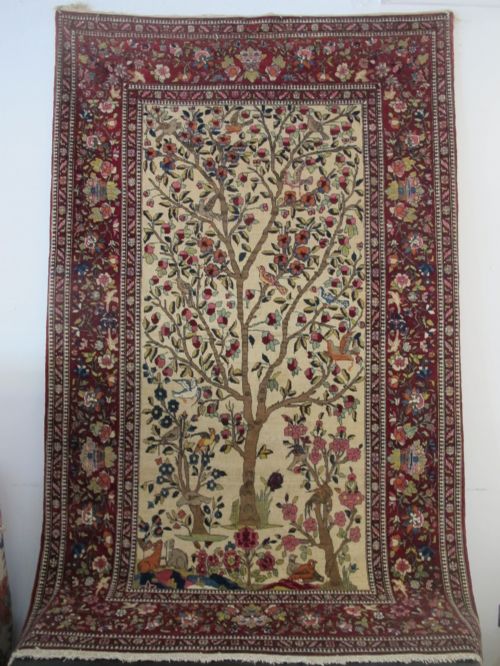


Floral Border Carpet
A floral border carpet brings structured botanical framing to a room, offering centuries of regional weaving traditions through wool, cotton, and silk.
Floral Border Carpet
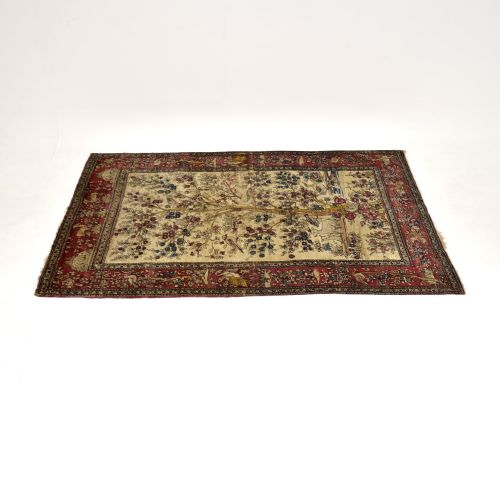
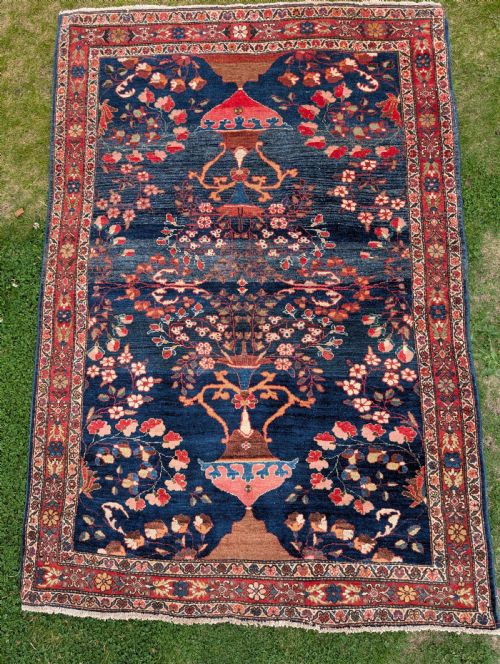
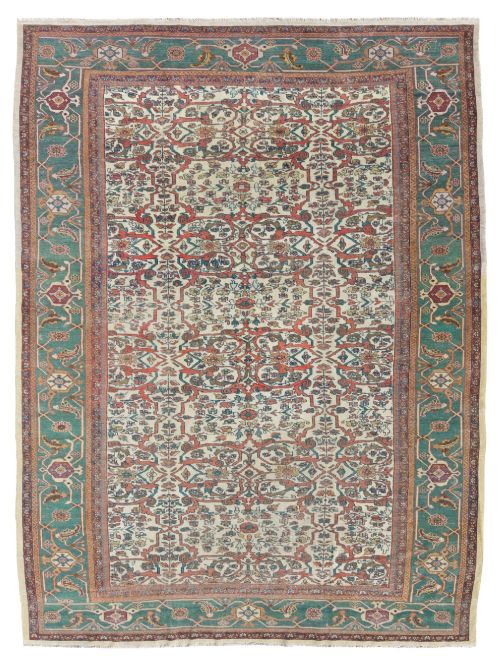
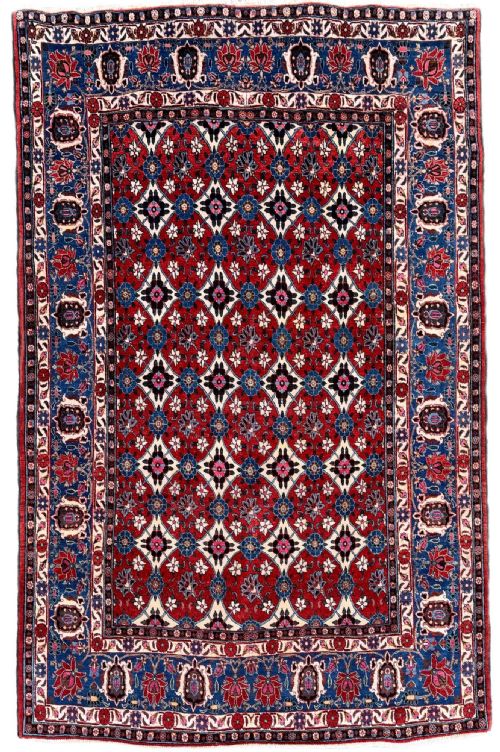
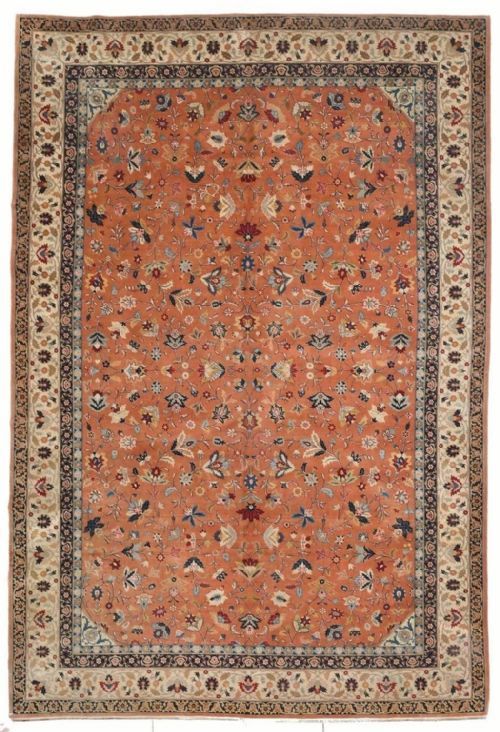
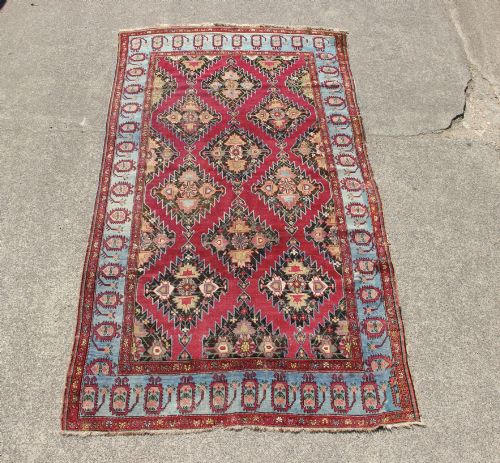
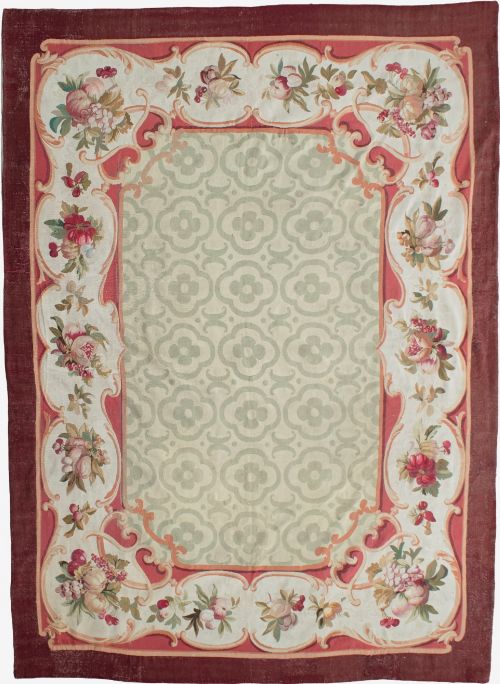
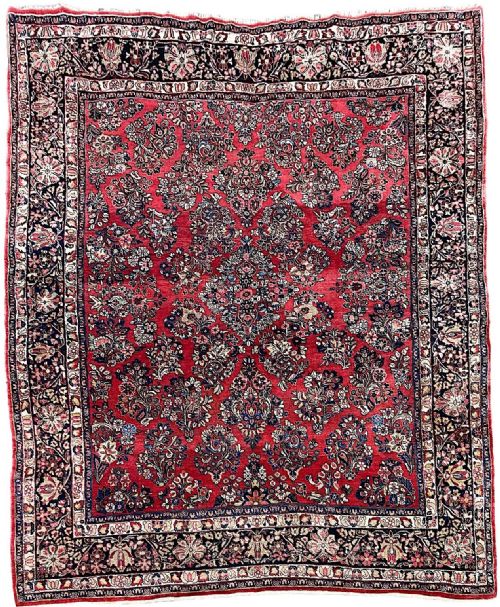
A floral border carpet organises intricate field patterns within distinct botanical frames, grouping diverse regional traditions under one descriptive term. When searching for a floral border carpet, you encounter woven pieces originating from Persia, Turkey, China, Tibet, and Europe across the nineteenth and early twentieth centuries.
The selections available span room-sized floor coverings down to smaller area rugs and specialist saddle covers. Persian workshops dominate the entries, featuring specific regional designs from Heriz, Tabriz, Sultanabad, Kashan, and Kirman alongside European Aubusson and Bessarabian examples.
Most pieces date from the Victorian era into the interwar years, employing traditional hand-knotted and flat-woven construction methods. These textiles serve both functional flooring roles and decorative interior focal points through their distinct outer botanical bands.
Materials and construction
The listings record wool as the predominant pile material, frequently paired with cotton foundations for warp and weft threads to ensure structural stability. Selected fine pieces incorporate silk elements or rely entirely on flat-woven kilim techniques without a raised pile.
Weavers utilised hand-knotted techniques across vertical looms, tying individual knots around warp threads before securing them with horizontal weft rows. Regional workshops applied natural dyes derived from plants and minerals to colour the spun wool and cotton yarns before assembly.
Recorded periods span from the eighteenth century through to the 1930s, encompassing traditional room carpets, prayer rugs, and saddle covers.
Distinctions in quality
Quality rests upon knot density, the precision of botanical motifs within the border, and the stability of the foundation materials. Finer examples display meticulous control over curved floral lines and consistent tension across the wool pile.
The choice of materials also divides the range, with dense hand-spun wool and occasional silk additions marking superior production. Preserved structural integrity in the cotton foundation and even wear across the surface distinguish the finest surviving specimens.
Ahmadi·Ziegler
The Floral Border Carpet Glossary
- Warp
- The stationary vertical threads stretched on a loom that form the structural skeleton of a carpet. Fringe ends typically consist of these exposed threads.
- Weft
- The horizontal threads passed alternately over and under warp threads to lock knots in place. They run perpendicular to the warp.
- Kilim
- A flat-woven textile produced without a pile by tightly interweaving warp and weft threads. Bessarabian examples often utilise this technique.
- Pile
- The raised surface of a carpet formed by the clipped ends of knots. Wool and silk supply this tactile layer.
- Saddle cover
- A small animal trapping or seating mat designed for equestrian use. Tibetan pieces often take this compact format.
Floral Border Carpet: Frequently Asked Questions
How do I clean an antique carpet?
Maintenance requires gentle surface vacuuming without the rotating brush bar to protect the wool pile and cotton foundations. Professional textile conservators should handle wet washing or deep cleaning to prevent dye migration.
Positioning the rug away from direct, continuous sunlight preserves the natural dyes used in the botanical borders and central fields. Rotating the piece every few years ensures even foot traffic distribution across the woven surface.
Are these carpets hand knotted?
The listings consist primarily of hand-knotted wool and cotton textiles produced in traditional regional workshops. Individual weavers tied rows of knots onto vertical looms by hand.
Flat-woven kilims represent the alternative construction method found in the selection, omitting the pile entirely. Both techniques rely on manual labour rather than industrial machinery.
How do I identify a Heriz carpet?
Heriz carpets feature bold geometric medallions and robust, stylized botanical borders woven with sturdy wool. The regional palette often incorporates rich terracotta and deep blue tones.
These Persian pieces derive durability from heavy cotton foundations supporting thick wool piles. Their structured designs separate them from the curved floral motifs of Tabriz or Kashan.