


Pastel Turkish Rug
A pastel turkish rug brings gentle tones and historic craft into a room, offering faded charm through soft wool and delicate dyes.
Pastel Turkish Rug
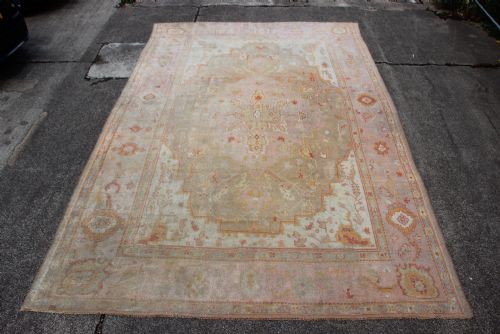
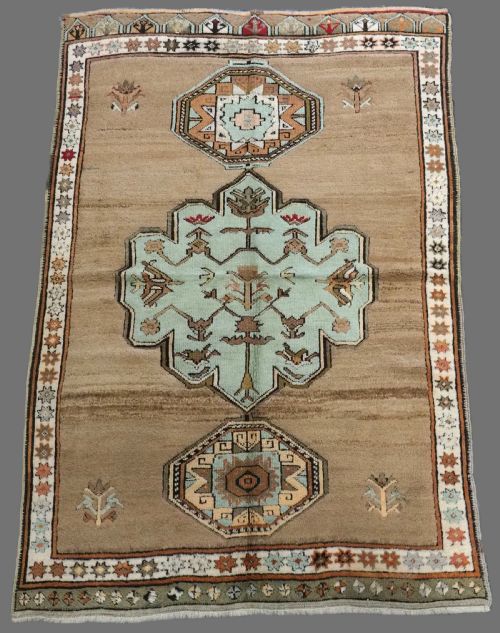
A pastel turkish rug is a hand-knotted or flat-woven textile originating from Anatolian weaving centres, shaped by regional traditions spanning the late nineteenth and early twentieth centuries. These pieces present muted palettes of soft pinks, pistachios, and aquamarines, moving away from saturated primaries to fit understated interiors.
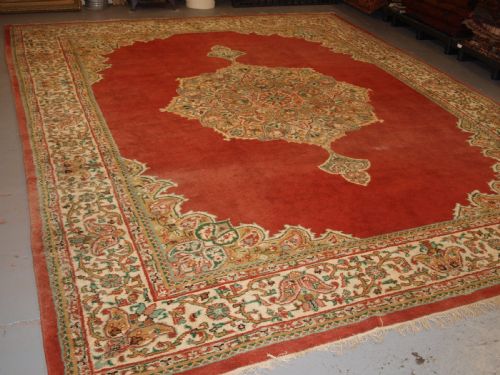
The selection here draws heavily on classic weaving towns, featuring large carpets from Oushak alongside smaller prayer rugs from Kayseri and Panderma. Buyers encounter both grand room-size carpets and more compact area formats, often bearing traditional medallion layouts or repeat Anatolian motifs.
Dated examples typically sit between eighteen-eighty and nineteen-twenty, reflecting the output of late Ottoman workshops and traditional village looms. These floor coverings bridge historical craft with muted interior aesthetics, using time-softened wool and silk.
How they were made
Weavers constructed these carpets using natural wool, camel wool, and silk, knotted onto sturdy cotton foundations. The choice of fibre dictates the handle and drape of each piece, with camel wool and standard sheep's wool offering resilience while silk provides a finer, lustrous pile.
Dyers employed vegetable and natural colorants that mellowed over decades of light and washing, producing the characteristic soft pastel shades seen today. Artisans tied symmetrical or asymmetrical knots by hand, finishing the ends with traditional flat-woven kilim borders and secured selvedges.
Listings span periods from eighteen-eighty to nineteen-twenty, encompassing traditional Ottoman styles and revival designs from Anatolian centres.
What varies in quality
Quality rests in the finesse of the knotting density and the integrity of the materials, where finer silk or soft wool foundation work creates a more supple handle. Master weavers in centres like Oushak or Kayseri achieved balanced proportions and harmonious secondary tones that elevate the central medallion design.
The preservation of the pile and the crispness of the drawing separate standard regional village work from finer city output. Even with faded palettes, superior pieces retain clear delineation in their floral or geometric motifs without excessive restoration.
The Pastel Turkish Rug Glossary
- Oushak carpet
- A large-format floor covering from the town of Ushak, known for monumental floral designs and loose, expressive knotting. These rugs often utilise muted tertiary colours that suit contemporary spaces.
- Prayer rug
- A small format textile featuring a distinct mihrab arch at one end, designed to indicate the direction of prayer. Kayseri and Panderma are notable origins for this specific layout.
- Kilim
- A flat-woven textile made without a pile, produced by tightly interweaving warp and weft threads. Sharkoy examples demonstrate this technique with large repeat patterns.
- Medallion design
- A central ornamental motif balanced symmetrically within the field of the rug. Classic Sivas and Isparta pieces frequently employ this layout.
- Warp
- The vertical foundation threads stretched tightly on the loom before knotting begins. Cotton is the standard material for these structural elements.
Pastel Turkish Rug: Frequently Asked Questions
Where were these rugs made?
Production centres span various regions of Anatolia, including the famous weaving towns of Ushak, Kayseri, Sivas, and Panderma. Each town developed distinct motifs and material preferences, ranging from large floral carpets to fine silk prayer formats.
Weavers in these locations drew upon Ottoman design traditions while adapting to changing aesthetic demands for softer, muted colourways towards the end of the nineteenth century.
How do I clean an antique rug?
Gentle, professional surface cleaning by a specialist in antique textiles remains the safest method for wool and silk floor coverings. Regular, cautious vacuuming without a rotating brush helps remove embedded grit without straining the old cotton foundations.
Harsh chemical detergents and excessive moisture damage natural dyes and brittle fibres. Keeping the textile out of direct, harsh sunlight also preserves the faded pastel tones.
What is a prayer rug?
A prayer rug is a smaller textile defined by a pointed architectural arch, known as a mihrab, woven into one end of the design. This niche pointed towards Mecca during daily use.
Examples from Kayseri and Panderma often showcase this format alongside delicate floral details and soft pastel ground colours.