
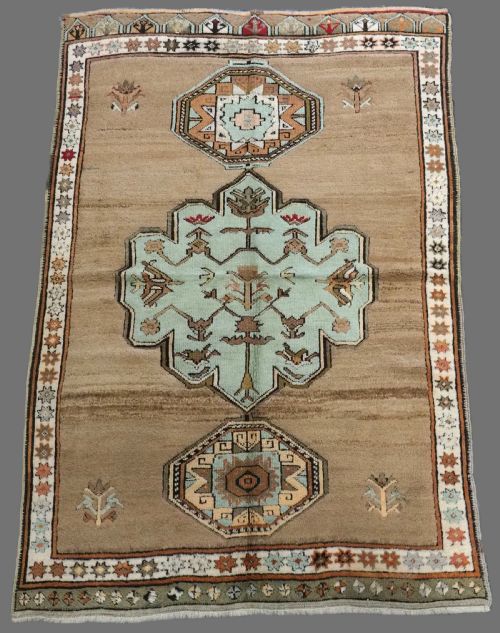
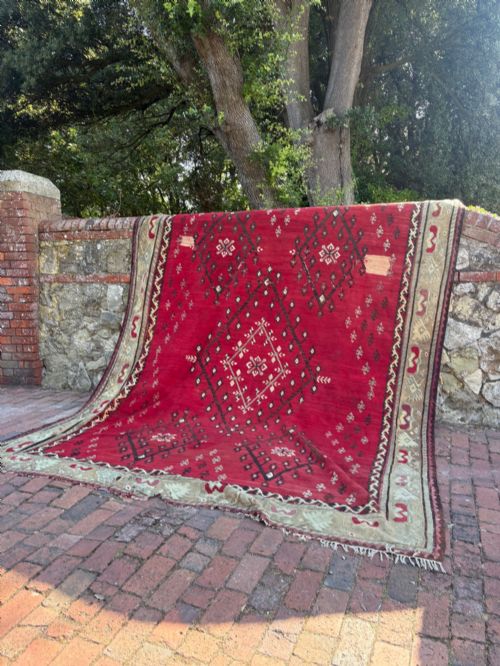


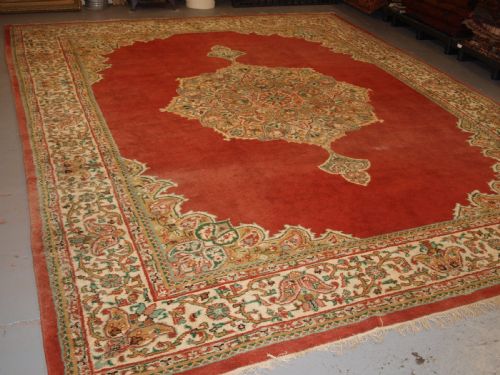

1920s Turkish Carpet
These 1920s turkish carpet examples bring genuine Anatolian and Balkan character into a room through honest woven wool and cotton.

1920s Turkish Carpet
A 1920s turkish carpet encompasses handwoven pile rugs, flatweave kilims, and room-sized runners originating from Anatolia and neighbouring regions. You will frequently meet traditional styles such as Oushak, Konya Karapinar, Yahyali, Dosemealti, and Isparta alongside regional flatweaves.
These floor coverings take various forms ranging from small scattered rugs and narrow runners to large room-sized carpets and multi-part kilims. The designs rely on classic repeat medallions, banded patterns, and traditional prayer formats executed in wool, cotton, or camel wool.
How they were made
Weavers constructed these pieces using natural wool and cotton foundations, occasionally incorporating camel wool fields for distinct texture and tone. Pile rugs were hand-knotted while flatweaves utilised traditional kilim techniques.
The makers employed regional dyes to achieve soft colours, warm pastels, and light red grounds that define the palette of this period. Timeworn repairs and historical interventions often form part of the physical history of these flatweaves.
Current listings feature materials including wool, cotton, and camel wool across styles from Anatolian traditional to Balkan folk.
What varies in quality
Quality rests in the crispness of the traditional design execution and the harmonious balance of soft or pastel colours. Finer knots in pile carpets or tighter weaves in flatweaves demonstrate superior craftsmanship from the workshop or region.
The integrity of the wool and cotton materials, alongside the subtlety of the dye work, separates ordinary production from exceptional examples. Condition matters, though historical repairs often reflect the genuine working life of these textiles.
Tuduc
The 1920s Turkish Carpet Glossary
- Kilim
- An untufted flatwoven rug or carpet produced by tightly interweaving warp and weft strands. This technique creates a smooth surface without a raised pile.
- Oushak
- A traditional style originating from a major carpet-producing town in western Anatolia known for softer pastel palettes and large-scale designs. These rugs often feature relaxed floral or geometric motifs.
- Camel wool
- Fibre gathered from camels, utilised in the field of certain rugs for its natural warmth and distinct un-dyed shade. It adds a subtle earthy tone to the composition.
- Medallion
- A central ornamental motif placed in the field of a carpet or kilim. This design element anchors the surrounding patterns and border arrangements.
- Prayer rug
- A specialised textile featuring a niche or mihrab design indicating the direction of prayer. These pieces served devotional functions in domestic spaces.
1920s Turkish Carpet: Frequently Asked Questions
How do I clean a 1920s turkish carpet?
Gentle surface brushing and professional specialist washing suit these antique wool and cotton textiles. Avoid harsh chemical agents that can strip natural dyes.
Regular light vacuuming without a rotating power head prevents dust accumulation in the pile or flatweave structure.
Can I place these rugs in high traffic areas?
Durable wool construction allows these carpets to handle everyday movement in hallways and living spaces. Runners and larger room sizes distribute foot traffic effectively.
Using a quality underlay protects the foundation threads from excessive friction against hard flooring.
What is the difference between a kilim and a carpet?
Kilims are flatwoven without a pile, resulting in a lighter, thinner textile with pattern visible on both sides. Carpets feature a dense hand-knotted pile that provides a plush surface underfoot.
Both forms utilise traditional wool and cotton materials rooted in Anatolian weaving traditions.
How do I identify an Oushak design?
Oushak pieces typically display relaxed floral motifs and large geometric medallions set against soft pinks, pastels, or light red grounds. The wool often has a lustrous quality.
These rugs tend to feature less rigid symmetry than classical court carpets, favouring an organic artistic flow.
Are historical repairs acceptable on these pieces?
Timeworn repairs reflect the genuine utilitarian history and domestic longevity of antique flatweaves and pile rugs. Skillful historical mends preserve the structural integrity of the textile.
Collectors often view honest interventions as part of the narrative rather than a detraction from value.