
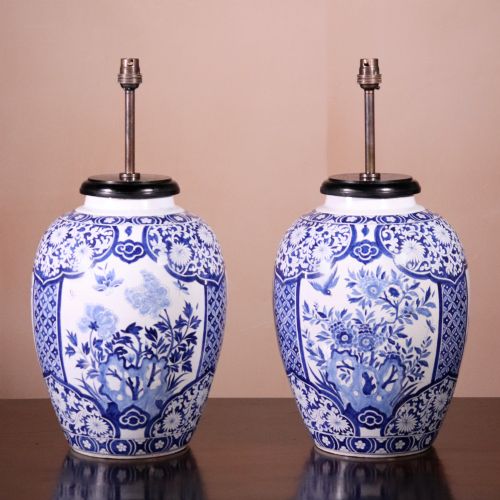
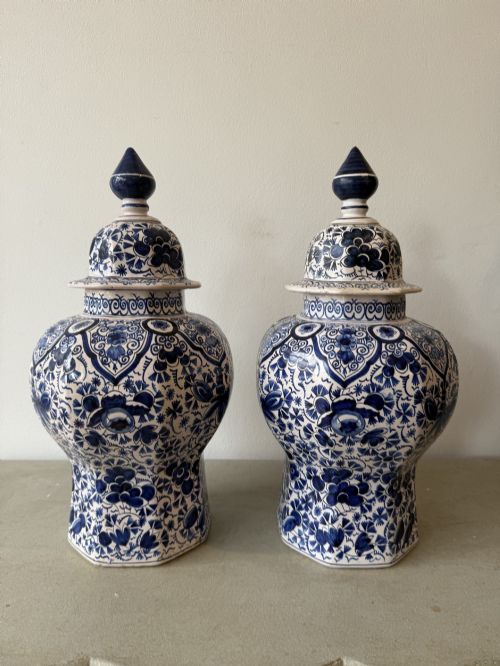


Floral Blue White Vase
A floral blue white vase brings crisp botanical cobalt decoration into a room, spanning centuries of global ceramic traditions.
Floral Blue White Vase
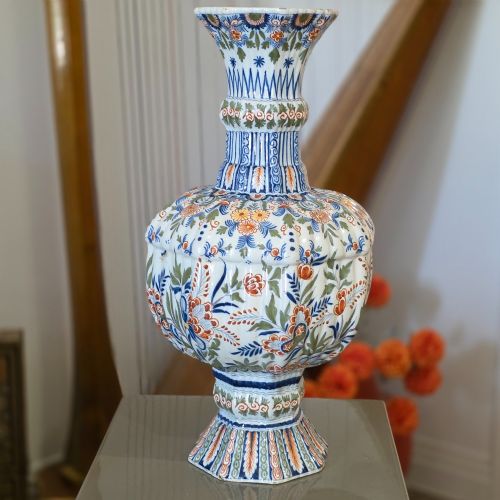
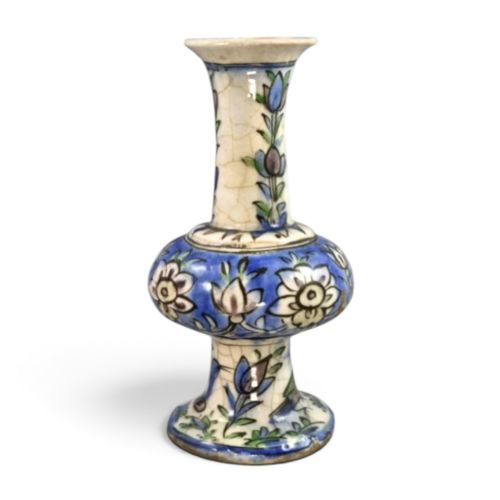
A floral blue white vase encompasses centuries of global ceramic production, ranging from 18th century English delftware and Chinese export wares to later Japanese Imari and European earthenware. Buyers searching for a floral blue white vase encounter diverse regional interpretations, including Dutch delft, Qajar Persian ceramics, and Staffordshire ironstone.
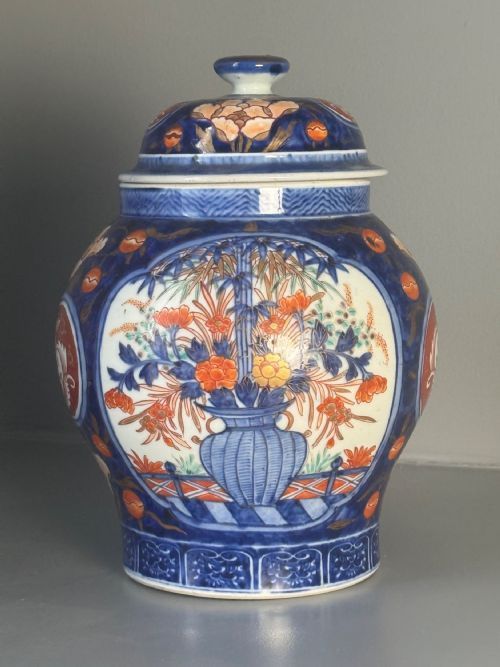
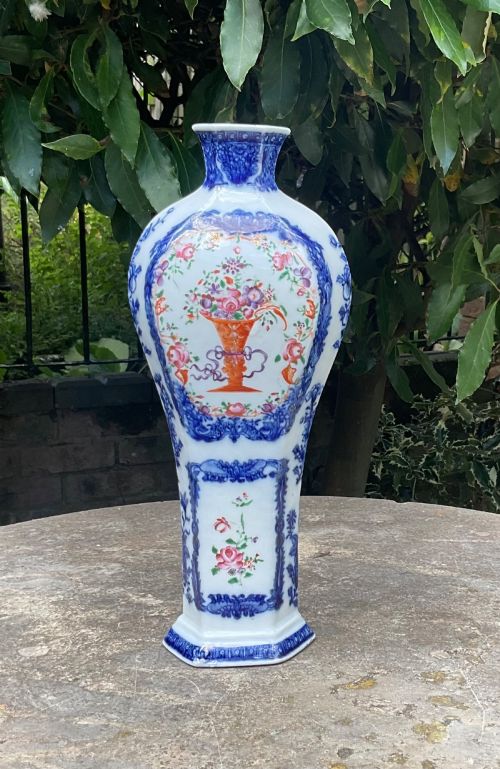
The selection on this page leans heavily towards 19th century Japanese Imari and Chinese export vessels, alongside pairs of lidded baluster jars and table lamps adapted from earlier vessels. These pieces frequently feature botanical motifs painted in cobalt blue against white grounds, occasionally enriched with enamel colours or gold leaf highlights.
Vessels take many forms, from simple bottle vases and flare neck Kutani shapes to large urns and lidded jars designed for display. Alongside ceramic vessels, the selection includes related oil and tempera paintings depicting floral still life subjects.
Materials and Techniques
Potters shaped these pieces from porcelain, earthenware, and ceramic bodies, applying mineral cobalt pigments beneath clear or opaque glazes before firing. Artisans frequently enhanced select surfaces with enamel colours, copper red highlights, or gold leaf applied during secondary low temperature firings.
Certain English and European factories utilised ironstone or refined earthenware bodies moulded into robust baluster, urn, and jug forms. Glaze application varied from smooth, glossy porcelain finishes to the characteristic thick, pooling tin glazes found on delftware.
One cheerful 20th century canvas portrays a lucky charm still life celebrating lily of the valley flowers as a token of friendship.
Assessing Quality
Quality rests upon the crispness of the cobalt brushwork and the purity of the white ground beneath the glaze. Superior examples display confident, fluid botanical painting with deep tonal variation, whereas lesser pieces show rushed or mechanical transfer printing.
The refinement of the ceramic body and the stability of the glaze significantly influence the overall standard. Early thrown pots with balanced proportions and well preserved enamel or gold leaf sit at the upper end of the range.
Spode·Adams·Meissen·Moorcroft Macintyre·Mason s·Royal Doulton
The Floral Blue White Vase Glossary
- Baluster
- A tall vase form with a rounded lower body and a narrower neck resembling an architectural baluster. This shape provides a stable base for detailed botanical painting.
- Imari
- A Japanese style of porcelain decorated in underglaze blue, iron red, and gold. These wares often feature dense floral and brocade patterns.
- Delftware
- Tin glazed earthenware produced in England and the Netherlands during the 17th and 18th centuries. The opaque white glaze mimics Chinese porcelain.
- Ironstone
- A heavy, durable type of earthenware patented in the 19th century. It combines the strength of stoneware with the smooth appearance of porcelain.
- Underglaze
- Pigment applied directly to the raw ceramic body before glazing and firing. This technique protects the blue decoration beneath a glassy surface layer.
Floral Blue White Vase: Frequently Asked Questions
How do I date a blue and white vase?
Dating relies on examining the characteristics of the ceramic body, the tone of the cobalt pigment, and any factory marks or seal stamps present on the base. Stylistic details such as transitional shapes or specific regional motifs also help place pieces within centuries like the 18th or 19th.
Comparing potting techniques, glaze thickness, and wear patterns against known examples provides further confirmation. Unmarked pieces require careful analysis of their stylistic period and manufacturing material.
Are these vases waterproof?
Most antique ceramic and porcelain vases hold water safely, but pieces with historical repairs or porous earthenware bodies require caution. Tin glazed delftware and older earthenware can sometimes seep moisture through minute crazing lines in the glaze.
Using a discreet glass or plastic liner inside fragile or porous vessels protects the interior from mineral deposits. Examining the base and interior for cracks ensures the vessel remains suitable for fresh flower displays.
How should I display a large vase?
Large baluster vases and lidded urns suit prominent placements on sturdy sideboards, pedestals, or low tables where their height and scale command attention. Pairing symmetrical vessels on either side of a fireplace or cabinet creates a balanced focal point in a room.
Ensuring the display surface is stable and away from heavy foot traffic protects heavy porcelain and ceramic pieces from accidental knocks. Adequate natural light helps highlight the cobalt blue details and enamel decoration.
What is the difference between porcelain and earthenware?
Porcelain is fired at extremely high temperatures, resulting in a dense, white, vitrified body that rings when struck and remains completely non porous. Earthenware is fired at lower temperatures, producing a more porous, softer ceramic body that requires a glaze to hold liquids.
Ironstone bridges these categories by offering the durability of stoneware with the refined appearance of porcelain. Each material displays distinct weight, translucency, and fracture characteristics.