


Chinoiserie Blue White Jar
A chinoiserie blue white jar brings hand-painted oriental scenery into a room through deep cobalt tones on white ceramics.
Chinoiserie Blue White Jar
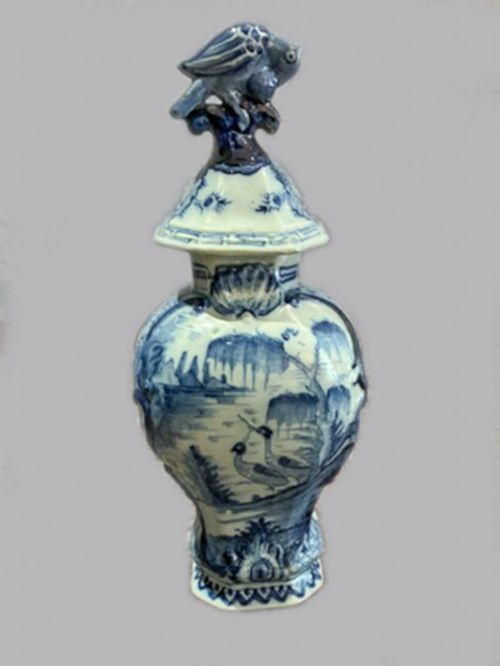
A chinoiserie blue white jar represents centuries of European and Asian ceramic exchange, taking the form of ginger jars, baluster vessels, and lidded vases. These pieces range from early Dutch Delftware interpretations to 19th-century Chinese export porcelain and later Qing Dynasty designs.
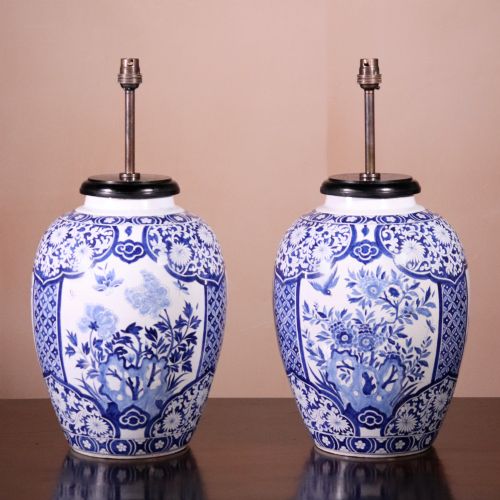
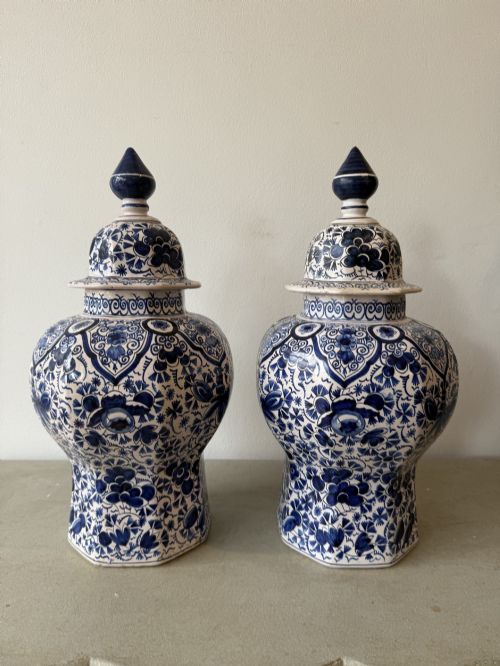
The pieces on this page heavily feature table lamp adaptations alongside traditional lidded vessels and decorative vases. Buyers will encounter seventeenth-century Dutch Delft alongside eighteenth-century works and nineteenth-century Chinese porcelain.
Forms vary from classic ginger jars with covers to tall bottle vases and pairs suitable for mantelpieces or wiring into lighting. The underlying palette remains consistent across centuries, using cobalt blue pigments beneath a clear glaze.
Materials and Techniques
Potters shaped these vessels from ceramic, earthenware, and fine porcelain bodies before applying cobalt blue pigment by hand. Tin-glazed earthenware provided the opaque white surface needed for European Delftware copies of Asian imports.
Painters executed flora, birds, and architectural scenes directly onto the unfired body or tin glaze before sealing the piece beneath a transparent glaze and firing it in a kiln. Some nineteenth-century examples incorporate brass fittings or wooden bases when converted later into table lamps.
Several jars spent a second career trading spices for lamp oil before finding themselves wired for electricity.
Assessing Quality and Execution
Quality rests primarily in the fluidity and detail of the hand-painted cobalt decoration, where confident brushwork separates superior artistic output from mechanical repetition. The depth of the blue glaze and the crispness of the white background define the visual impact of each vessel.
The survival of original lids on baluster jars and ginger vases significantly alters the integrity and desirability of the piece. Body weight, potting symmetry, and the subtlety of the crackle or glaze finish further distinguish exceptional examples from standard production.
The Chinoiserie Blue White Jar Glossary
- Chinoiserie
- European artistic style reflecting Chinese motifs and decorative themes. Artisans applied these imaginative interpretations to ceramics, furniture, and textiles.
- Baluster
- Vertical architectural or ceramic form featuring a rounded lower body that tapers upward. This profile appears frequently on jars and vases designed for display.
- Delftware
- Tin-glazed earthenware produced in the Netherlands, particularly around Delft. Potters used this technique to mimic imported Chinese porcelain.
- Ginger Jar
- Storage vessel featuring a broad shoulders and a short mouth, originally used for spices. These jars typically accept a flat or domed lid.
- Underglaze
- Pigment applied to a ceramic body before the application of a clear glaze and subsequent firing. This technique protects the painted design beneath a glassy surface.
Chinoiserie Blue White Jar: Frequently Asked Questions
How do I date a blue and white jar?
Dating relies on examining the potting technique, the specific shade of cobalt blue, and any reign marks on the base. Stylistic clues also point toward either European Delft production or Asian export periods.
Changes in glaze formulation and the weight of the ceramic body help separate seventeenth and eighteenth-century pieces from later nineteenth-century adaptations.
Were these jars used for ginger?
Many sturdy jars with wide mouths served originally to transport and store spices, ginger, and preserves from Asia to Europe. Wealthy households later repurposed them purely as decorative display items.
Over time, makers produced similar jars exclusively as ornamental objects rather than functional storage containers.
Can I use a jar lamp safely?
Many antique jars were converted into table lamps during the nineteenth or twentieth centuries by mounting them with electrical fittings and wooden bases. These conversions allow collectors to enjoy antique ceramics as functional lighting.
Buyers should have older wiring checked by a qualified professional to ensure safety in modern homes.
What is the difference between Delft and porcelain?
Delftware uses a coarse earthenware body covered in an opaque tin glaze to create a white surface for painting. Porcelain relies on fine kaolin clay fired at higher temperatures to produce a vitreous, resonant material.
Porcelain remains thinner and harder than earthenware, though both mediums carried similar blue and white chinoiserie decoration.