



Floor Standing Gong
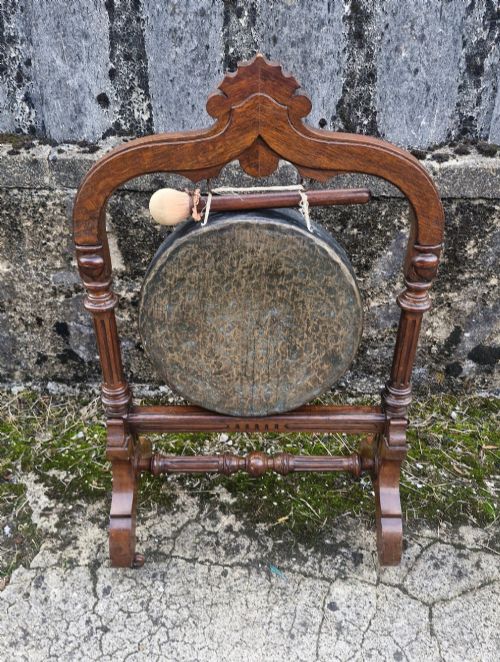
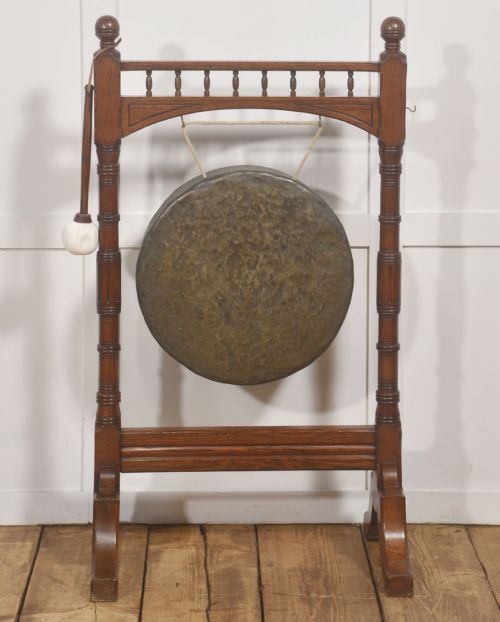
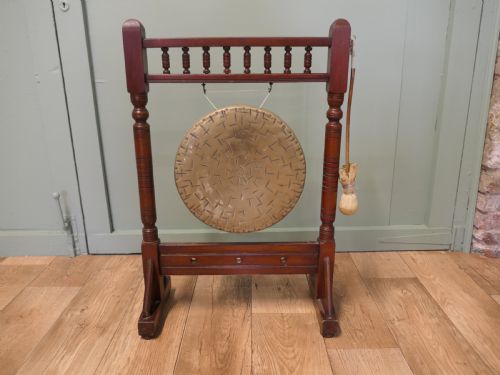
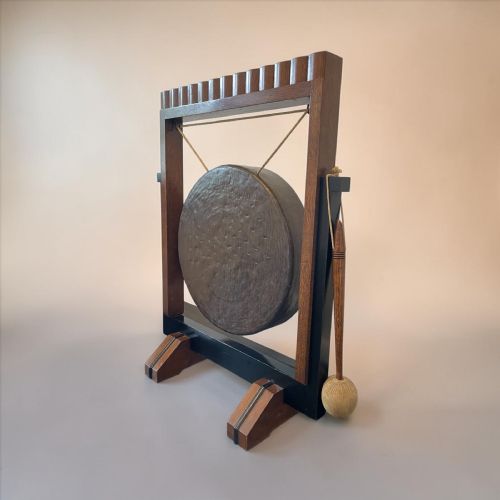
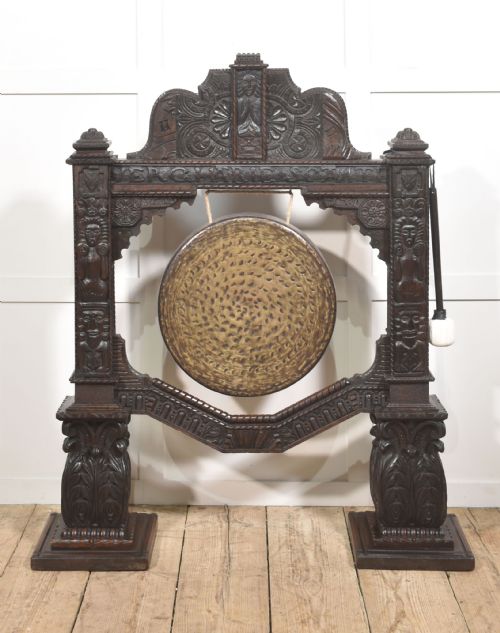
These floor standing gong pieces deliver a resonant presence to a hallway, formed in timber frames with metal discs.
Floor Standing Gong
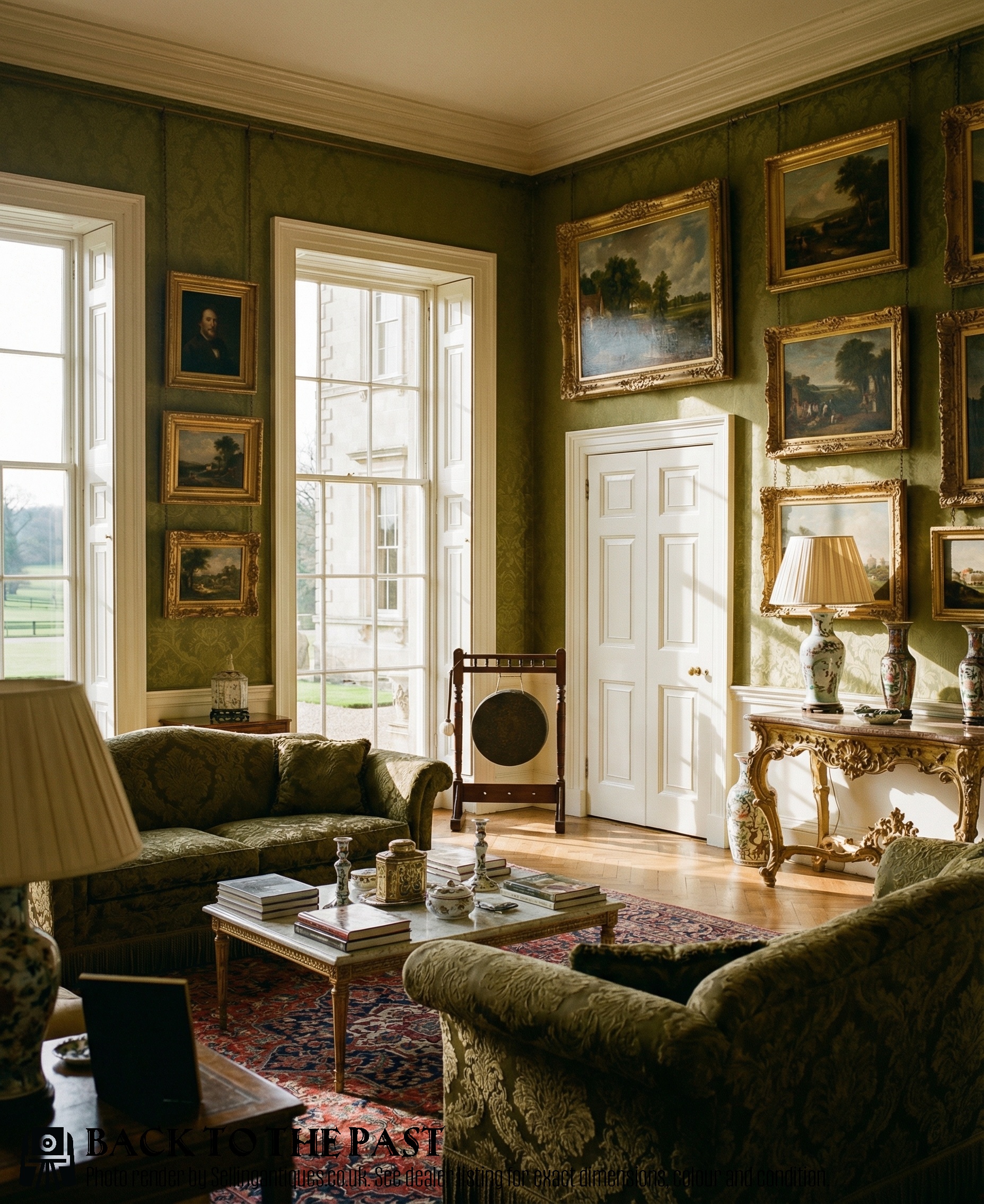
A floor standing gong comprises a substantial wooden frame supporting a suspended metal disc, designed to summon households for meals or mark the passage of time. When you search for this phrase, you encounter substantial domestic artefacts intended for prominent placement in large hallways or reception rooms.
The versions most commonly met on this page date from the nineteenth century into the early twentieth century. They combine architectural woodwork with striking metallic resonance, reflecting the domestic habits of their period.
Construction and Materials
Makers constructed the standing frames primarily from hardwoods such as oak, walnut and mahogany, occasionally incorporating wrought iron. These timbers were carved, joined and polished to form stable supports capable of bearing the weight of a suspended metal disc.
The gongs themselves utilise brass and bronze, suspended within the frame using cord, rope or fabric ties. This method allows the metal to vibrate freely when struck with a mallet.
Floor Standing Gong Retail Price Guide 2026
Typical asking prices for floor standing gong among the pieces listed under this phrase on Sellingantiques today, from the lower quarter to the upper quarter. They describe what is for sale here now, not the wider market.
Listings feature oak, walnut, mahogany, brass, bronze, cord, rope and fabric across Victorian, Gothic Revival and Arts and Crafts styles.
Judging Quality
Quality in these pieces rests upon the ambition of the timber framing and the purity of the metal casting. Monumental examples exhibit deep relief carving, sometimes featuring figures such as the Green Man, alongside heavier gauge brass or bronze discs that produce a richer, more sustained tone.
Simpler interpretations rely on plain timber framing and standard commercial brass discs. The distinction lies entirely in the architectural presence of the stand and the acoustic resonance of the hanging gong.
The Floor Standing Gong Glossary
- Dinner gong
- A domestic striking instrument used historically to announce meals to the household. It typically consists of a metal disc hung within a decorative wooden stand.
- Gothic Revival
- An architectural and decorative style drawing inspiration from medieval forms. Pieces in this style often feature pointed arches, tracery and heavy carved mouldings.
- Arts and Crafts
- A design movement prioritising traditional craftsmanship and visible construction methods. Furniture from this ethos uses plain surfaces and honest joinery.
- Green Man
- A sculptural motif depicting a face made of or entwined with leaves and vines. It appears frequently in nineteenth century architectural wood carving.
Floor Standing Gong: Frequently Asked Questions
What is a floor standing gong?
A floor standing gong is a large domestic piece featuring a metal disc suspended in a wooden frame. It was traditionally used to summon occupants for dinner.
These pieces combine furniture making with percussion, functioning simultaneously as decorative stands and working instruments.
How were they used historically?
Households used these gongs to announce meals or gather guests from different parts of a large country house. A mallet, usually kept nearby, struck the suspended metal disc to produce a deep, carrying tone.
They stood in entrance halls or landings where the sound could travel effectively throughout the building.
Which woods are most common?
Oak is the predominant timber found in these frames, often reflecting Victorian Gothic Revival tastes. Walnut and mahogany also appear frequently in nineteenth and early twentieth century examples.
These durable hardwoods provided the structural integrity required to support heavy suspended metal discs.
How do I date a floor standing gong?
Dating relies upon stylistic markers such as Gothic Revival carving, timber choice and construction techniques. Nineteenth century pieces often show heavier ornamentation, while early twentieth century versions lean towards simpler Edwardian frames.
Hardware, joinery methods and the nature of the suspension cord or rope also offer chronological clues.