

Flip Top Console
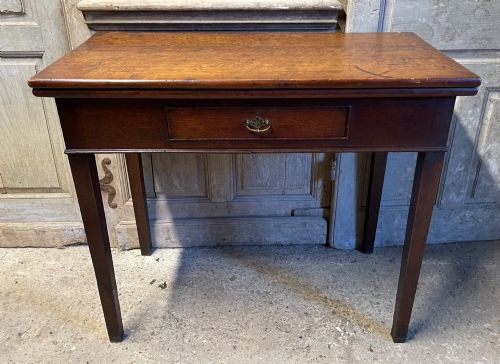
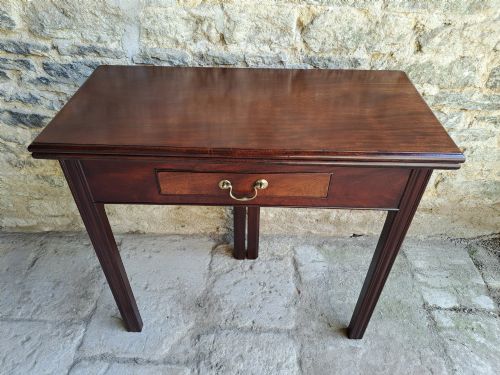
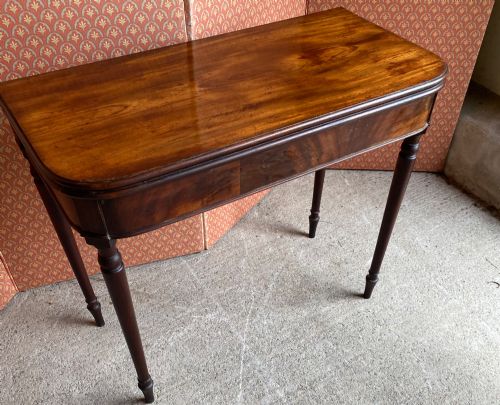
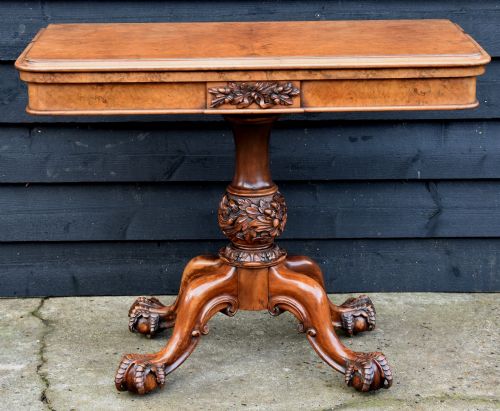
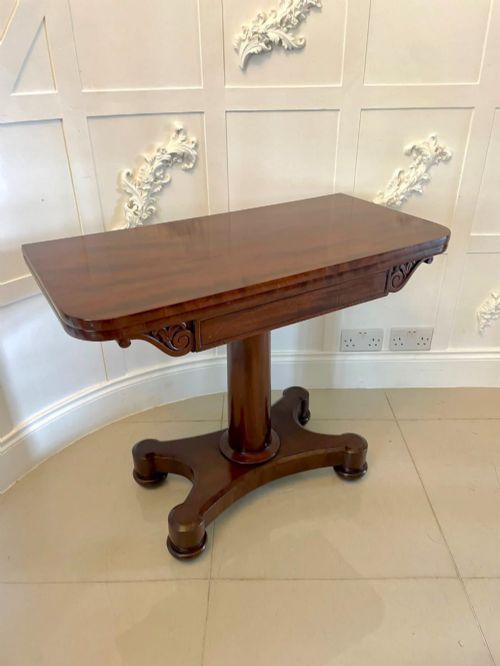
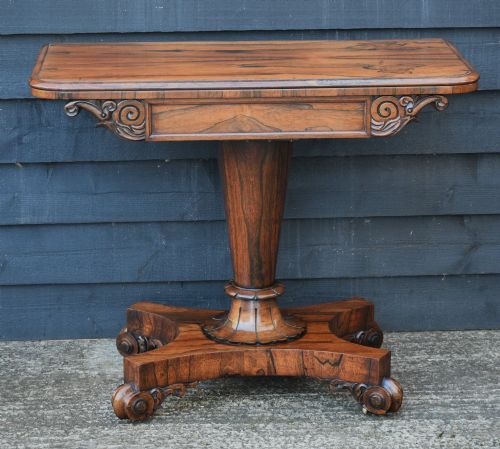
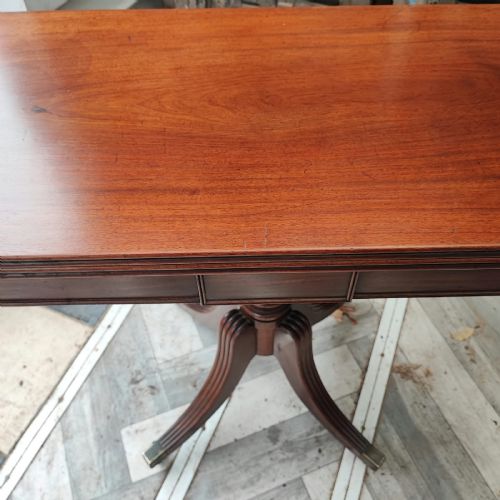
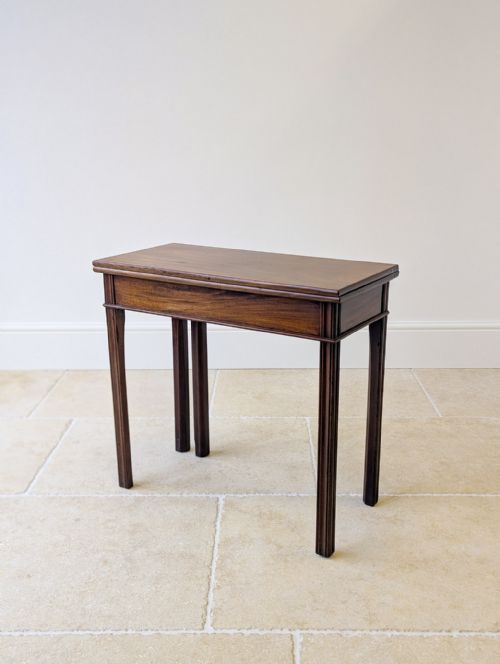
A flip top console brings versatile folding timber surfaces into a room, serving as a tea, card or side table.
Flip Top Console
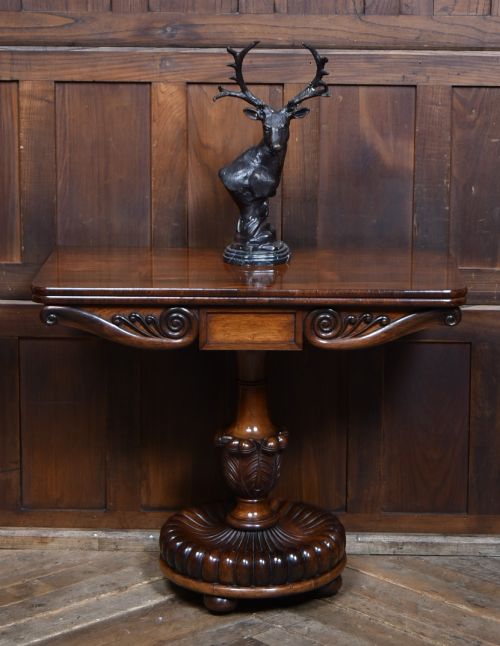
A flip top console is primarily found in mahogany, rosewood and walnut, spanning periods from the eighteenth century through the Victorian era. These pieces function as compact side tables that open to reveal larger surfaces supported by folding or concertina actions.
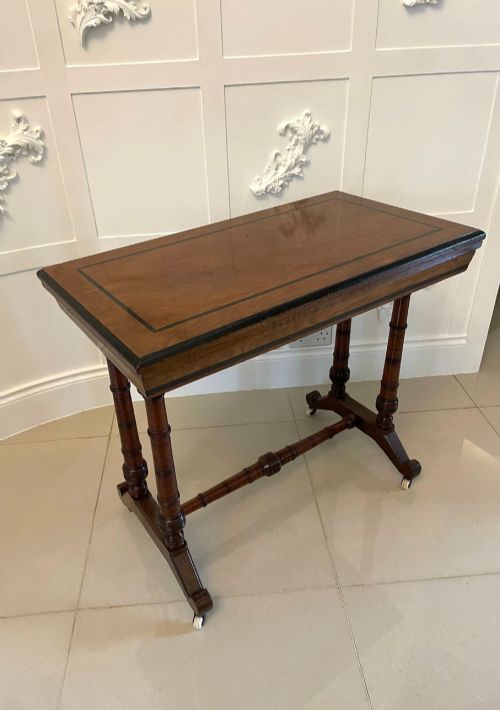
The selections on this page concentrate heavily on Georgian and Regency forms, alongside William IV and Victorian examples. Makers built them as tea tables, card tables and games tables, adapting the folding top mechanism for domestic entertainment and parlour use.
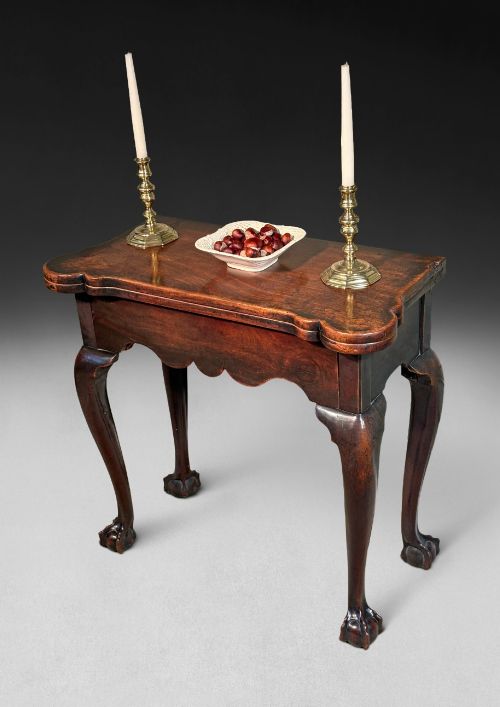
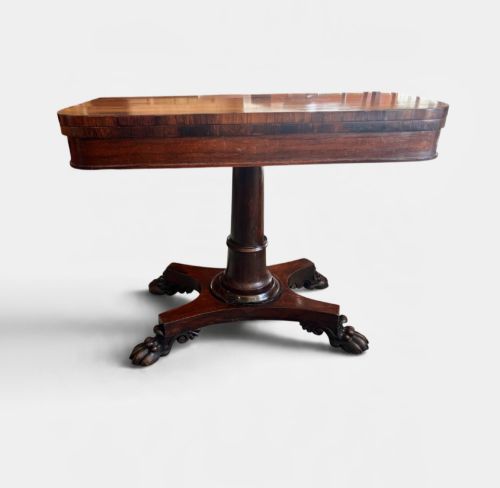
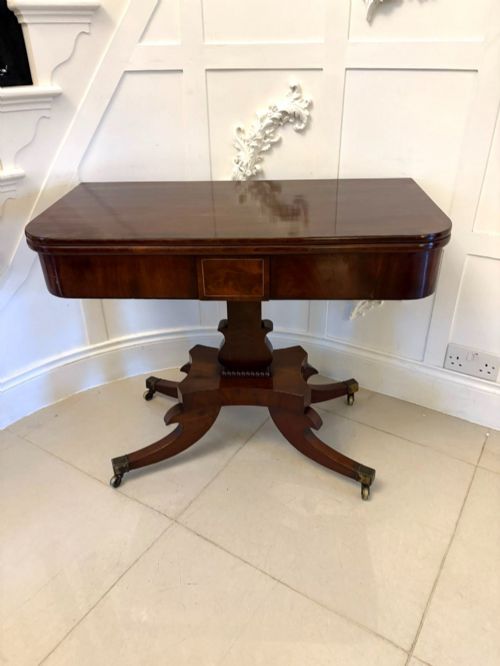
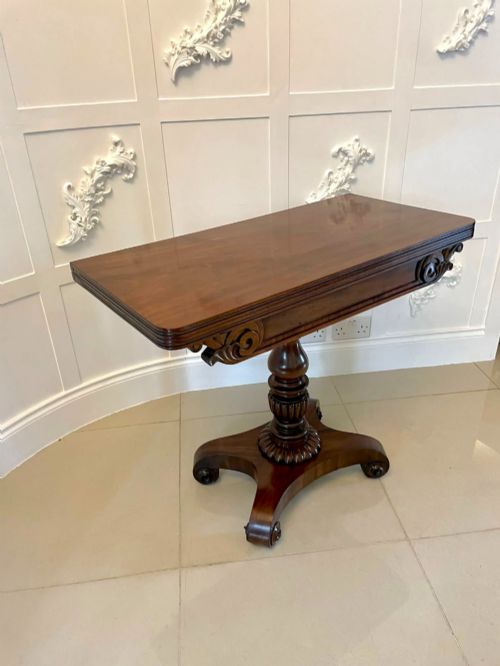
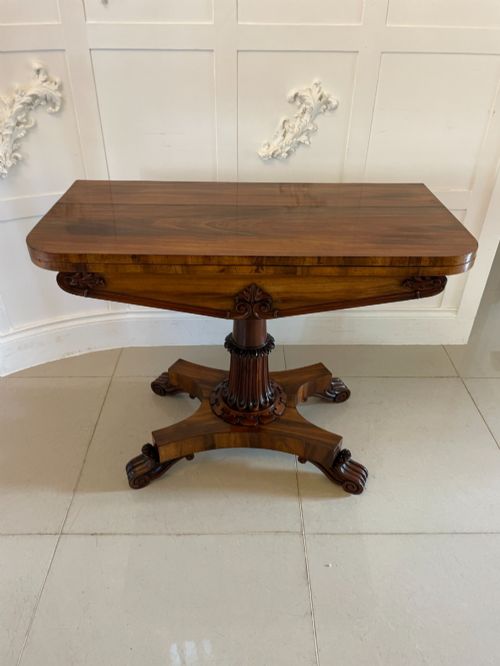
Buyers encounter variations ranging from simple mahogany side tables to elaborate rosewood card tables featuring satinwood inlay, brass mounts and carved paw feet. The core utility remains a hinged top that doubles the surface area when rotated or unfolded against a rear leg or gate-leg frame.
What varies in quality
Quality depends upon the choice of timber and the precision of the folding mechanism, with superior examples displaying matched grain across the fold and smooth operation in the concertina action or swivel pivot. The crispness of carved details like paw feet or inlaid satinwood borders also separates finer pieces from simpler domestic furniture.
Proportion and structural integrity define the upper tier of these tables. Well-balanced pedestals, tight joinery at the hinges and substantial timber thickness indicate superior workshop production during the Georgian and Regency periods.
Flip Top Console Retail Price Guide 2026
Typical asking prices for flip top console among the pieces listed under this phrase on Sellingantiques today, from the lower quarter to the upper quarter. They describe what is for sale here now, not the wider market.
Listings feature mahogany, rosewood, walnut and satinwood inlay across Georgian, Regency and Victorian periods.
Epstein and Co
The Flip Top Console Glossary
- Concertina action
- An expanding frame mechanism that supports the double-leaf top of a card table when opened. This construction allows the rear rails to pull outward symmetrically.
- Fold-over
- A hinged top design where the surface splits and folds flat against itself to reduce depth. It creates a console or side table configuration when closed.
- Satinwood inlay
- Contrasting light timber veneers set into darker primary woods like mahogany or rosewood. Craftsmen used this technique to create geometric or decorative borders.
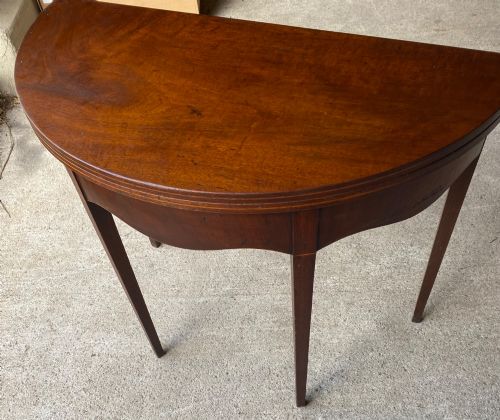
- Demi lune
- A half-moon shape characteristic of tables designed to sit flush against a wall. The top unfolds from a semicircle into a full circle or oval.
- Sabre leg
- A curving, outwardly splayed leg profile typical of Regency furniture. It tapers downward toward the foot for a lighter visual stance.
Flip Top Console: Frequently Asked Questions
How do you open a flip top console?
The top leaf lifts and rotates on a central pivot or unfolds on hinges to rest upon the extended frame. Some models utilise a concertina action where the rear rail pulls outward to support the open surface.
Once unfolded, the double-thickness top provides a stable area intended originally for card playing, tea service or general display against a wall.
What is the difference between a tea table and a card table?
Tea tables generally feature plain or moulded timber tops designed for holding porcelain during the eighteenth and nineteenth centuries. Card tables frequently include lined interiors with baize or leather surfaces for games.
Both utilise the same folding mechanism to transform from narrow console depths into larger square or rectangular formats.
Where should I place a flip top console in a room?
These tables fit naturally against a hallway or living room wall in their closed console position. The shallow depth preserves floor space while offering a surface for lamps or decorative objects.
Opening the top requires clearance around the piece, so positioning them away from tight corners allows the leaf to unfold without obstruction.
How do I identify a Regency period table?
Regency pieces often display rosewood or figured mahogany veneers accompanied by brass mounts, inlaid satinwood or carved paw feet. Sabre legs and pedestal bases with scroll supports are also common markers of this era.
Construction details such as hand-cut dovetails and traditional timber fixings help confirm the nineteenth-century origins of the piece.