
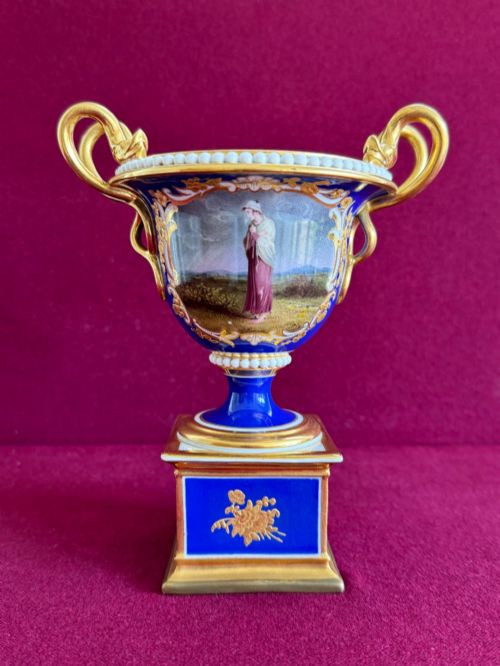
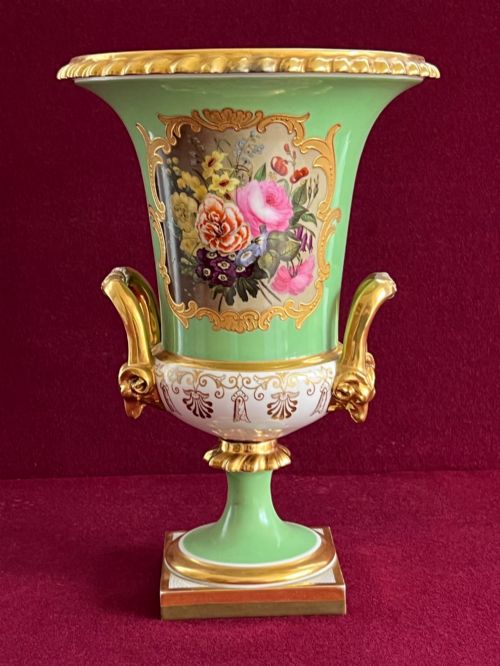
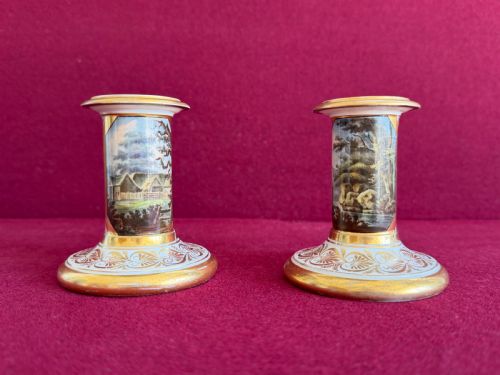


Flight Period Worcester
Flight period worcester porcelain represents the refined tablewares and ornamental pieces produced by the historic factory under the leadership of the Flight family and their later partners.
Flight Period Worcester
When you search for flight period worcester, you encounter tea wares, cabinet cups, dessert dishes, and decorative vases spanning the late eighteenth century into the regency era. The items listed here range from simple tea bowls and saucers decorated with cornflower sprigs to large jardinieres and topographical dessert plates.
The objects bridge the georgian and regency periods, encompassing the initial management under martin flight, the subsequent partnerships with the barr family, and the evolution into flight, barr and barr. Teacups, saucers, and trios appear most frequently, alongside specialised items like egg drainers, cream jugs, and rose water sprinklers.
Materials and manufacture
The pieces rely upon porcelain bodies, encompassing soft-paste porcelain from the earlier eighteenth-century years and finer bodies developed into the nineteenth century. Potters shaped items such as tea bowls and sauce tureens on wheels or in moulds, often incorporating spiral fluting, shanked moulding, or pinched handles.
Decorators applied hand-painted enamels, topographical scenes, and patterns such as the dragon in compartments or the queen's pattern. Gilding with gold leaf and rich burnished gilt highlights completed the ornamentation on cabinet cups, vases, and dessert dishes.
Object types span practical tea services, dessert plates featuring topographical scenes, and specialised items including egg drainers.
Judging the standard
Quality in these porcelains rests upon the crispness of the moulding, the precision of the hand-painted enamels, and the ambition of the form. A spiral fluted tea bowl or a heavily gilded cabinet cup demonstrates the potter's skill in balancing delicate clay bodies with complex decoration.
The distinction between standard domestic tea wares and exhibition-level pieces lies in the artistry of the painting, whether executed by named hands like thomas Lowe or samuel astles, and the preservation of the gold leaf and enamel surface over time.
Flight·Barr, Flight and Barr·Flight Barr and Barr·Thomas Lowe·Samuel Astles
The Flight Period Worcester Glossary
- Soft-paste porcelain
- An artificial porcelain composition fired at lower temperatures than hard-paste, common in earlier eighteenth-century English ceramics. It provides a warm, creamy background for enamel painting.
- Flight period
- The era of the Worcester porcelain factory managed by Joseph Flight and his family from the 1780s onward. This tenure covers important transitions in style from late georgian to regency.
- Barr, Flight & Barr
- The partnership title adopted when the Barr family joined the firm, succeeding the earlier Flight management. Pieces bearing this mark typically date from the first decades of the nineteenth century.
- Tea bowl
- A small drinking vessel without a handle, traditional for tea consumption during the eighteenth century. They frequently appear accompanied by matching saucers in trios.
- Cabinet cup
- A decorative cup made for display in a cabinet rather than daily tea drinking. These pieces often feature elaborate painting and substantial gilding.
Flight Period Worcester: Frequently Asked Questions
How do I date flight period worcester?
Dating relies upon factory marks found on the base, partnership names such as barr, flight and barr, and stylistic shifts from eighteenth-century neoclassical designs to regency forms.
Changes in porcelain bodies and decorative motifs also help narrow the decade of production.
Were these pieces used for daily dining?
Many items, including tea bowls, saucers, cream jugs, and dessert dishes, served practical functions in upper-class households for tea and dessert courses.
Finer cabinet cups, vases, and rose water sprinklers were primarily decorative or ceremonial.
What is spiral fluting on tea bowls?
Spiral fluting refers to the twisted vertical ribbing moulded into the body of tea bowls, coffee cups, and cream jugs during manufacture.
This technique added texture to the piece and caught the light beneath the glaze.