
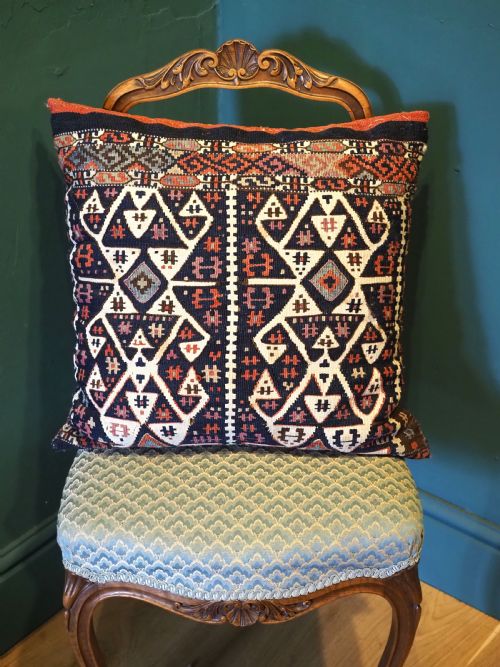


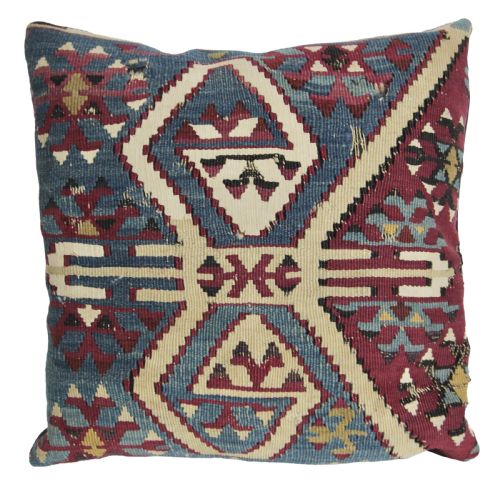


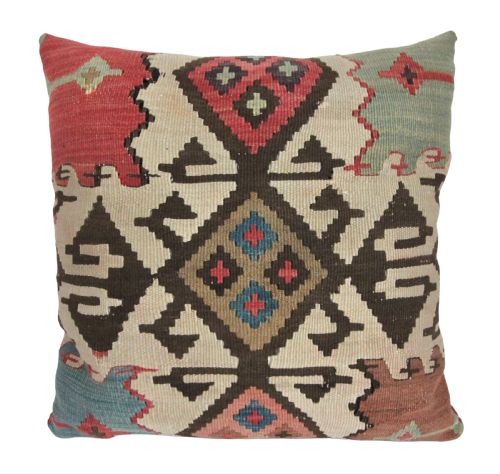
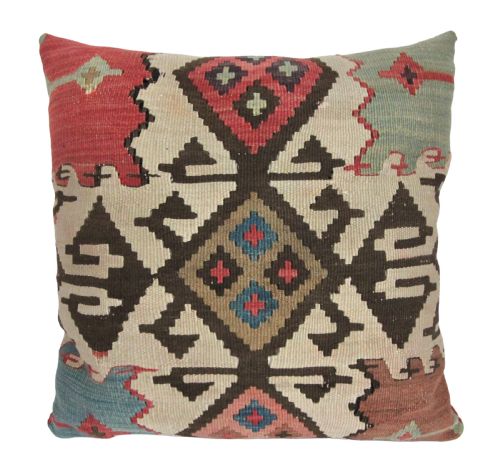


Flatweave Wool Pillow Cushion
These flatweave wool pillow cushion examples are woven from antique tribal textiles to bring authentic nomadic texture and pattern into a modern room.
Flatweave Wool Pillow Cushion
A flatweave wool pillow cushion brings traditional nomadic craftsmanship into daily use by repurposing genuine tribal textiles such as saddle bags, torbas and bag faces. These pieces originate from regional weaving traditions including Anatolian, Persian, Caucasian and Central Asian workshops.
Most items you encounter on this page take the form of scatter cushions and throw pillows, often created from fragments of older kilims and saddlebags. The materials typically combine wool surfaces with cotton backings, preserving the historical character of the original flatweaves.
How they were made
Makers constructed these flatweave textiles using traditional hand-weaving techniques on vertical or horizontal looms, interlacing warp and weft threads without a pile. Natural dyes provided the rich colour palette found across the wool surfaces.
Many examples incorporate sturdy cotton for structural backing, while surviving tassels and original bag openings are frequently integrated into the finished cushion construction to maintain the authenticity of the vintage textile.
Some cushions still retain their original hanging tassels from their days strapped across a nomad's camel.
What varies in quality
The distinction between standard and superior pieces rests on the integrity of the original textile and the precision of the flatweave structure. Denser wool knotting and well-preserved natural dye variations elevate a cushion's visual depth.
Consideration is also given to how thoughtfully the textile fragment is repurposed, ensuring the historic pattern remains balanced across the face of the cushion while maintaining durable seams for everyday placement.
The Flatweave Wool Pillow Cushion Glossary
- Kilim
- A flatwoven textile produced without a pile, forming the primary source material for many antique cushions. These weaves display geometric patterns formed by interlocking weft threads.
- Torba
- A small storage bag produced by Turkmen tribes, often featuring distinctive guls and geometric motifs. Completed torbas provide dense flatweave panels suited for cushion conversion.
- Saddle bag
- A dual-pouch carrier woven by nomadic groups for transport on animals. The decorative faces of these bags are frequently separated and transformed into decorative throw cushions.
- Natural dyes
- Colourants derived from plants, roots and minerals used in older tribal textiles. These dyes yield muted, harmonious tones that age gracefully over decades.
Flatweave Wool Pillow Cushion: Frequently Asked Questions
What is a flatweave wool pillow cushion?
A flatweave wool pillow cushion is a decorative soft furnishing created by repurposing antique nomadic textiles like kilims and saddlebags.
These pieces combine historic woven wool faces with supportive cotton backings to provide both cultural heritage and comfortable domestic seating.
How do I care for my cushion?
Care for these vintage textiles requires gentle handling to preserve the delicate natural wool fibres and traditional dyes.
Professional specialist cleaning is recommended rather than machine washing to protect the structural integrity of the flatweave.
How are different tribal styles identified?
Tribal styles are distinguished by specific geometric motifs, colour combinations and weaving structures characteristic of particular regions.
Anatolian, Persian, Caucasian and Turkmen pieces each exhibit unique visual vocabularies passed down through generations of nomadic makers.