
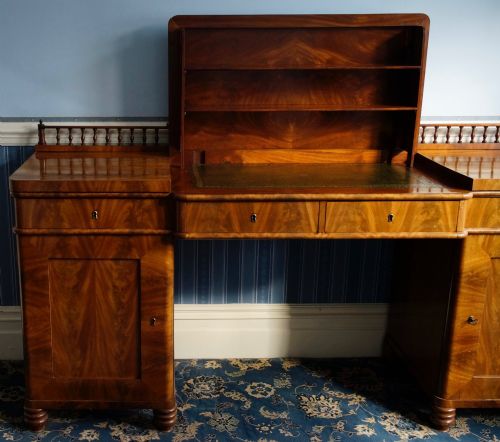
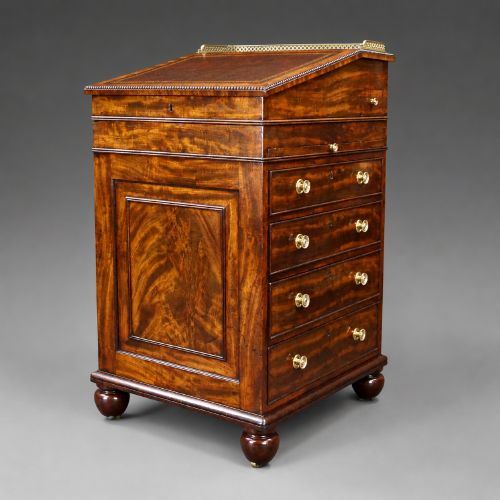
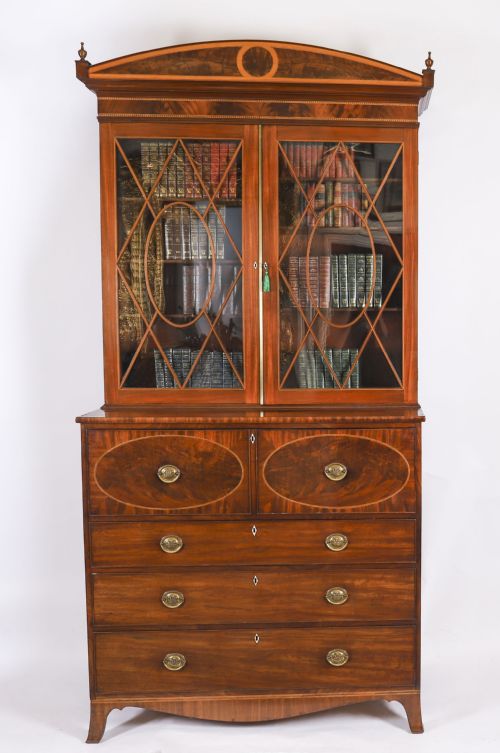
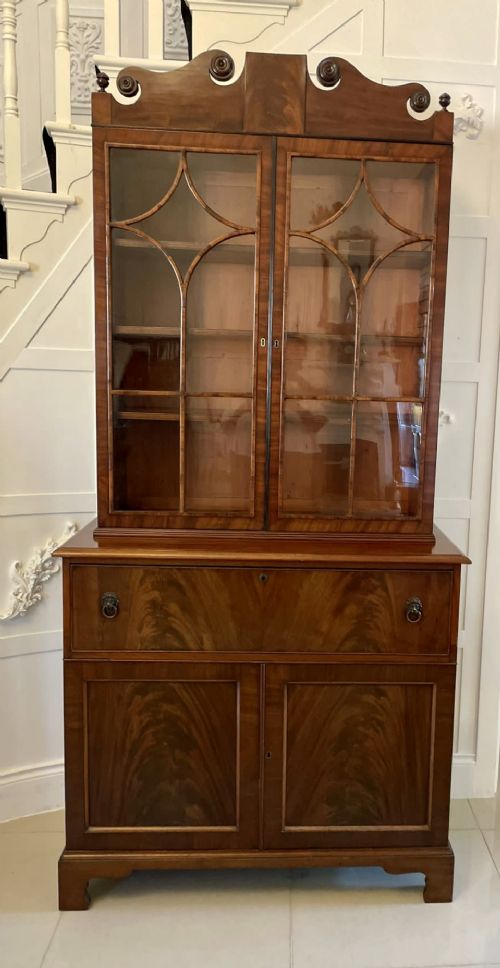
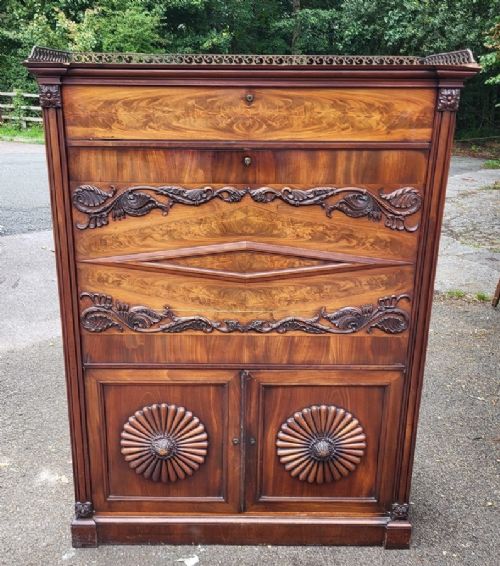
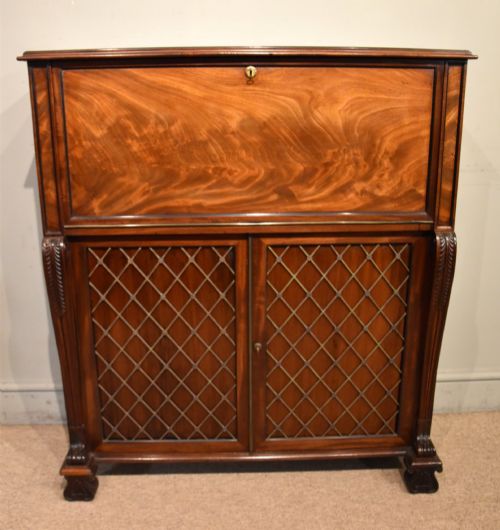
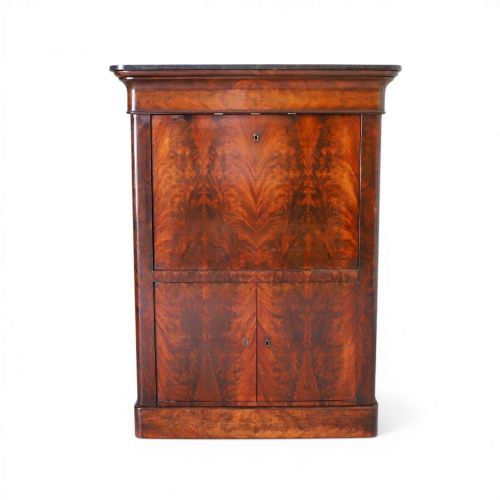
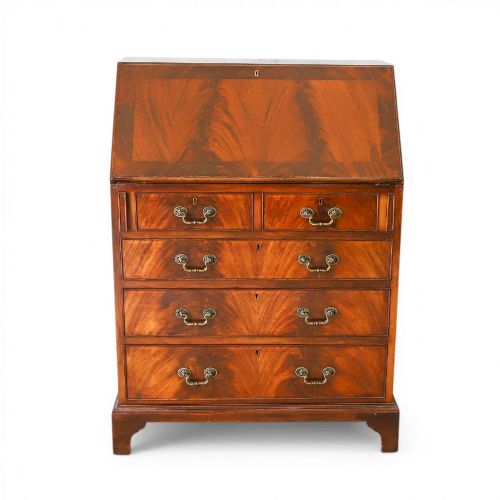
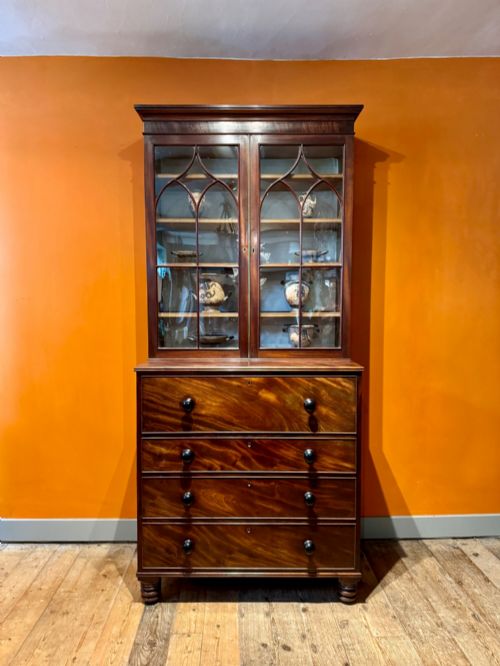
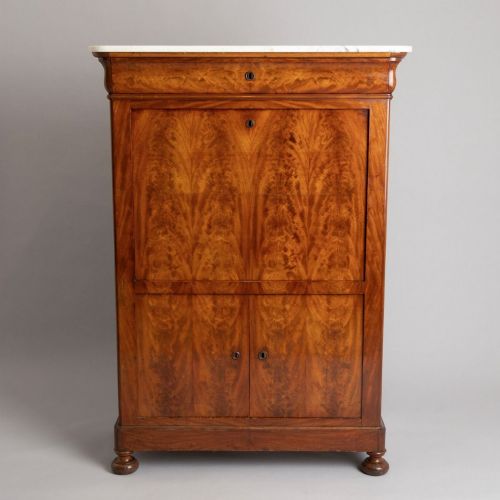


Flame Mahogany Writing Cabinet
Flame mahogany writing cabinets bring remarkable figured timber and hidden desks together in grand storage pieces designed for serious correspondence.
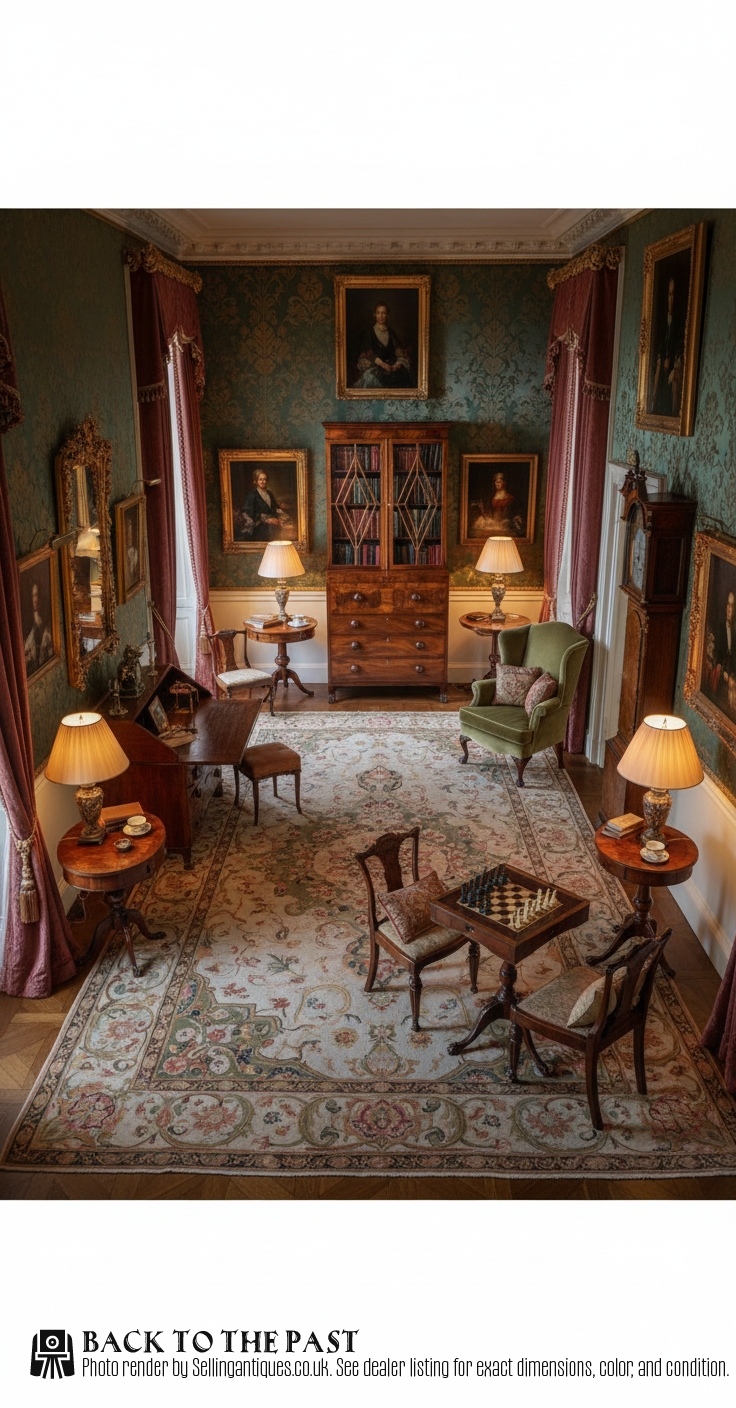
Flame Mahogany Writing Cabinet
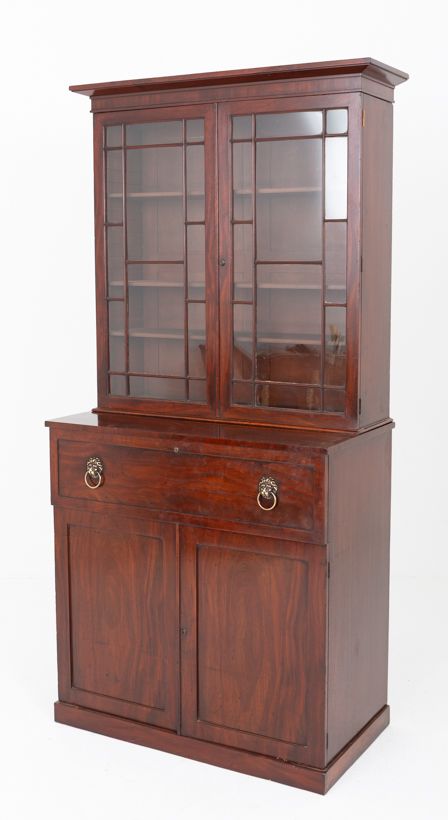
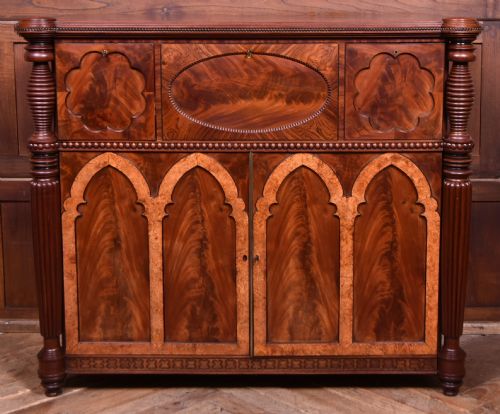
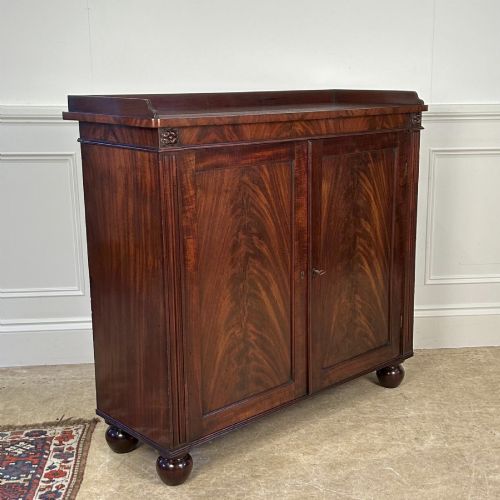
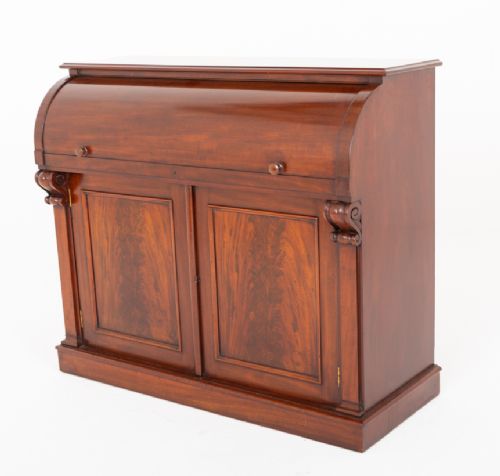
A flame mahogany writing cabinet encompasses tall secretaire bookcases, drop-front cabinets, and fitted cylinder desks designed to hold papers and books. These pieces emerge predominantly from the Georgian, Regency, and Victorian periods, carrying the weight of 18th- and 19th-century cabinetmaking.
The version most commonly encountered on this page is the secretaire bookcase, a tall case piece combining upper shelving with a pull-out writing drawer or drop-front desk section. Smaller formats such as the Davenport and the French secretaire à abattant also appear frequently among the listings.
Origins span English workshops, notably those associated with Gillows, alongside continental examples including French Louis Philippe and Biedermeier pieces. Each regional variation brings distinct proportions and interior drawer layouts to the form.
Materials and Construction
Makers built these cabinets using solid secondary timbers like oak for internal framing and drawer carcasses, applying figured flame mahogany veneers to the primary exterior surfaces. The distinctive flame pattern arises from slicing timber taken from the fork of the mahogany tree where branches meet the trunk.
Secondary materials such as brass for handles and escutcheons, leather for writing surfaces, and white marble for continental cabinet tops appear alongside the wood. Glass panels feature in the upper bookcase doors of the taller secretaire forms.
Construction relied on precise dovetail joints for drawers and panelled framing to stabilise the large timber surfaces against seasonal movement. Secret drawers and internal pigeonholes demand intricate miniature joinery hidden behind fitted architectural facades.
Many of these elegant cabinets conceal secret compartments behind sliding pigeonholes, designed for hiding private correspondence from prying eyes.
Judging Quality
Quality rests heavily on the intensity and book-matching of the flame mahogany veneer across the front drawers and fall-front panels. Grain that flows symmetrically across multiple drawers indicates a maker who selected and laid the timber with deliberate care.
The sophistication of the internal fittings defines the upper tier of these cabinets, distinguishing standard utility pieces from exceptional commissions. Secret compartments, satinwood inlay, and finely turned pigeonholes elevate the interior architecture.
Proportion and architectural integrity separate superior examples from heavier, clumsier constructions. Crisp mouldings, original brass hardware, and well-balanced bookcase doors reveal the hand of skilled period workshops.
Gillows
The Flame Mahogany Writing Cabinet Glossary
- Flame mahogany
- A veneer cut from the branch junction of the mahogany tree, producing a swirling, flame-like grain pattern. This timber forms the decorative focal point of many Regency and Georgian writing cabinets.
- Secretaire bookcase
- A tall cabinet combining a bookcase top with a pull-out drawer or drop-front desk containing writing surfaces and pigeonholes. It serves both library and correspondence functions.
- Secrétaire à abattant
- A tall vertical cabinet featuring a hinged drop-front door that opens to reveal a fitted writing desk and internal compartments. Continental examples often pair this form with a marble top.
- Davenport
- A compact pedestal desk featuring a sloping, sliding writing surface and side drawers. This form offers a smaller footprint while retaining deep storage capacity.
- Cylinder desk
- A bureau featuring a quarter-circle rotating wooden cylinder that conceals the writing slide and internal drawers. When closed, it hides the entire working surface from view.
- Biedermeier
- A Central European style from the 19th century emphasising clean lines, minimal ornamentation, and warm native veneers. Pieces from this tradition focus on architectural simplicity rather than heavy carving.
Flame Mahogany Writing Cabinet: Frequently Asked Questions
What is a flame mahogany writing cabinet?
A flame mahogany writing cabinet is a piece of antique case furniture featuring figured wood grain and a dedicated writing surface, such as a drop-front desk or secretaire drawer.
These cabinets combine upper display or storage space with enclosed compartments for correspondence and ledgers.
How do you use a secretaire drawer?
The secretaire drawer pulls forward like a standard drawer while the front hinged panel drops down to horizontal, creating a stable writing desk.
Inside, you find an arrangement of small drawers, pigeonholes, and sometimes secret compartments designed for letters and stationery.
Where were these cabinets made?
These cabinets originate primarily from British workshops, with many examples bearing the hallmarks of London and provincial cabinetmakers.
Continental pieces from France and Central Europe also appear, bringing distinct stylistic touches like marble tops and architectural column supports.
How do I care for flame mahogany?
Keep mahogany furniture away from direct sunlight and steady heat sources to prevent the veneer from drying out or splitting.
Apply traditional beeswax periodically to nourish the timber and maintain the natural lustre of the figured grain.
How do I date a writing cabinet?
Dating relies on examining construction methods, timber thickness, drawer dovetails, and stylistic markers associated with periods like George III or Regency.
Secondary woods, brass hardware styles, and the complexity of internal desk fittings also provide clear clues to the decade of manufacture.