


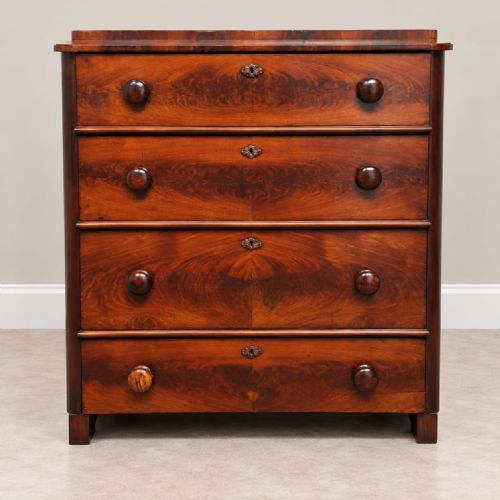
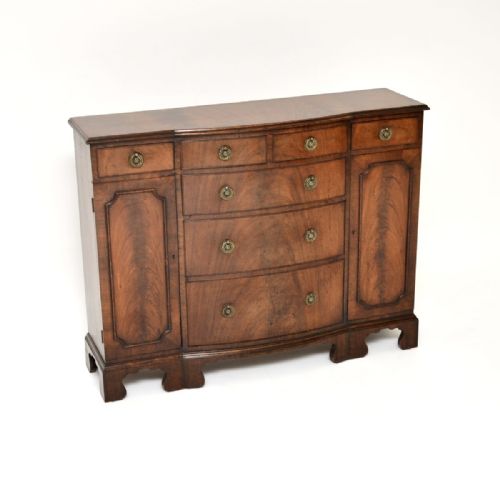
Flame Mahogany Storage Chest
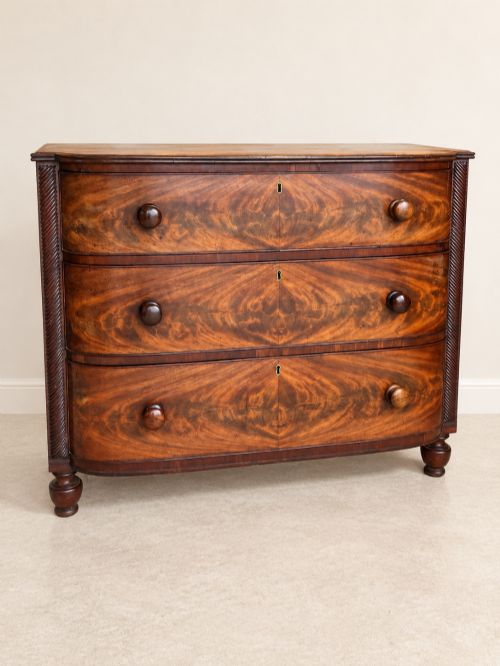
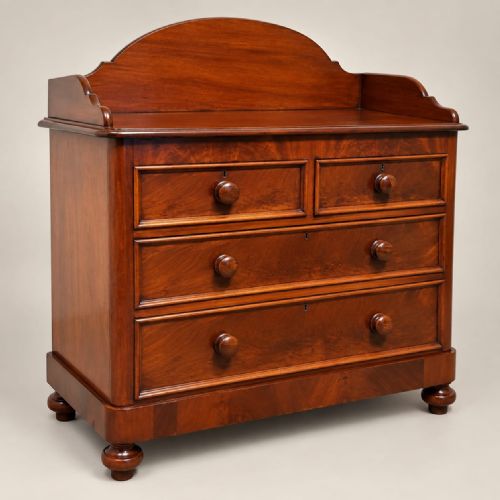
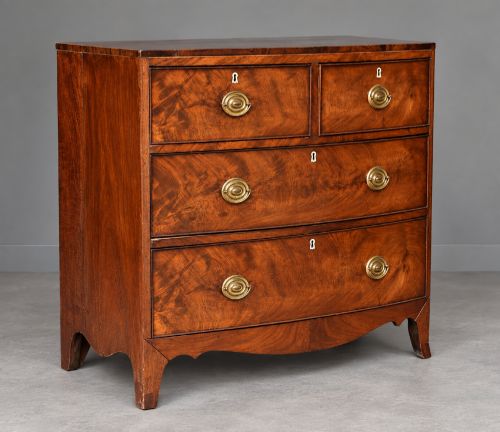
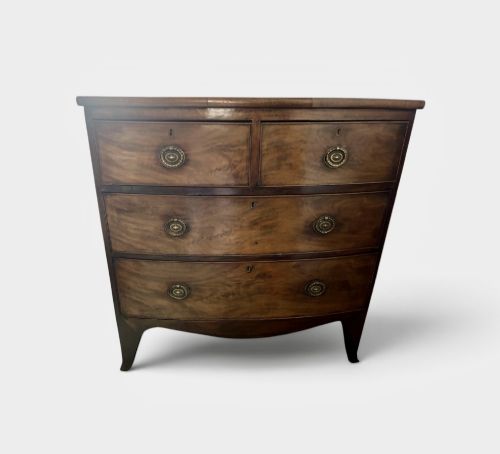
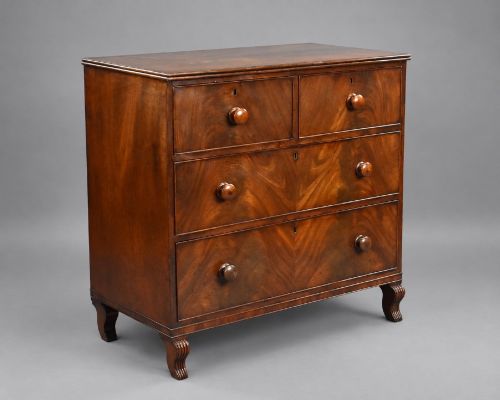
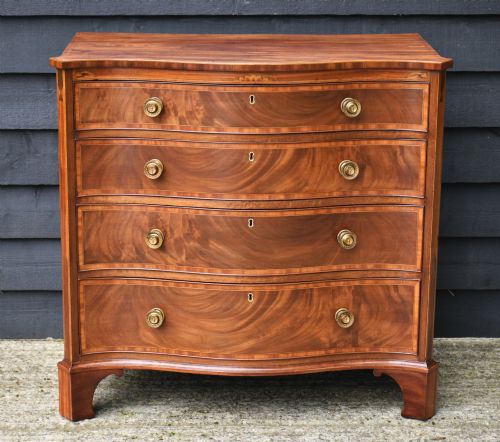
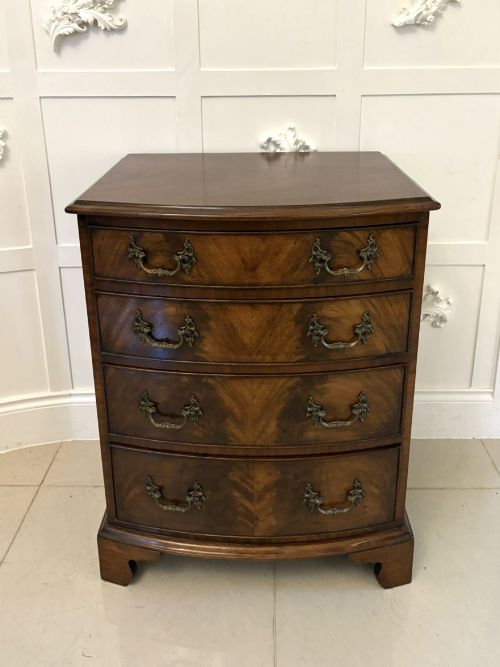
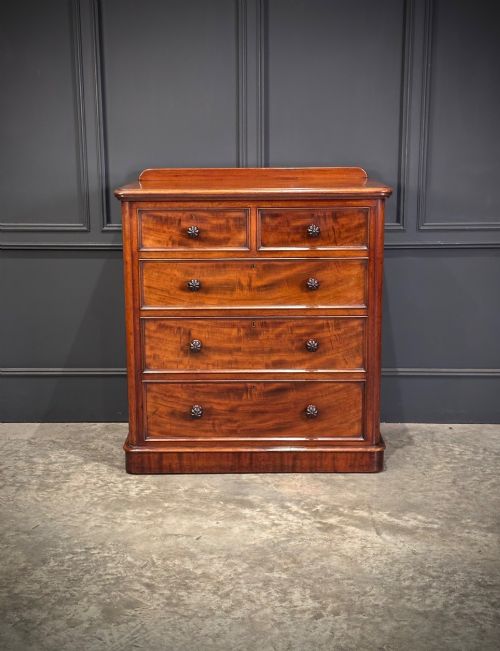
A flame mahogany storage chest brings together rich figuring and practical depth, offering a handsome focal point for bedroom or living space.
Flame Mahogany Storage Chest
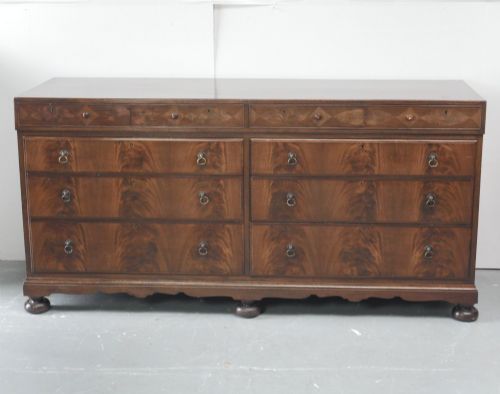
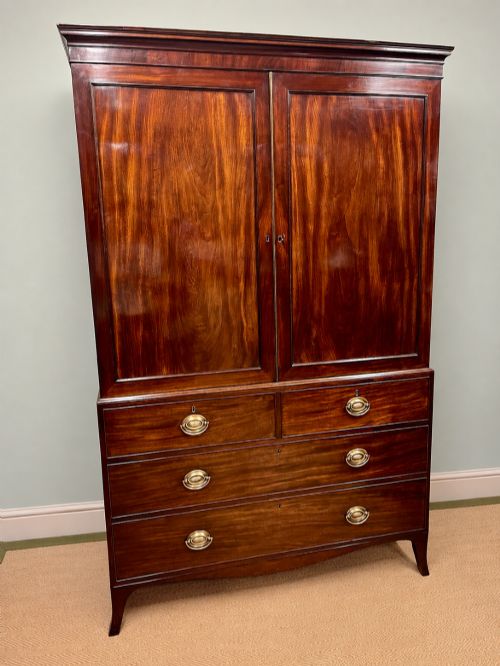
A flame mahogany storage chest primarily takes the form of a chest of drawers, alongside linen presses, tallboys, and chest on chest designs across this selection. Pieces span the Georgian, Regency, and Victorian eras, reaching into Edwardian and later twentieth-century revivals.
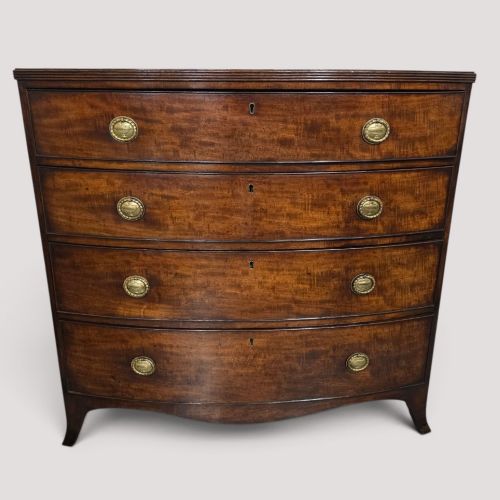
Buyers meet bow front, serpentine, and straight profiles constructed from timber with prominent figuring. Origins extend from English workshops to Scottish and Welsh pieces, occasionally featuring specialised forms such as cellarettes and wardrobe storage.
Standards of craftsmanship
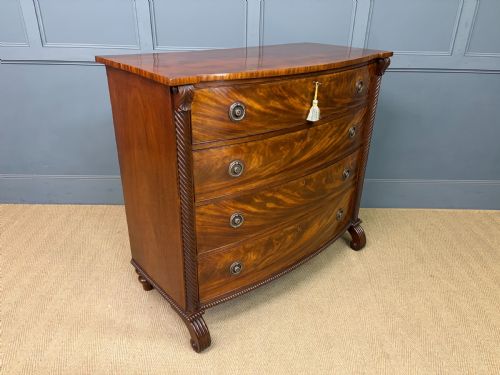
Quality rests heavily on the selection and matching of the veneer across drawer fronts, where symmetry in the flame pattern elevates the visual impact. The crispness of hand-cut dovetails and the smooth sliding of drawers within their runners further distinguish finer examples.
The choice of secondary timbers and the retention of original brass hardware indicate the original tier of manufacture. Well-executed additions like secret drawers or subtle stringing reflect maker ambition during periods such as the Georgian and Regency revivals.
Keep your eyes open for hidden compartments, as more than one Welsh cabinet maker tucked a secret drawer away behind the moulding.
Whytock and Reid
The Flame Mahogany Storage Chest Glossary
- Flame mahogany veneer
- A thin slice of wood cut from the fork of the mahogany tree, displaying a distinctive flammiform grain pattern. This figure is prized for its undulating, flame-like appearance on drawer fronts.
- Bow front
- A convex, outward-curving cabinet front popular during the Georgian and Regency periods. It softens the silhouette of a heavy storage chest.
- Chest on chest
- A tall storage unit comprising one chest stacked directly upon a slightly larger lower chest, often termed a tallboy. This form maximises vertical capacity.
- Linen press
- A large storage piece featuring upper cabinet doors enclosing sliding trays, sitting above a base of lower drawers. Originally designed for storing household textiles.
- Cellarette
- A dedicated subterranean or freestanding container used for storing wine bottles securely. These pieces often feature fitted internal compartments.
Flame Mahogany Storage Chest: Frequently Asked Questions
How do I date a flame mahogany chest?
Dating relies on observing construction methods, timber choice, and hardware styles across periods from the eighteenth century onwards. Hand-cut dovetails and oak linings generally point towards earlier Georgian and Regency craftsmanship.
Later Victorian and Edwardian examples often introduce machine-sawn elements and different secondary woods. Comparing handles, foot shapes, and veneer thickness helps confirm the era of manufacture.
Where should I place a chest of drawers?
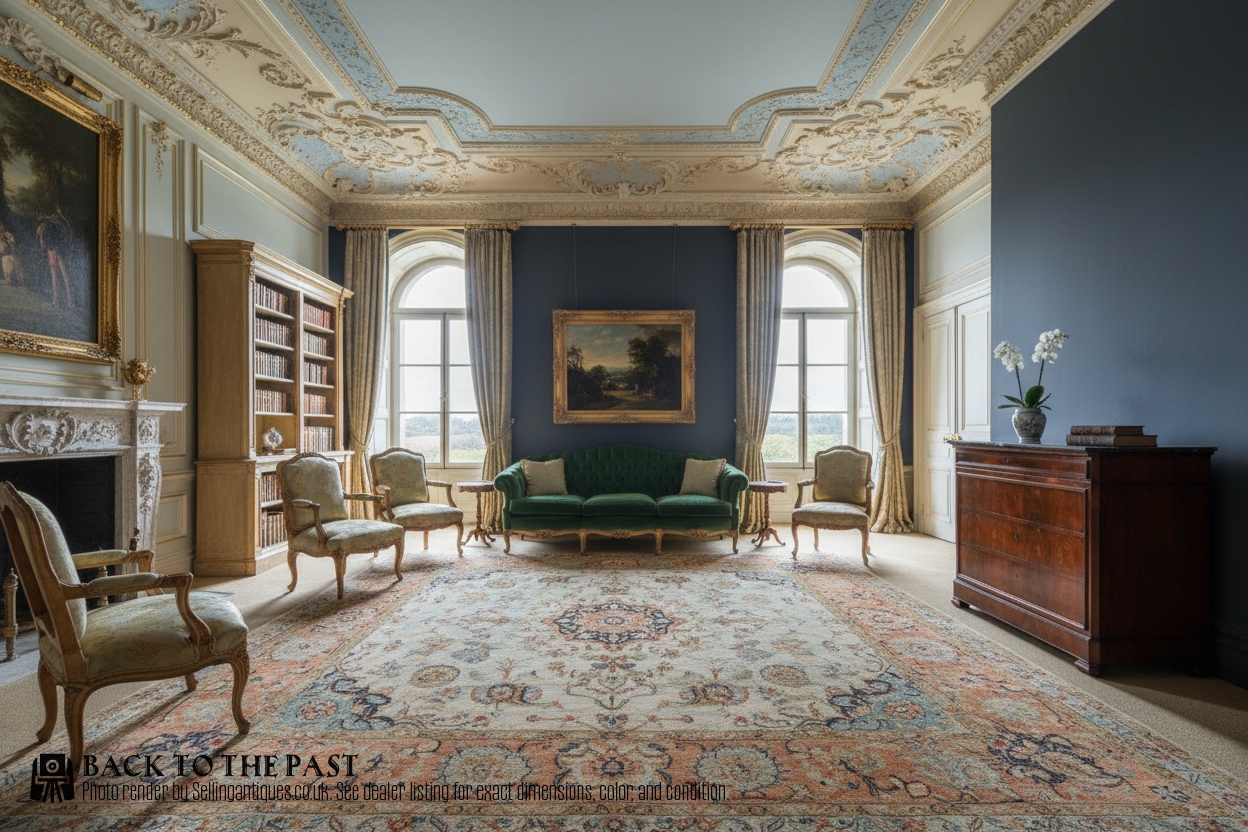
These storage pieces suit bedrooms, hallways, or living rooms where their figured timber can catch natural light. Direct sunlight should be avoided to protect the polish and prevent veneer fading.
Maintaining stable room humidity preserves the wood and prevents movement in the carcase. Allowing clearance around the piece ensures drawers operate smoothly without wall obstruction.
What is the difference between a tallboy and a chest on chest?
A chest on chest specifically describes two distinct cabinetry sections stacked together, typically combining a smaller upper chest on a wider base. This specific configuration creates substantial vertical storage.
The term tallboy often encompasses this form as well as single-carcase tall chests of drawers. Both variants offer considerable capacity while occupying a compact floor footprint.
How do I care for antique veneer?
Dusting regularly with a soft, dry cloth prevents particulate build-up on the polished flame mahogany surface. Avoid silicone-based polishes, opting instead for traditional microcrystalline wax applied sparingly.
Keep wooden furniture away from direct heat sources such as radiators to prevent veneer lifting. Addressing minor environmental changes protects the structural integrity of the timber over time.