
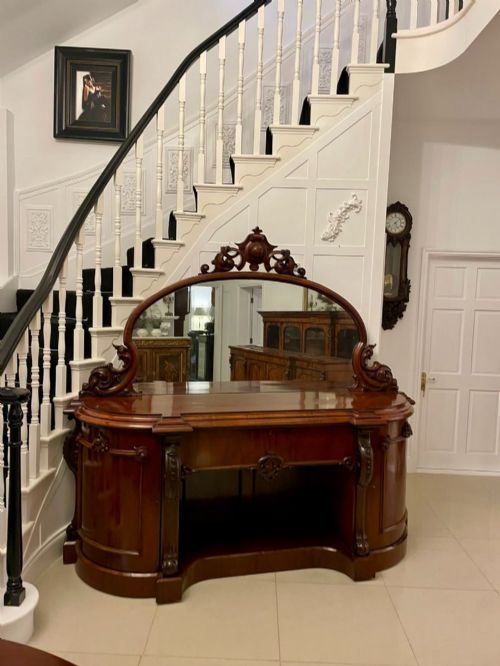
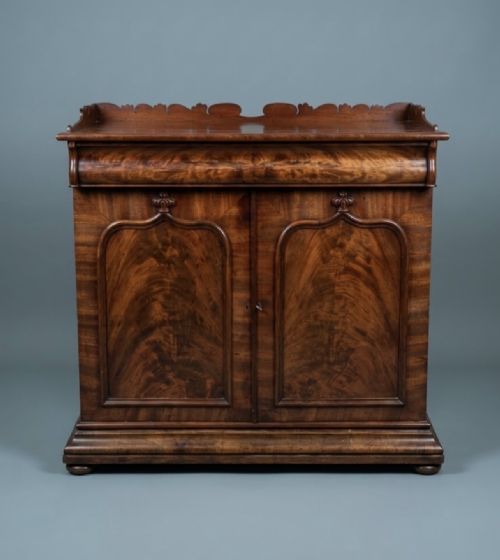
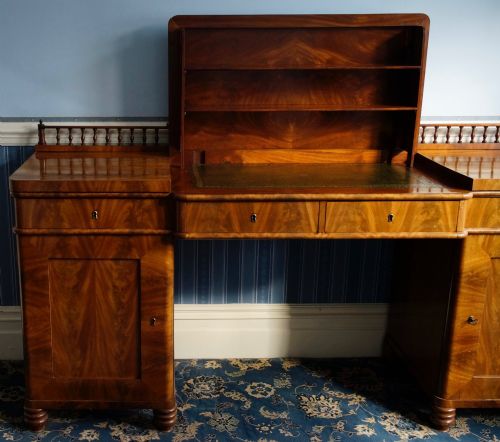
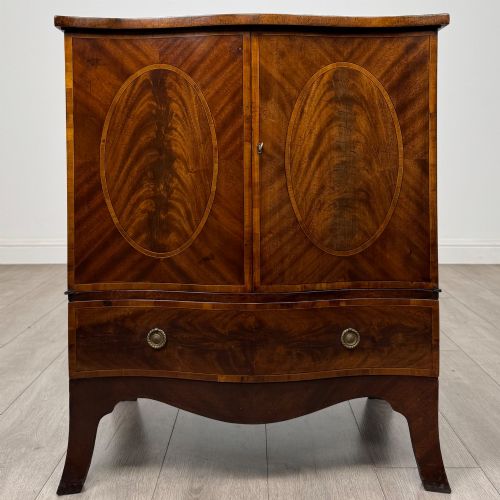
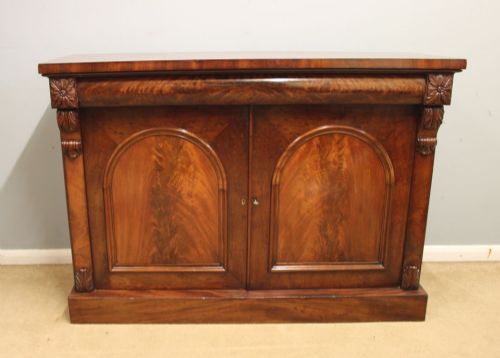
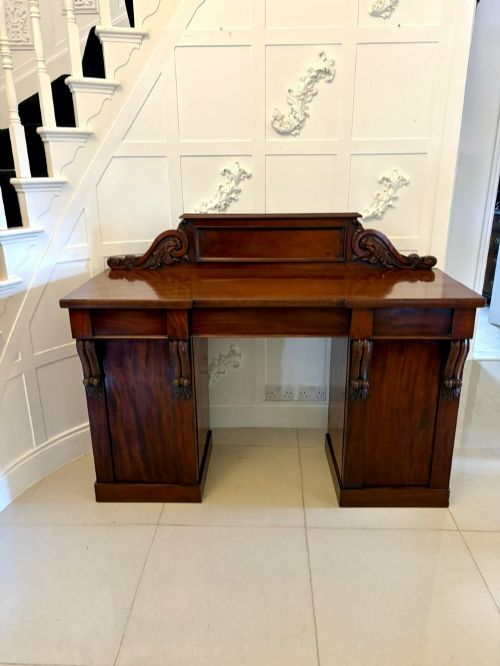
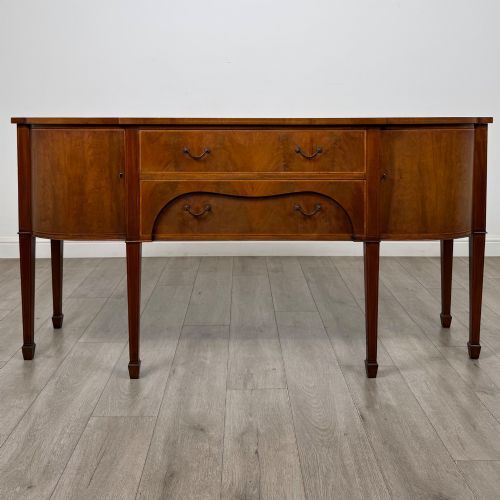
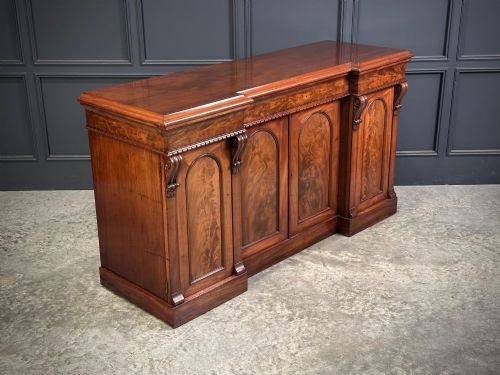
Flame Mahogany Sideboard Cabinet
A flame mahogany sideboard cabinet brings rich grain figures and practical storage to a room.
Flame Mahogany Sideboard Cabinet
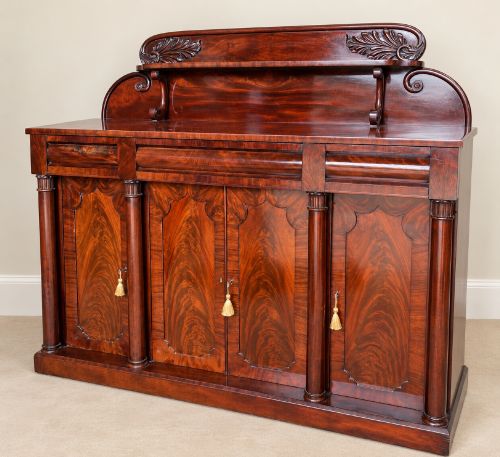
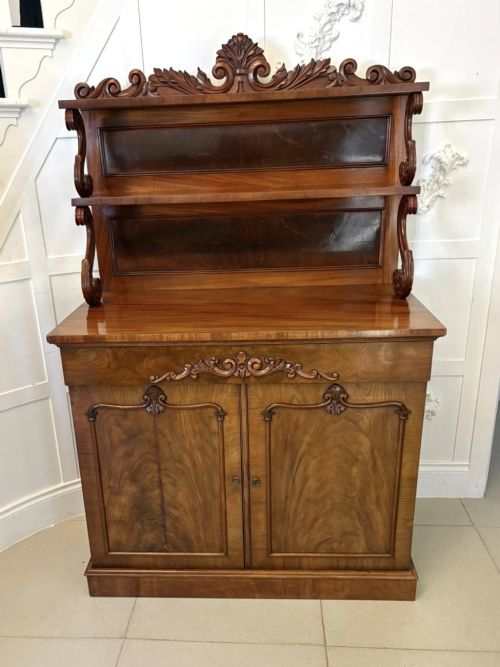
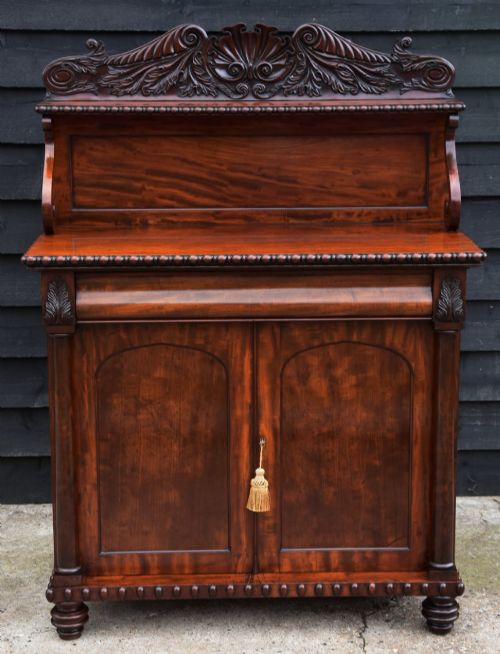
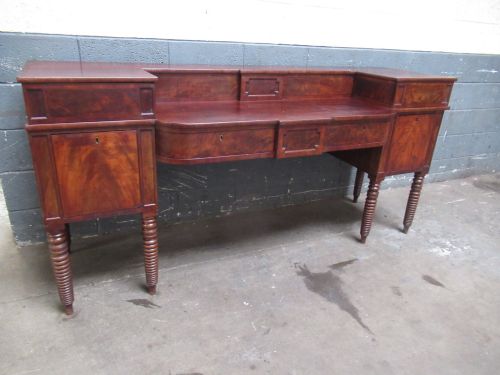
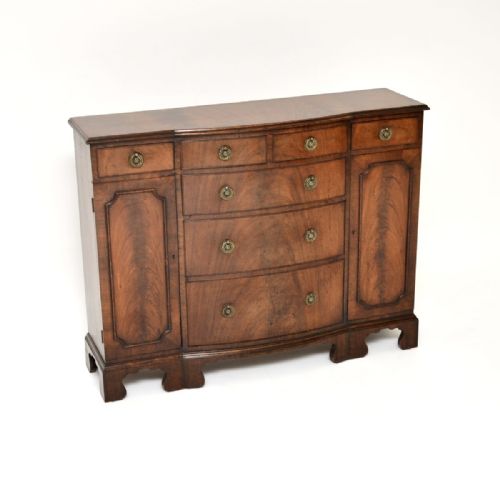
A flame mahogany sideboard cabinet combines deep storage utility with the striking visual movement of figured wood grain. When you search for a flame mahogany sideboard cabinet, you encounter forms ranging from compact Victorian chiffoniers to large breakfront servers.
The pieces on this page span the Georgian, Regency, William IV, Victorian, and Edwardian periods. Victorian examples with four doors or mirrored backs appear frequently alongside Regency and Georgian server designs.
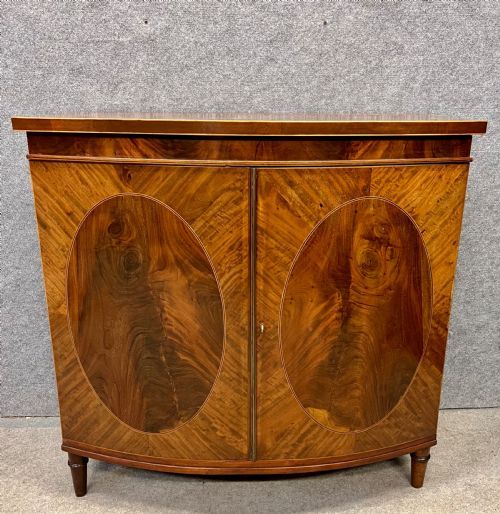
Makers utilised various formats including bow-front cabinets, two-tier pieces, and demi-lune shapes. Each object serves to anchor a dining room or hallway while providing enclosed shelving.
Assessing quality in antique cabinets
The distinction between standard examples and superior pieces rests largely on the intensity and book-matching of the flame mahogany veneer. Master cabinetmakers selected timber cuts with intense figuring and arranged them symmetrically across the doors.
Construction integrity defines the upper tier of these items, visible in heavy carcase timbers, tight dovetail joints in the drawers, and original brass fittings. Carved elements executed with sharp relief display the hand of skilled workshops rather than mass production.
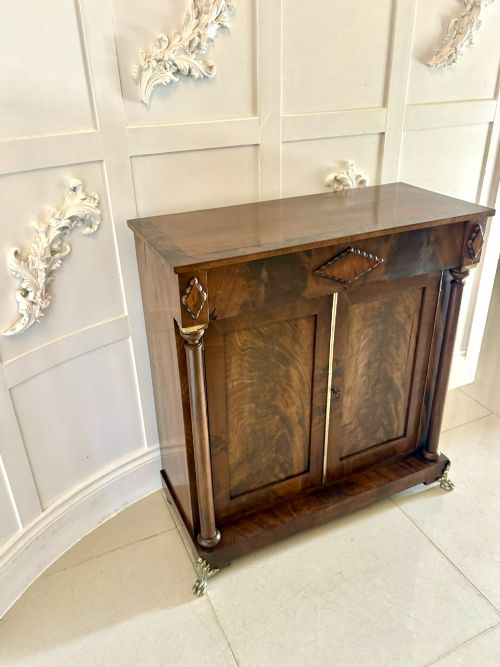
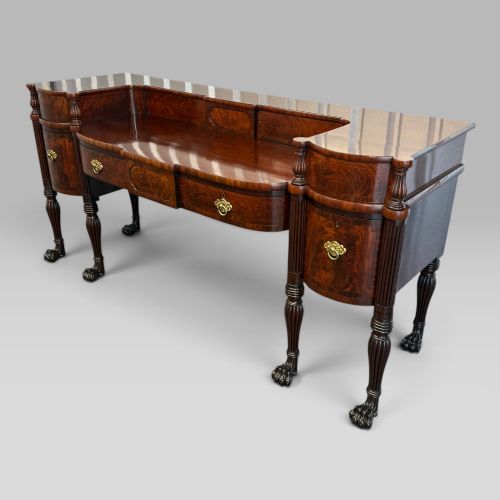
Lion paw feet stand ready to pounce across multiple centuries of dining room storage.
Gillows·Henry Dasson
The Flame Mahogany Sideboard Cabinet Glossary
- Flame mahogany veneer
- A thin slice of wood cut from the fork of a mahogany tree where the branch meets the trunk, producing a rippling, flame-like pattern. This prized timber surface defines the visual character of the cabinet.
- Chiffonier
- A low sideboard or cabinet equipped with enclosed shelves and often a raised superstructure or mirror back. Originating in the Regency period, it served dining rooms for storing silver and linen.
- Breakfront
- A large cabinet design where the central section projects forward from the flanking cupboards. This architectural layout creates depth and shadow across the front elevation.
- Demi-lune
- A half-moon shape utilised for console tables and small side cabinets designed to sit flat against a wall. The curved profile softens room geometry.
- Secretaire
- A cabinet incorporating a pull-down writing drawer fitted with small pigeonholes and letter compartments. It combines desk functionality with enclosed sideboard storage.
Flame Mahogany Sideboard Cabinet: Frequently Asked Questions
What is a flame mahogany sideboard cabinet?
A flame mahogany sideboard cabinet is a large storage piece for dining rooms and hallways, made using timber with a dramatic rippling grain pattern.
These items date predominantly from the Georgian, Regency, and Victorian eras, functioning as servers, cupboards, and enclosed shelving units.
How do I identify a Regency period cabinet?
Regency pieces often display classical architectural lines, brass inlay, or carved paw feet reflecting early nineteenth-century taste.
They tend to show restrained decoration compared to later Victorian iterations, relying on the quality of the figured mahogany itself.
Where were these cabinets placed originally?
Dining rooms formed the primary location for sideboards and chiffoniers, where households stored heavy china, silver, and table linens.
Smaller side cabinets also found use in hallways and drawing rooms as display surfaces for decorative objects.
How should I care for flame mahogany wood?
Protect antique timber surfaces by keeping them away from direct sunlight and maintaining stable room humidity to prevent veneer lifting.
Apply natural beeswax periodically to nourish the grain and preserve the deep reddish-brown polish.