
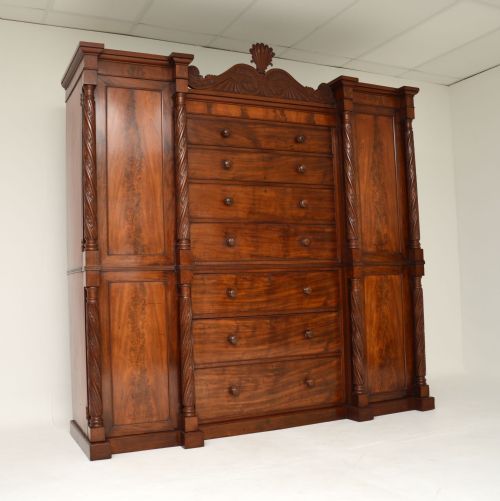
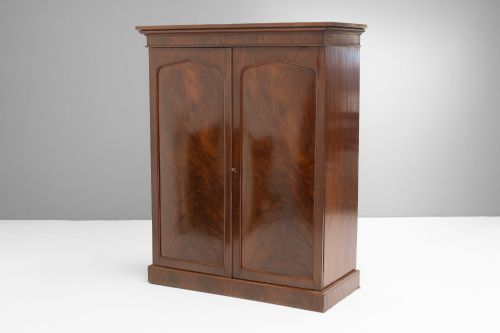
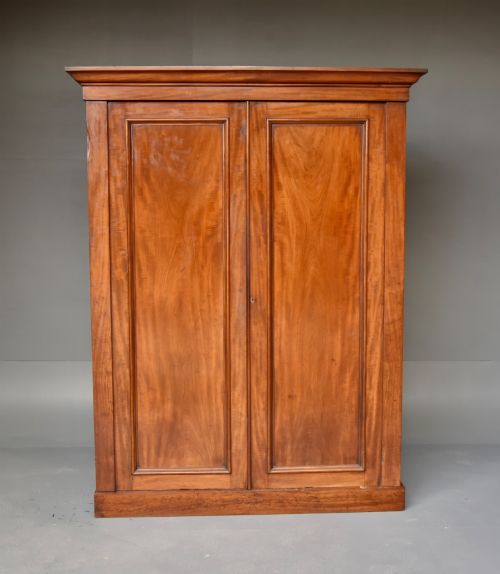
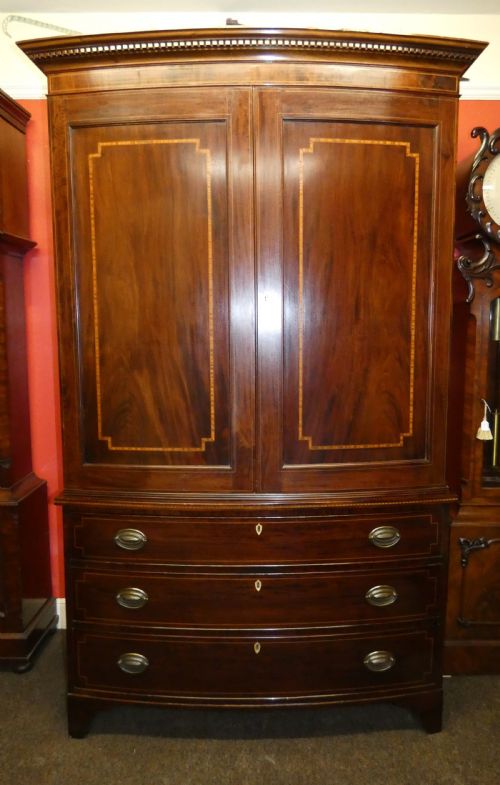
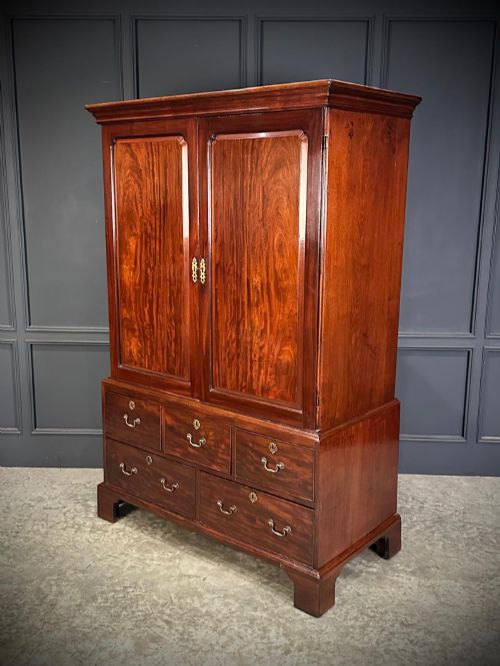
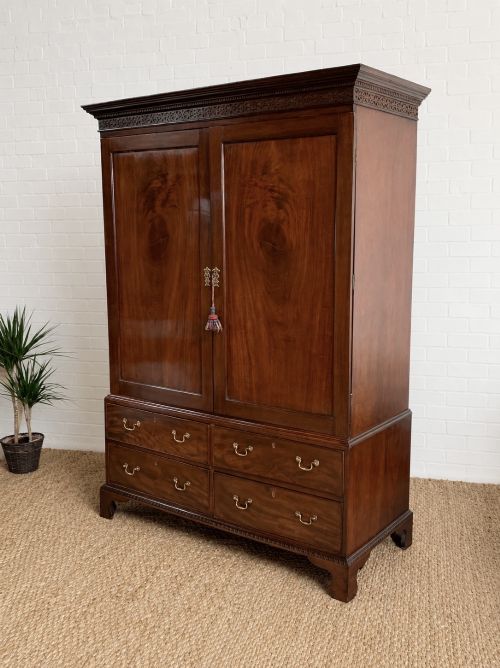
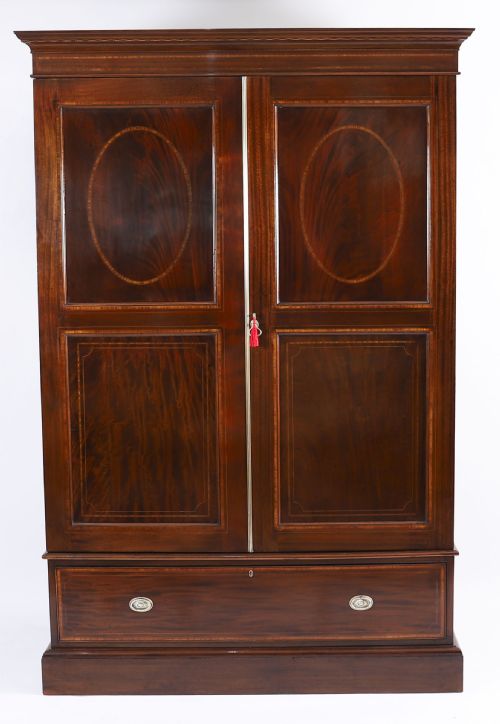
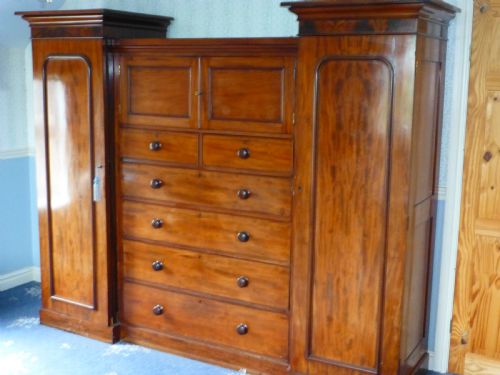
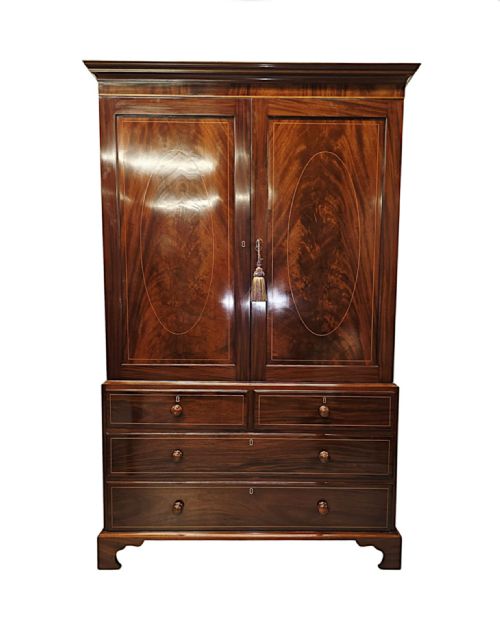
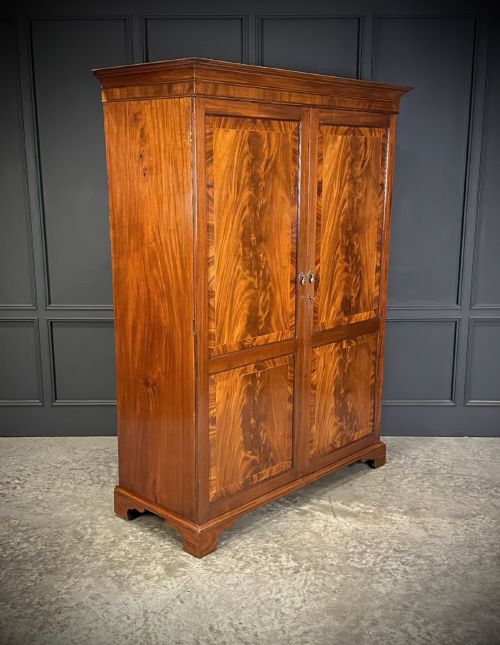
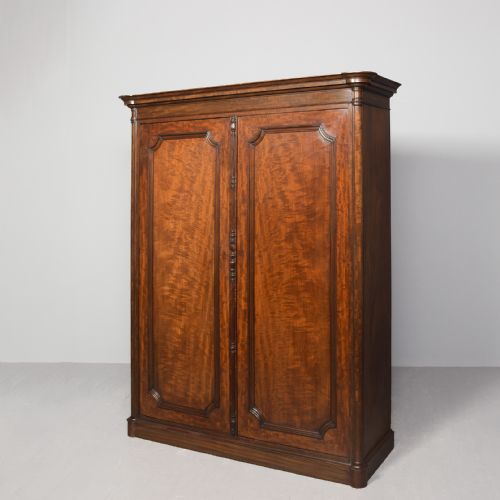
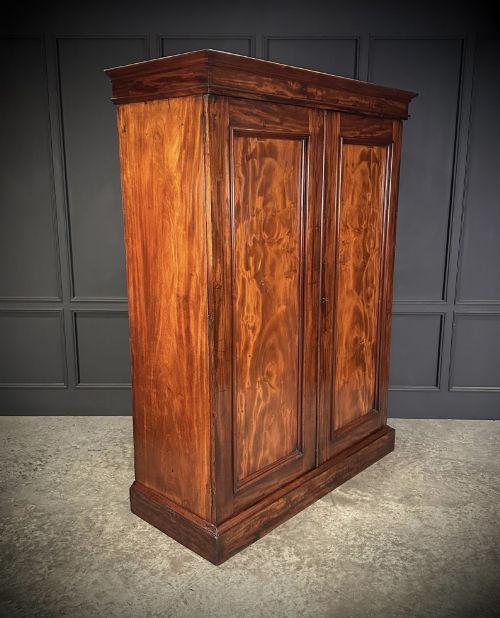
Flame Mahogany Press
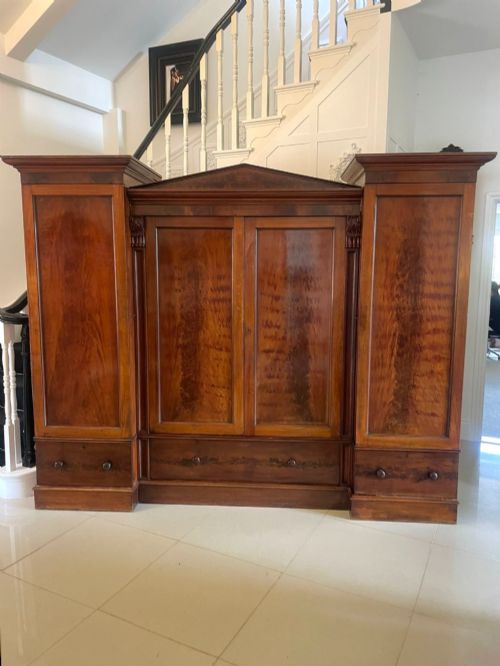
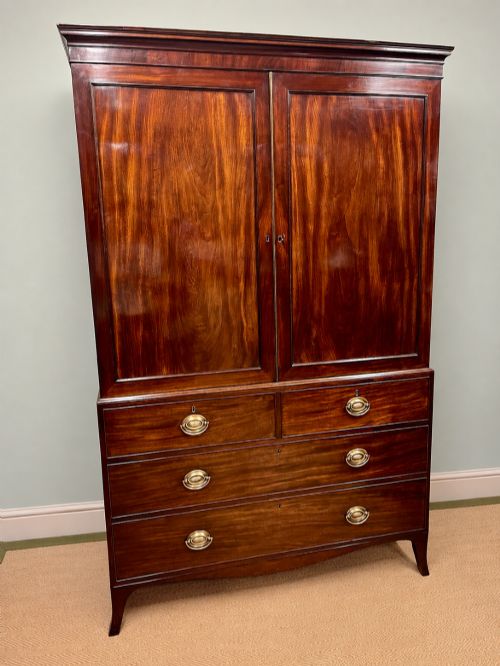
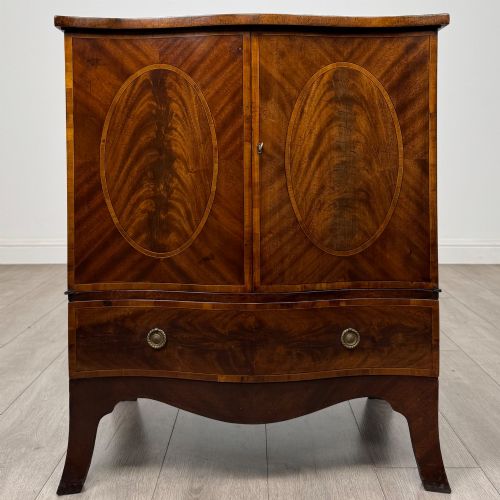
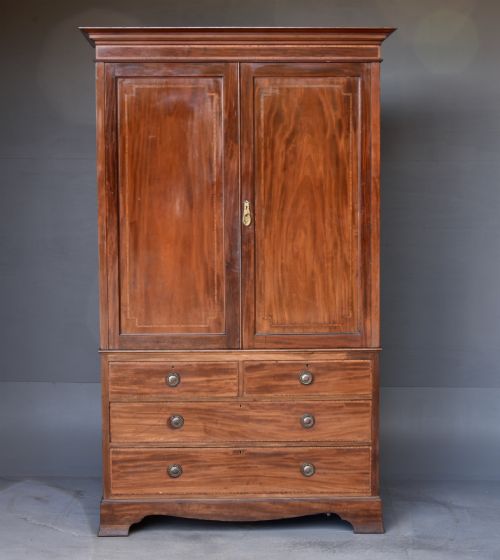
When you look for a flame mahogany press, you seek a commanding piece of furniture defined by swirling timber grain and deep storage capacity.
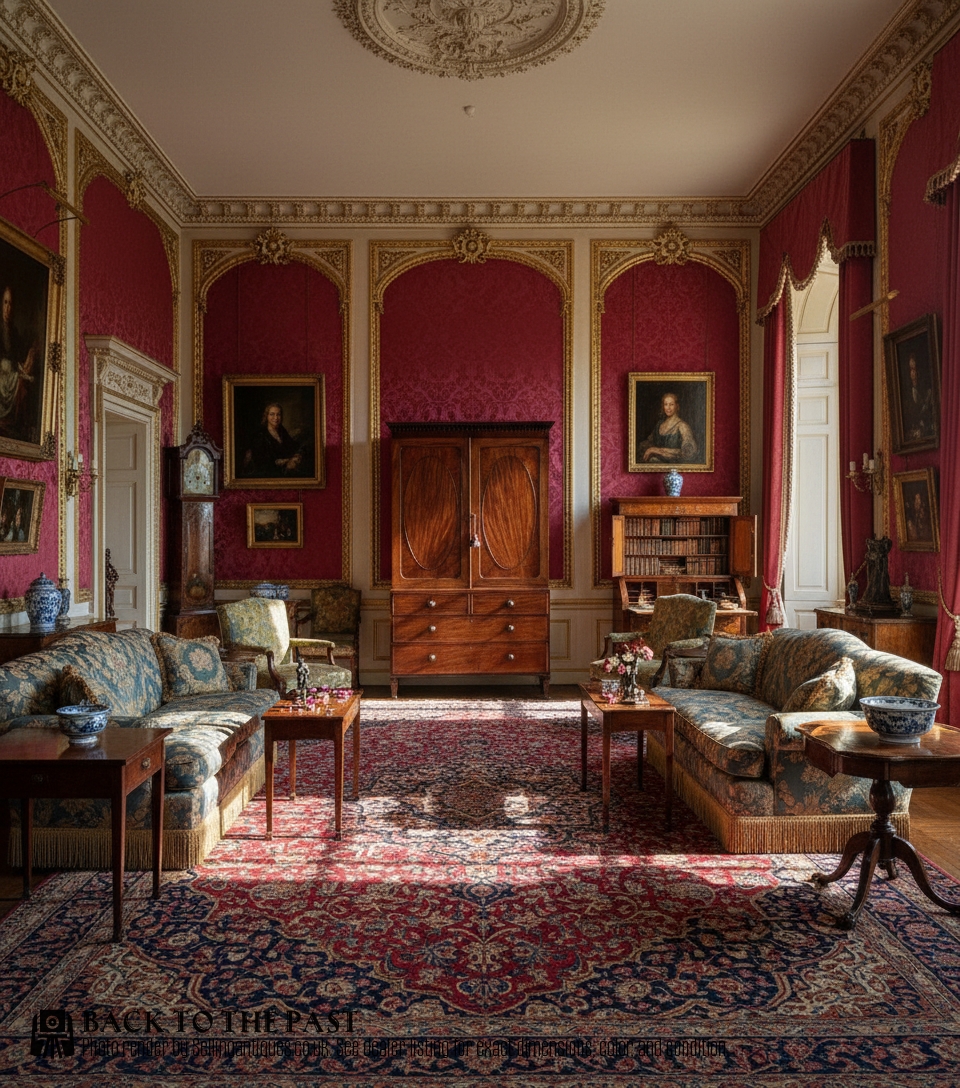
Flame Mahogany Press
A flame mahogany press is a substantial storage piece historically used for linen and clothing, combining upper cabinet doors with a chest of drawers beneath.
The versions most common on this page date from the Georgian, Regency, and Victorian periods, often appearing as tall linen presses or compact wardrobes.
These pieces originated in fine country houses and town residences, designed to house textiles securely while displaying the dramatic figure of the wood in a principal room.

How they were made
Cabinet makers applied highly figured flame mahogany veneer over solid secondary timbers such as oak, cutting the veneer from the fork of the mahogany tree to achieve swirling, fiery patterns.
Detailing often included contrasting inlay such as boxwood and satinwood, alongside functional brass hardware and glass elements on related bookcase variants.
Structural integrity relied on traditional joinery within large carcases, supporting heavy cornice mouldings and internal linen slides or hanging spaces.
Several presses retain faint traces of old lavender scent tucked deep inside the linen slides from generations past.
What varies in quality
The visual strength of the timber figure dictates much of the distinction, separating standard cabinet work from examples with continuous, book-matched flame patterns across every drawer and door.
Proportion and scale also separate pieces, with smaller country house proportions and restrained architectural cornices commanding greater design interest than utilitarian alternatives.
The precision of secondary details, such as blind fretwork cornices and crisp inlay work, marks the hand of superior workshops.
maples & co·Gillows·S & H Jewell·Heals·DENBY & SPINKS
The Flame Mahogany Press Glossary
- Flame mahogany veneer
- A thin slice of wood cut from the point where a branch joins the trunk, yielding a rippling, flame-like pattern. This veneer forms the primary visual draw of the furniture.
- Linen press
- A tall cupboard traditionally fitted with sliding trays for storing household linen rather than hanging clothes. Later examples often saw these internal trays converted for modern wardrobe use.
- Compactum
- A multi-functional wardrobe combining hanging space, drawers, and linen slides within a single unified carcase. These pieces offer varied internal storage configurations.
- Blind fretwork
- Carved ornamentation applied to a flat surface in imitation of pierced fretwork, often seen along the cornices of Georgian pieces. It adds texture without cutting through the wood.
- Bracket foot
- A simple structural foot supporting the corners of case furniture, shaped from a single piece or mitred at the corner. It lifts the heavy body of the press slightly off the floor.
Flame Mahogany Press: Frequently Asked Questions
What is inside a flame mahogany press?
Inside the upper section you typically find sliding wooden trays originally intended for folded linen, whilst the lower section incorporates a chest of drawers.
Many surviving pieces have had these internal trays altered to create a standard hanging wardrobe for modern clothing requirements.
How do I date a flame mahogany press?
Dating relies on stylistic clues such as the architectural cornices of George III pieces, the bolder veneers of Regency and William IV examples, and the heavier proportions of Victorian work.
Construction methods inside the drawers and the choice of secondary timbers also help confirm the period of manufacture.
Where should I place a press?
Because of their height and deep footprint, these presses suit large bedrooms, dressing rooms, or wide hallways where they can stand flat against a sturdy wall.
Ensure the room maintains stable humidity to protect the delicate veneer from drying out or lifting over time.