
Mahogany Cupboard Wardrobe
When you search for a mahogany cupboard wardrobe, you are looking at substantial antique storage furniture built to hold linen, garments and household provisions.
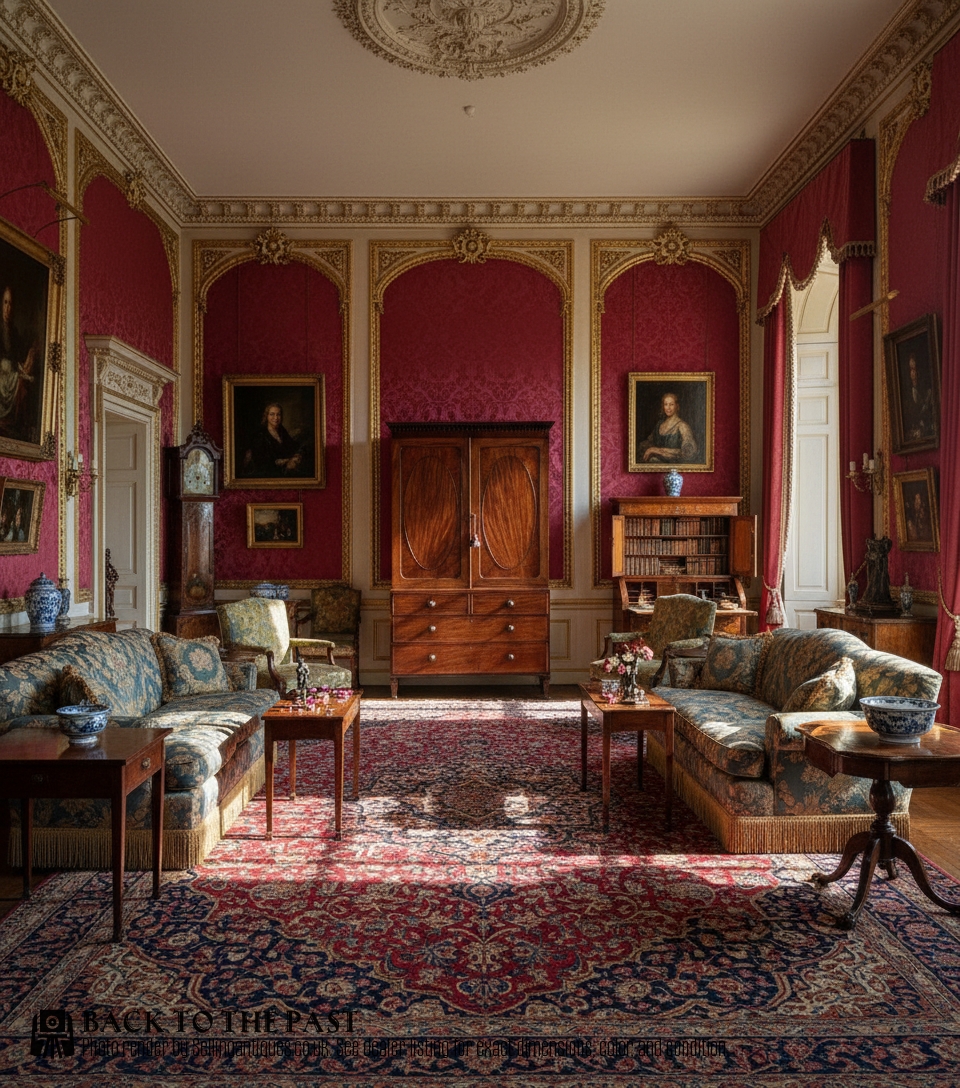
Mahogany Cupboard Wardrobe
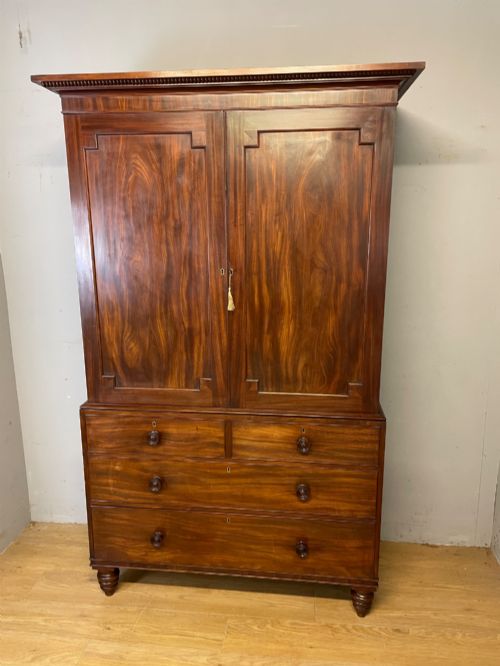
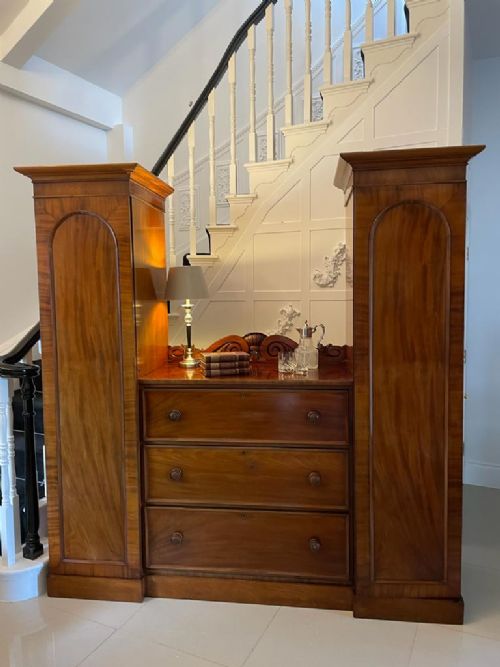
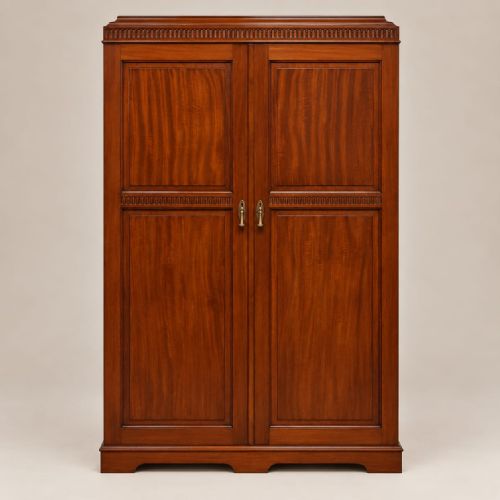
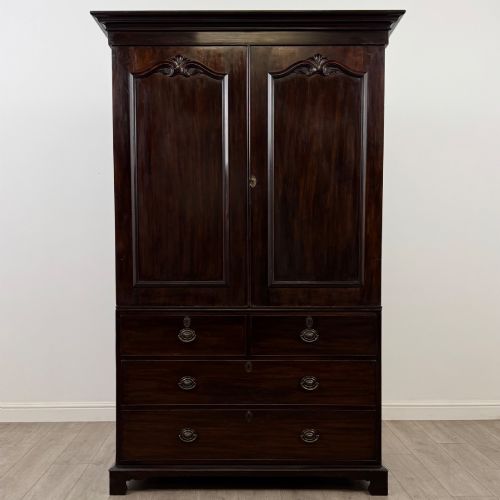
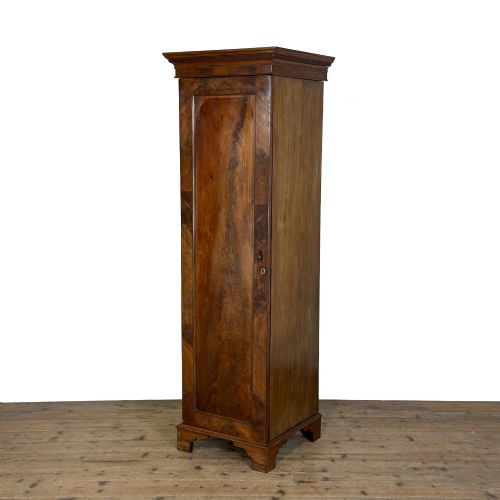
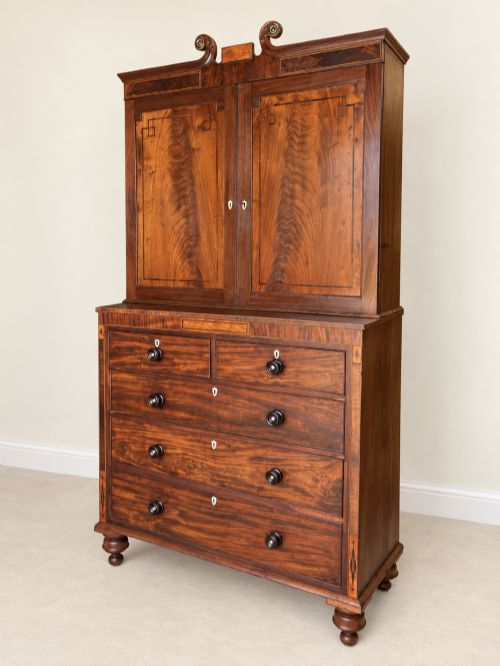
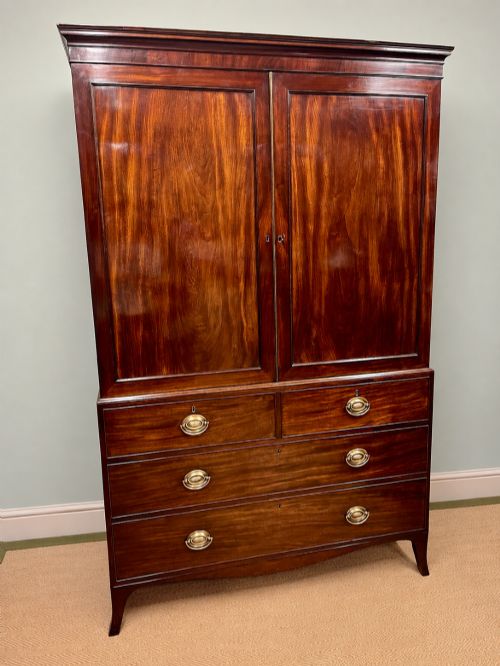
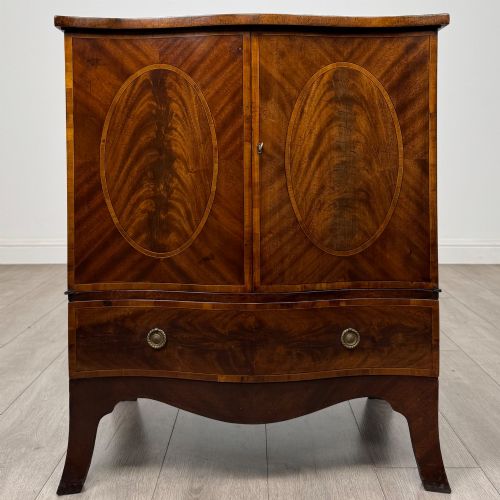
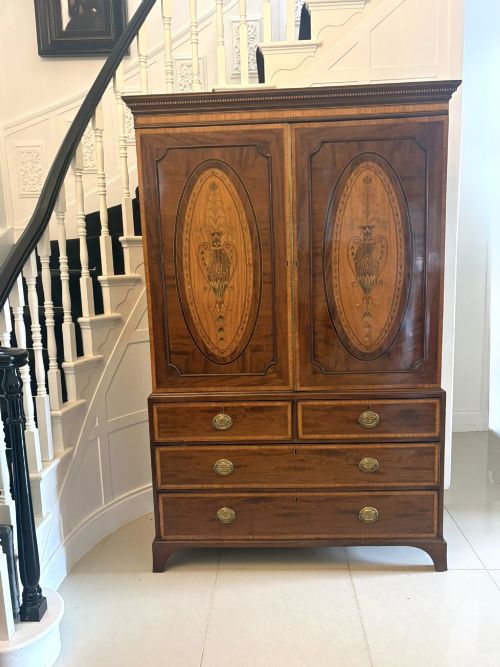
A mahogany cupboard wardrobe combines the enclosed shelving of a linen press with the hanging space of a traditional wardrobe, originating primarily from the Georgian, Victorian and Edwardian eras. These large storage items encompass gentleman's wardrobes, tallboys, compactums and breakfront linen presses designed for domestic utility.
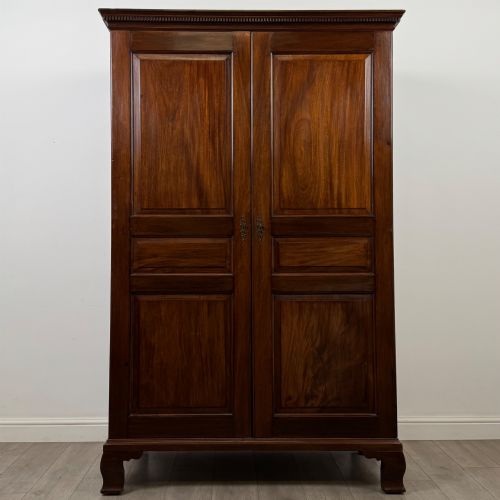
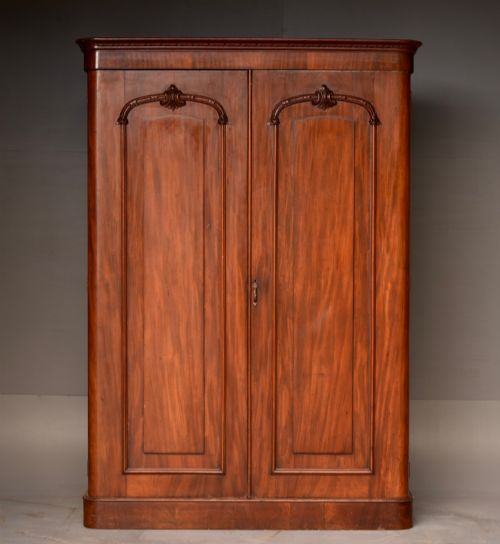
The version you are most likely to encounter on this page is the 19th-century or Edwardian double wardrobe, frequently featuring panelled doors and internal sliding trays or hanging rails. Georgian examples tend to present architectural cornices and lower drawer chests, while later Victorian and Edwardian iterations often scale up into triple compartments or combination units.
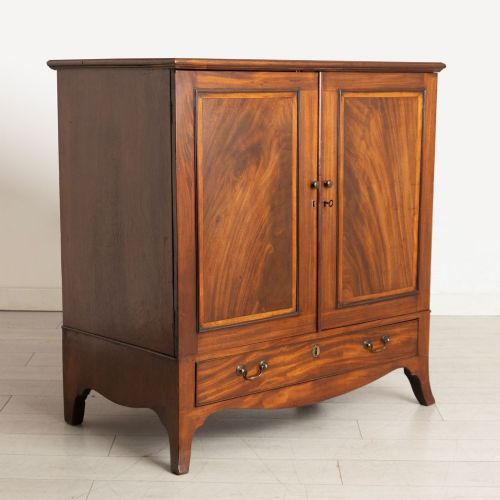
Makers and workshops constructed these large pieces to anchor the bedroom or dressing room, utilising dense timbers to support substantial depths and heights. Buyers find everything from dwarf press cupboards to large breakfront presses, reflecting the changing domestic storage demands of the eighteenth, nineteenth and early twentieth centuries.
How they were made
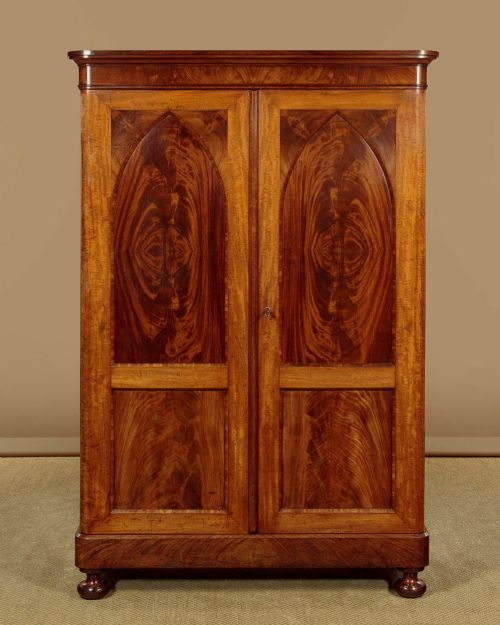
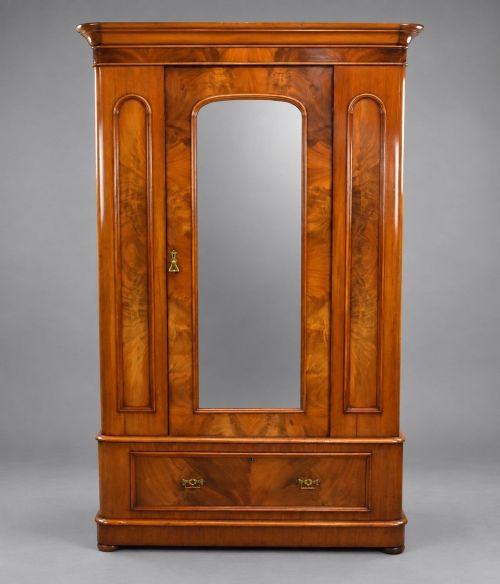
Cabinet makers relied heavily on solid mahogany and flame mahogany veneer, often laid over secondary structural timbers such as oak to ensure stability across wide panel doors. The rich grain patterns were carefully selected and matched to create striking symmetrical fronts on the primary display surfaces.
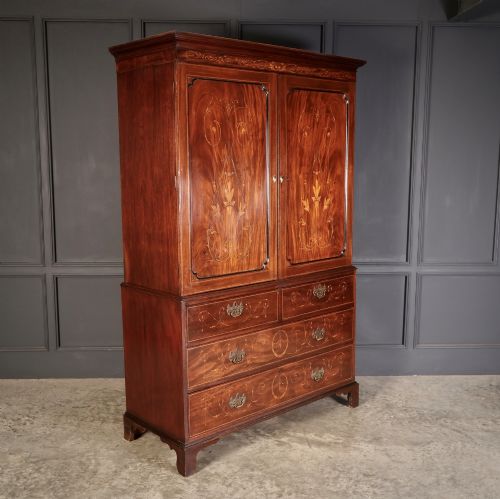
Decorative detailing involved contrasting timbers like satinwood and boxwood inlay, alongside carved elements such as blind fretwork cornices. Brass hardware, including drop handles, escutcheons and lock plates, secured the heavy doors and drawers while adding metallic contrast to the dark timber.
Construction techniques prioritized modular design in larger pieces, allowing massive linen presses and compactums to be disassembled for transport and reassembled in upper chambers. Drawer linings typically utilised secondary woods like oak or pine, joined with hand-cut dovetails that evidence traditional workshop craftsmanship.
Listings feature mahogany cupboard wardrobes spanning the Georgian, Regency, William IV, Victorian, and Edwardian periods.
What varies in quality
The tier of a piece depends significantly on the choice of timber figure, with striking flame mahogany veneer or plum pudding mahogany elevating a cabinet above plain stock. Master craftsmen selected grains with care, whereas lesser pieces utilised uniform, unfigured boards.
Proportion and architectural detailing distinguish finer examples, such as those with crisp blind fretwork cornices, precise satinwood stringing and well-executed boxwood inlay. Simpler provincial items often lack these refined decorative flourishes, relying purely on the natural warmth of the timber.
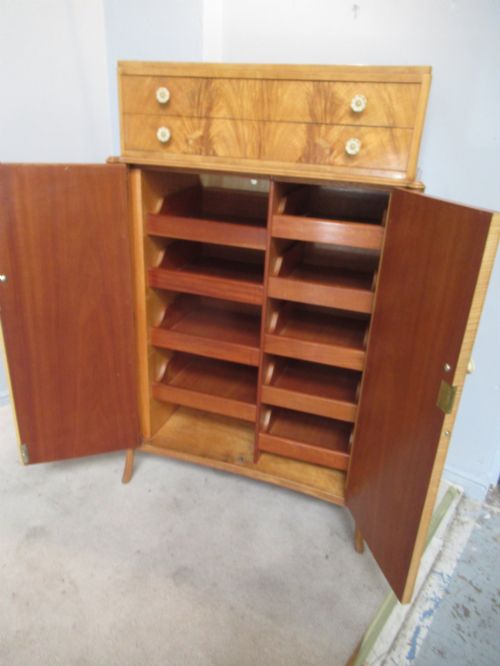
Internal configuration and joinery integrity define the upper echelon of these cabinets, seen in smooth-running sliding linen trays and robust dovetailing. Pieces that retain original brass hardware and functional locking mechanisms command greater appreciation among collectors.
maples & co·Druce & Co.
The Mahogany Cupboard Wardrobe Glossary
- Linen Press
- A tall storage cabinet featuring upper sliding trays for folded textiles and lower drawers for bulkier garments. These items formed an essential part of Georgian and Victorian domestic storage before hanging wardrobes became dominant.
- Compactum
- A multi-functional wardrobe designed to maximise internal storage by combining hanging space, drawers, and shelving within a single footprint. These units appeared frequently during the Victorian and Edwardian periods.
- Flame Mahogany
- A wood veneer cut from the fork of the mahogany tree to produce a distinctive, flickering, flame-like pattern. Cabinet makers utilised this decorative grain on prominent exterior surfaces to catch the light.
- Blind Fretwork
- Carved ornamentation applied to a flat wooden surface in a continuous geometric or interlaced pattern without piercing through to the back. This technique frequently decorated the cornices of finer 18th-century pieces.
- Gentleman's Wardrobe
- A specialised clothing cabinet designed for male attire, typically incorporating shirt slides in the upper section and deeper drawers below. These units date primarily from the Georgian and Victorian eras.
Mahogany Cupboard Wardrobe: Frequently Asked Questions
What is a linen press wardrobe?
A linen press wardrobe is a tall cabinet that divides its storage between sliding internal trays above and graduated drawers below. It served as the primary storage unit for household textiles and folded garments before full-length hanging space became standard.
These pieces often feature double doors enclosing the upper trays, resting upon a chest base. They span the Georgian and Victorian periods, offering deep storage capacity for modern bedrooms.
How do I tell a Georgian wardrobe from a Victorian one?
Georgian wardrobes and linen presses typically display architectural cornices, bracket feet, and refined stringing or inlay work. Their proportions tend to be slender and classical, reflecting 18th-century design principles.
Victorian examples generally appear heavier and more robust, often utilising solid figured mahogany with plinth bases and rounded corners. They frequently incorporate hanging rails as clothing fashions shifted away from folded storage toward garments hung on coat hangers.
Will an antique wardrobe dismantle for moving?
Many large antique wardrobes and linen presses were constructed to break down into modular sections for transport into upper rooms. This typically includes a detachable cornice, separate door and side panels, and a base chest.
However, smaller hall cupboards and single-door wardrobes often remain as solid, non-demountable units. Checking the construction reveals whether the side panels bolt into corner posts or remain permanently fixed.
Where should I place a mahogany cupboard wardrobe?
A mahogany cupboard wardrobe requires a stable environment away from direct heat sources and strong sunlight, which can dry out timber and fade flame mahogany veneer. Allowing sufficient clearance around the doors ensures they open fully without striking adjacent walls.
Because these cabinets possess significant height and depth, anchoring them securely to a wall provides stability, particularly in older properties with uneven floors.