

English Mahogany Cupboard
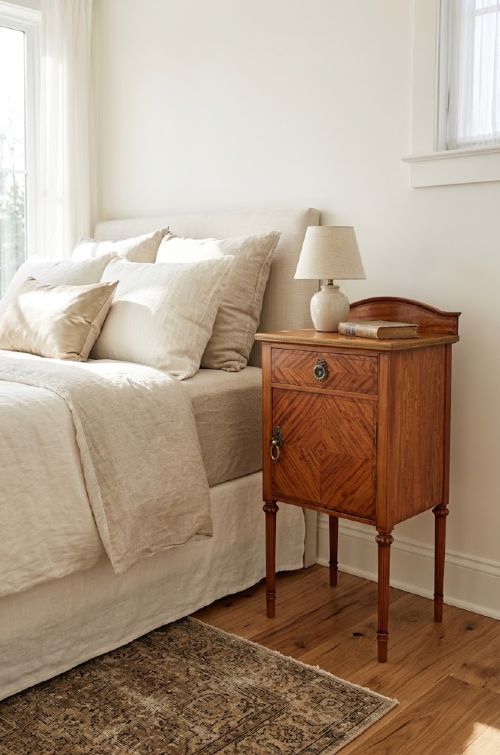
An English mahogany cupboard brings warmth and architectural presence to a room, ranging from small bedside nightstands to towering linen presses.

English Mahogany Cupboard
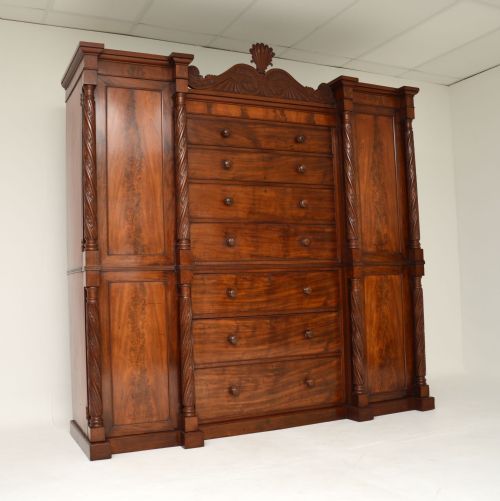
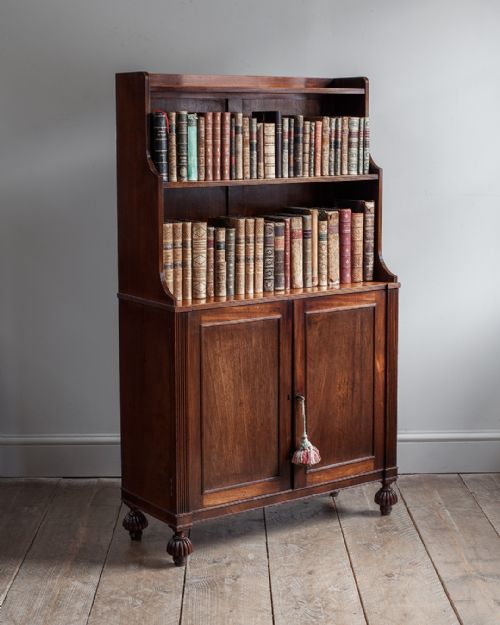
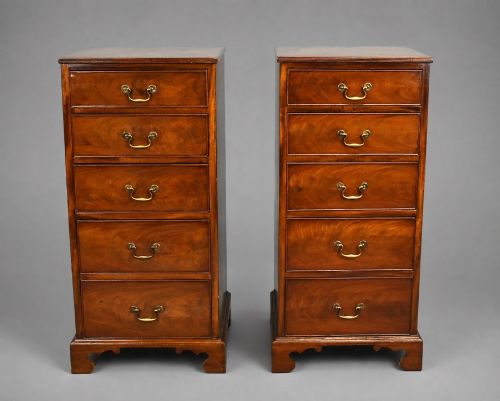
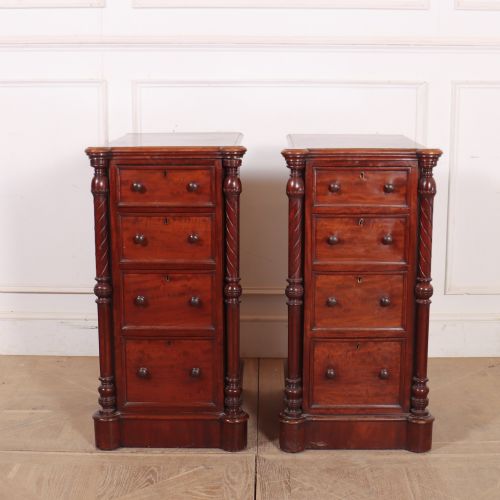
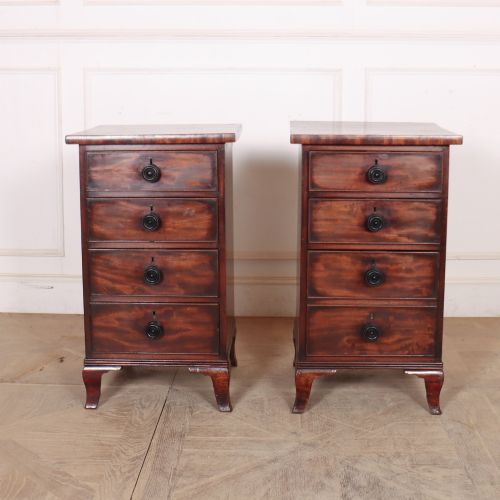
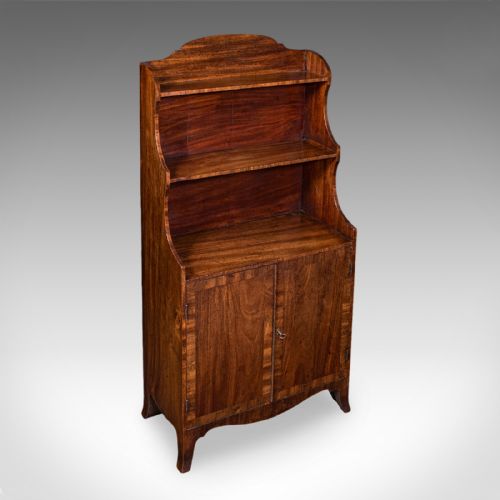
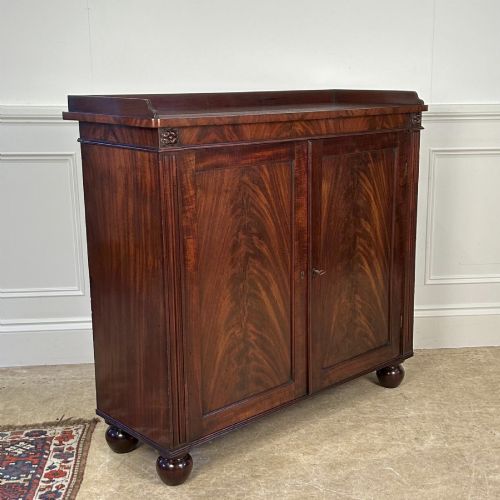
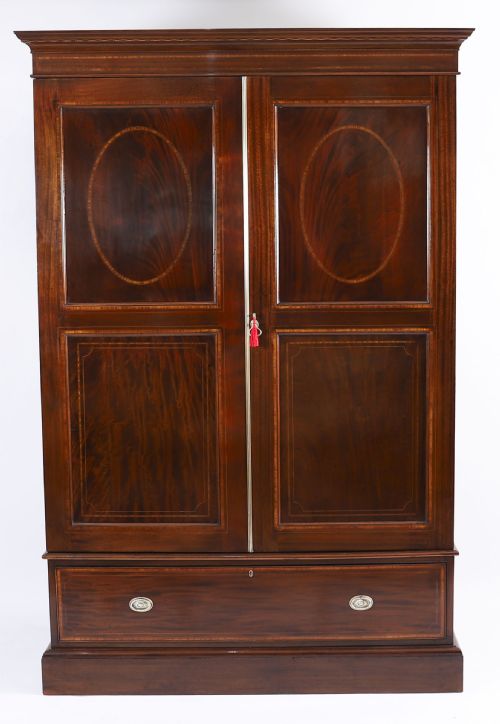
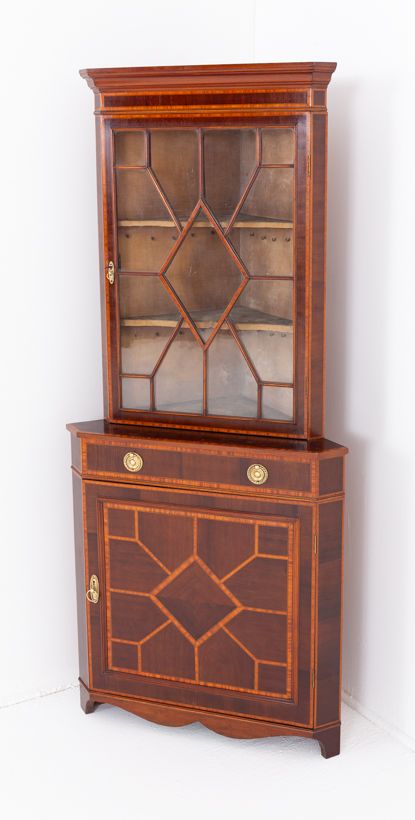
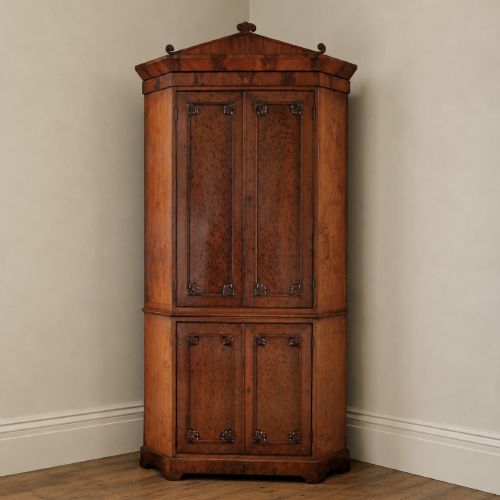
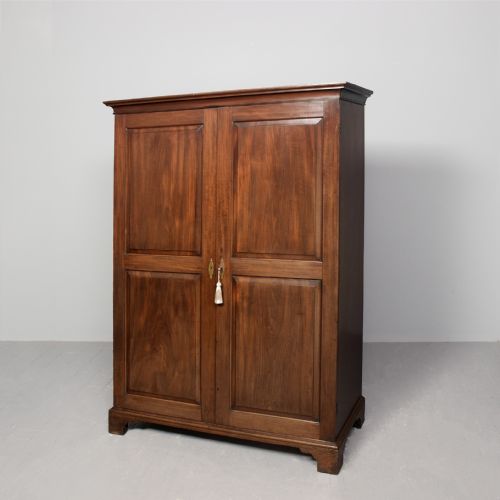
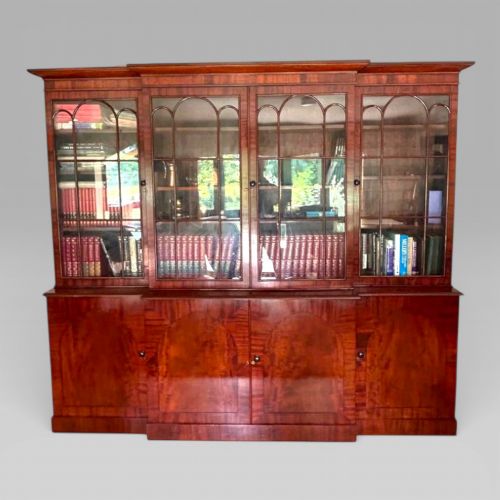
An English mahogany cupboard encompasses a broad variety of domestic storage forms spanning several centuries of British cabinet making. The selection on this page includes compact bedside nightstands, corner cabinets, large library bookcases, and substantial linen presses.
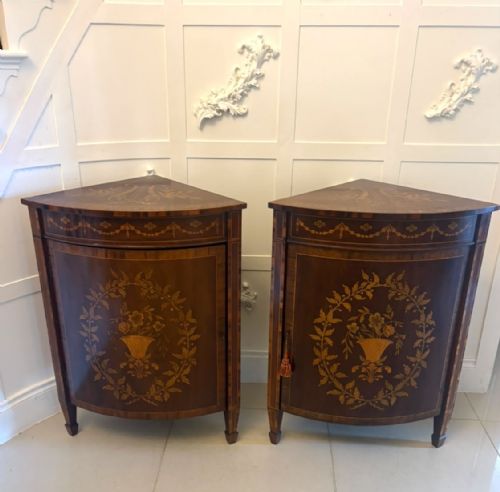
Georgian, Regency, and Victorian pieces dominate the selection, accompanied by later Edwardian interpretations in the Sheraton Revival style. Buyers frequently encounter wall-hanging corner cupboards, bedside pot cupboards, and tall floor-standing wardrobes.
Origins trace through workshops operating from the eighteenth century into the early twentieth century. Pieces reflect the prevailing architectural tastes of each distinct period, from strict Georgian symmetry to robust William IV proportions.
Materials and Construction
Makers utilised solid mahogany and applied flame mahogany veneer over secondary timbers such as oak to achieve striking grain patterns. Brass hardware, glass panes for glazed doors, and satinwood or marquetry inlay provide functional and decorative contrast.
Construction methods relied on traditional joinery, including dovetail joints for drawers and mortise and tenon frames for doors. Timber selection prioritized rich figure, particularly in flame and plum pudding varieties.
Listings feature eighteenth-century hanging cupboards alongside twentieth-century Sheraton Revival inlaid corner cabinets and Edwardian satinwood bedside nightstands.
Evaluating the Build
Quality rests in the selection of the timber grain, the precision of the veneer matching, and the integrity of the structural joinery. Superior pieces display continuous, highly figured mahogany across prominent surfaces without awkward patches.
Secondary details such as original brass handles, working locks with keys, and uncompromised internal shelving elevate a piece. The crispness of carved mouldings and inlaid stringing distinguishes master workshops from standard production.
Gillows·Edwards and Roberts·S and H Jewell·Lidstone London
The English Mahogany Cupboard Glossary
- Flame mahogany
- A veneer cut from the fork of the tree where branches meet the trunk, producing a distinctive flickering flame pattern. Cabinet makers reserved this highly decorative timber for primary door panels and drawer fronts.
- Linen press
- A tall storage piece comprising upper sliding shelves for textiles above a chest of lower drawers. These items served a primary role in storing household linen before fitted wardrobes became standard.
- Pot cupboard
- A small bedside cabinet designed originally to house a chamber pot. These pieces frequently feature a single door and sometimes an enclosed compartment.
- Crossbanding
- A narrow strip of veneer laid around the border of a panel with the grain running perpendicular to the centre. This technique frames the primary timber and demonstrates detailed craftsmanship.
- Chiffonier
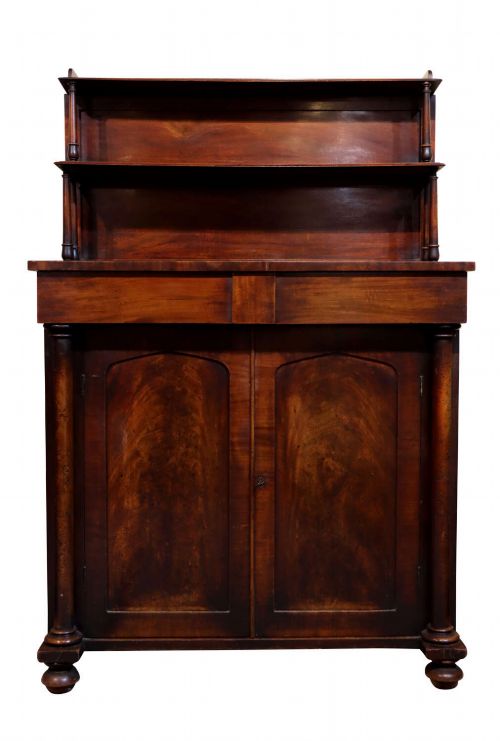
- A low sideboard or cabinet developed during the Regency and Victorian periods equipped with lower doors and sometimes a shelf superstructure. They served dining rooms and parlours for storage and display.
English Mahogany Cupboard: Frequently Asked Questions
How do I date an English mahogany cupboard?
Dating relies on architectural styling, construction techniques, and timber characteristics. Georgian pieces often display clean classical lines, while Victorian examples lean toward heavier proportions and darker finishes.
Secondary woods inside drawers also help determine age, as oak gave way to deal and pine in later periods. Examining the hand-cut dovetails and backboards provides further chronological clues.
Where should I place a corner cabinet?
Corner cabinets suit empty room junctions where standard rectangular furniture wastes space. Wall-hanging versions anchor above desks or tables, while floor-standing models fill empty architectural angles.
They function effectively in dining rooms for displaying porcelain or in hallways for supplemental storage. Ensure the wall angles match the square or bow-front geometry of the specific cabinet.
What is the difference between a chiffonier and a sideboard?
A chiffonier is typically smaller and more compact than a traditional sideboard, often featuring enclosed cupboards beneath a low surface or a small shelf superstructure. They emerged in the Regency period for smaller dining spaces.
Sideboards span a wider floor footprint and prioritize extensive drawer and cabinet combinations for serving food and storing dining silver. Both utilise rich mahogany veneers across their primary facades.
How do I care for antique mahogany wood?
Maintain antique mahogany by keeping it away from direct heat sources and strong sunlight, which fades the rich reddish-brown tone. Dust regularly with a soft, dry cloth rather than applying silicone-based polishes.
Feed the timber periodically with traditional wax to nourish the grain and preserve the surface sheen. Handle doors and drawers carefully to protect historic joinery and original brass fittings.