




Carved Mahogany Clothes Press
A carved mahogany clothes press offers generous architectural storage built from rich timber, bringing period character and practical depth to a bedroom.

Carved Mahogany Clothes Press
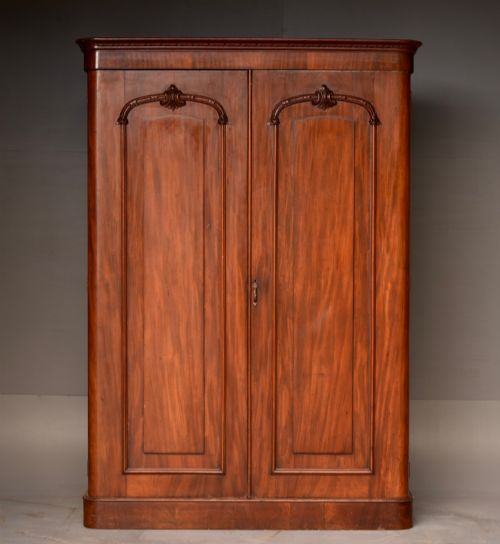
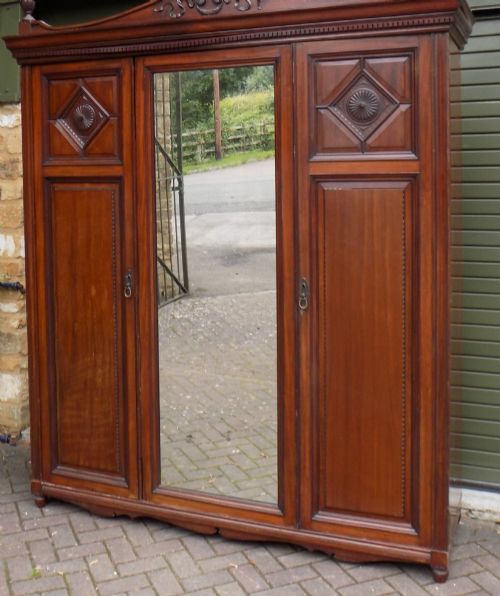
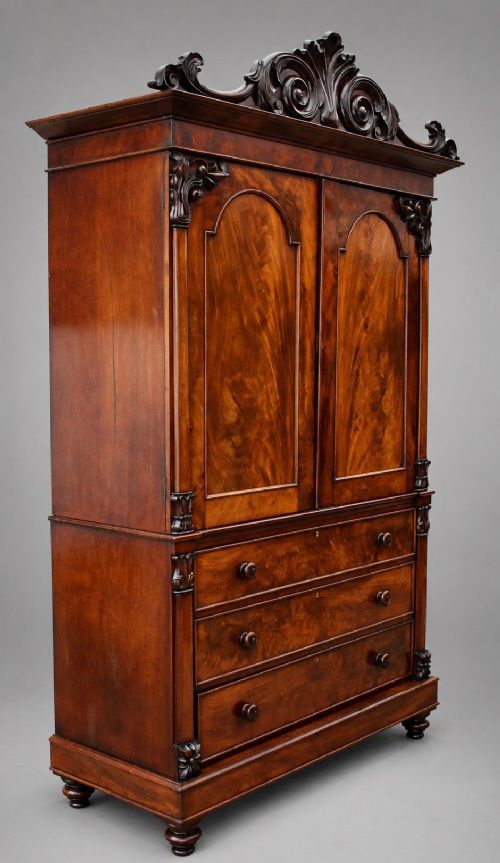
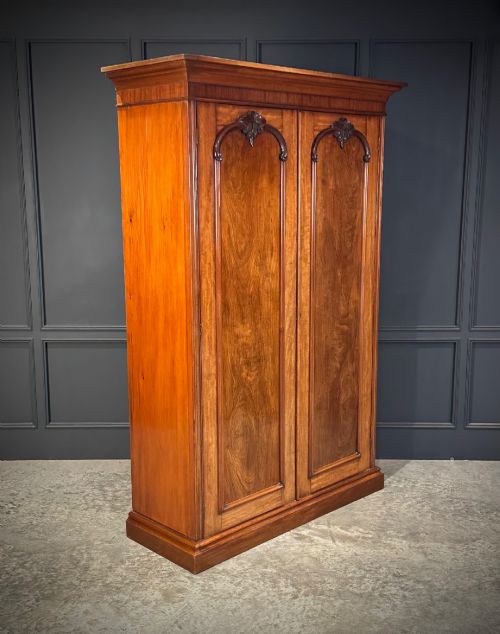
A carved mahogany clothes press is a substantial storage piece designed to hold garments and household linens, appearing across periods from George III through the Victorian and Edwardian eras. Buyers searching this phrase encounter tall wardrobes, compactums, and linen presses equipped with sliding trays, hanging space, and internal drawers.
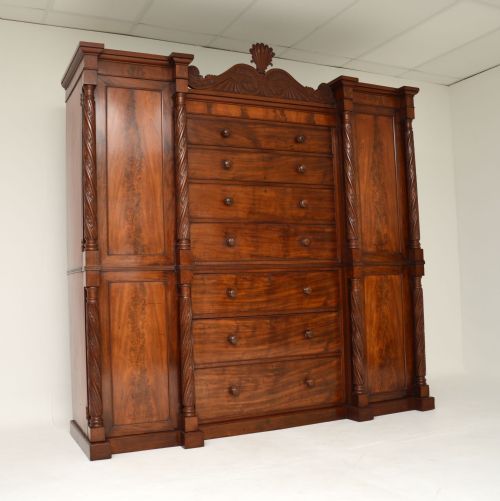
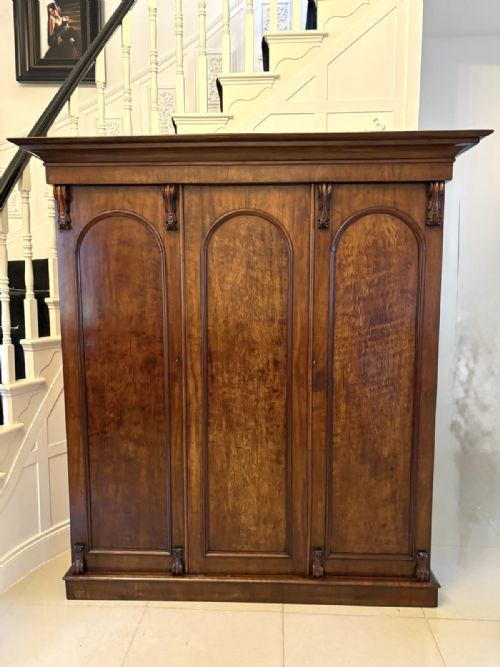
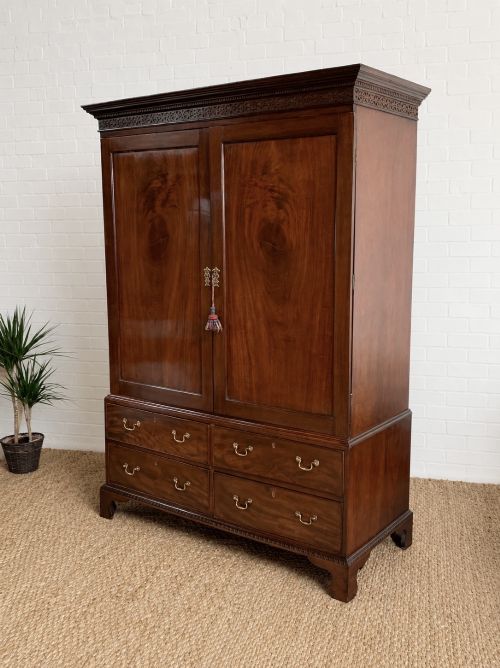
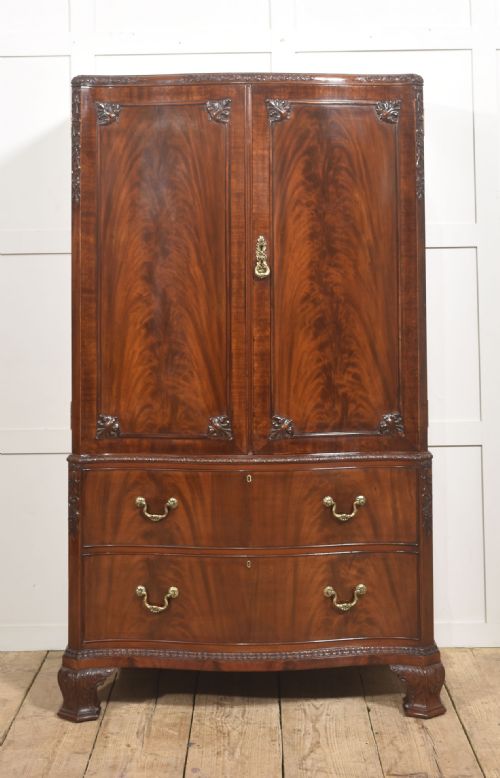
The pieces on this page span Georgian, Regency, William IV, and Victorian styles, alongside later revival pieces in the Chippendale style. Most examples combine upper press cupboards or wardrobe sections with lower drawer banks, utilising solid mahogany and flame veneers.
Origins vary from English workshops to Irish makers, with single, double, triple, and breakfront configurations reflecting the scale of the rooms they originally inhabited. The overarching form remains unified by heavy timber construction and classical proportions adapted for domestic storage.
How they were made
Cabinet makers constructed these presses using solid mahogany and dense flame mahogany veneer laid over secondary timbers such as oak. Carved details, blind fretwork cornices, and satinwood inlays were worked directly into the timber or applied as separate mouldings.
Interior storage relied on functional joinery including sliding linen trays, dovetailed drawers, and brass hanging hardware. French polishing finished the wood, sealing the grain while accentuating the natural figure and varied tones of the mahogany.
Carved Mahogany Clothes Press Retail Price Guide 2026
Typical asking prices for carved mahogany clothes press among the pieces listed under this phrase on Sellingantiques today, from the lower quarter to the upper quarter. They describe what is for sale here now, not the wider market.
Listings feature mahogany, flame mahogany veneer, satinwood, oak, brass, and glass across Georgian, Regency, Victorian, and Edwardian periods.
What varies in quality
The standard of a carved mahogany clothes press rests on the depth and crispness of the timber carving, alongside the selection of figured mahogany or flame veneer on the primary surfaces. Superior pieces display thoughtful grain matching across large panel doors and precise joinery in the internal sliding trays and drawers.
Proportion and architectural integrity separate workshop standards, with finer examples retaining original brass hardware, working locks, and balanced cornices. The presence of marquetry inlay, blind fretwork, or secondary woods like satinwood marks the boundary between utilitarian storage and high cabinet work.
Edwards and Roberts·Thomas Chippendale
The Carved Mahogany Clothes Press Glossary
- Compactum
- A multi-section wardrobe combining hanging space, drawers, and linen shelves in one unified cabinet. It provides diverse internal storage configurations for different types of garments.
- Flame mahogany
- A timber veneer sliced from timber where the branch meets the trunk, creating a distinctive flamed or swirling fire-like pattern. This decorative grain was prized for principal door panels.
- Blind fretwork
- Carved ornamentation applied to a flat surface in geometric or Chinese Chippendale lattice patterns without piercing the wood all the way through. It adds decorative relief to cornices and friezes.
- Linen press
- A tall cabinet featuring upper doors enclosing sliding trays for folded textiles above a base of lower drawers. These were historically used for storing household linen before modern wardrobe hanging spaces became standard.
- Marquetry
- The art of applying pieces of wood veneer of different colours and grains to form decorative patterns and pictures on furniture surfaces. It appears on select revival and Edwardian pieces.
Carved Mahogany Clothes Press: Frequently Asked Questions
What is inside a clothes press?
A clothes press typically contains sliding wooden trays behind the upper doors for folding garments and linens, paired with a lower chest of drawers for smaller items.
Many examples also incorporate hanging space or compactum compartments designed to organise a complete wardrobe within a single architectural piece.
How do I date a mahogany press?
Dating relies on stylistic markers such as the architectural cornices of George III pieces, the bold scrollwork of William IV designs, or the lighter inlays of Edwardian cabinets.
Internal construction details like hand-cut dovetails, secondary oak linings, and the type of mahogany veneer further help narrow the period of manufacture.
Will a large breakfront press fit in a modern room?
Breakfront and triple-door presses are substantial pieces that require significant wall space and ceiling height to sit comfortably in a contemporary bedroom.
Because many examples dismantle into modular sections - such as separate cornices, middle carcases, and drawer bases - transport and installation into older properties are generally straightforward.