



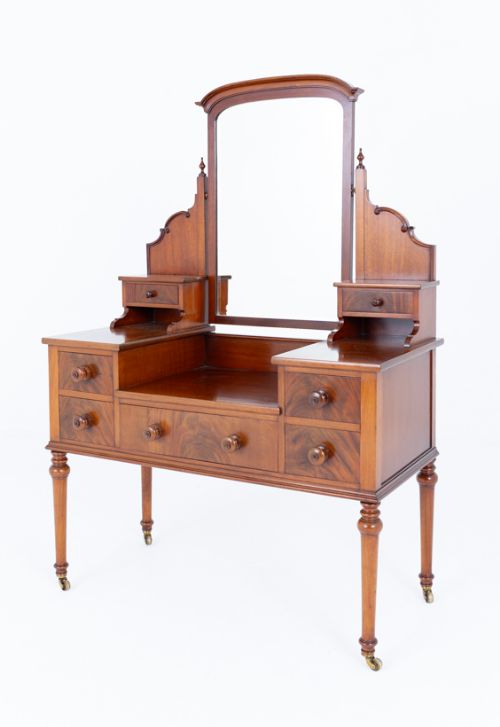
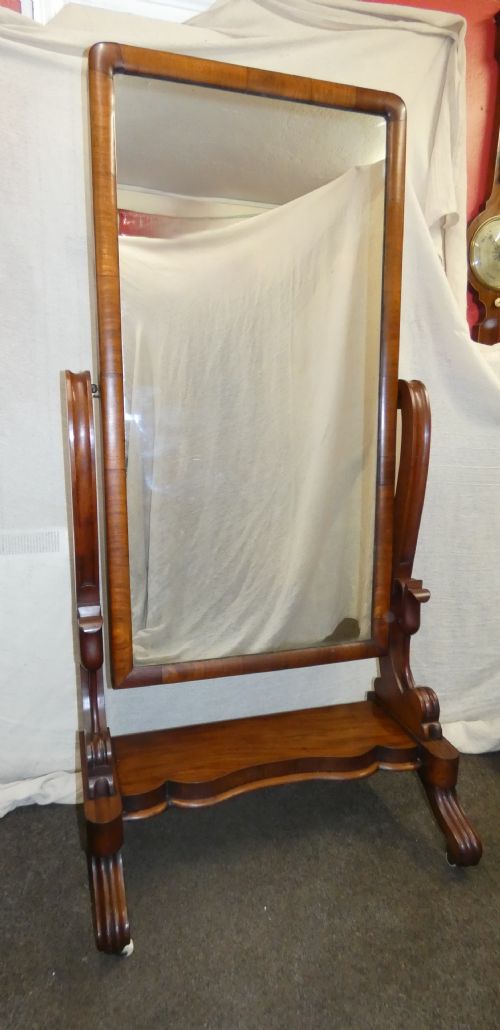


Flame Mahogany Dressing Mirror
Flame mahogany dressing mirror pieces are striking bedroom furnishings offering rich timber figuring and adjustable glass, sought after for period interiors.
Flame Mahogany Dressing Mirror
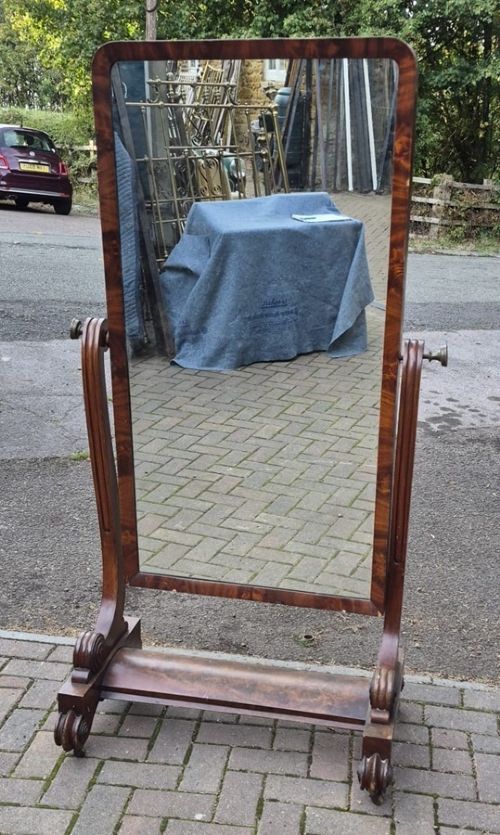
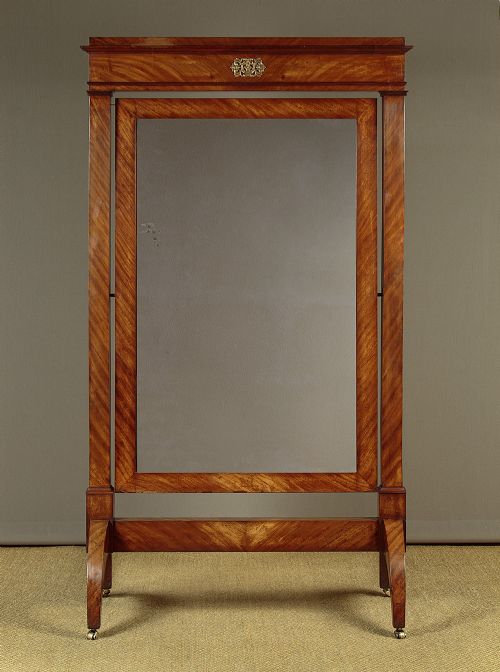
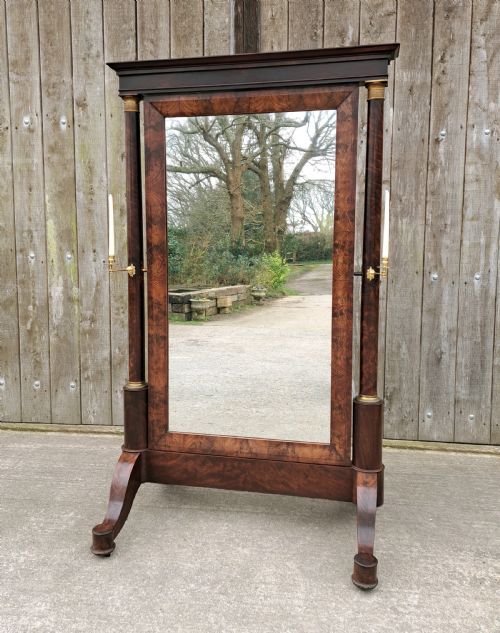
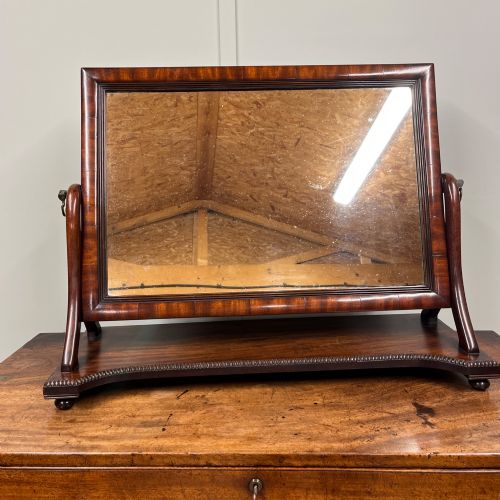
A flame mahogany dressing mirror brings intense wood grain patterns and adjustable glass to a bedroom interior, serving both a functional and decorative purpose. These pieces range from compact tabletop toilet mirrors to large floor-standing cheval glasses designed to tilt on vertical axes.
Buyers focusing on a flame mahogany dressing mirror encounter various historical eras, with Victorian and Georgian pieces appearing most frequently across the inventory. Common formats include rectangular or oval swing plates mounted above small drawer bases, alongside taller cheval frames supported by upright columns.
The selection encompasses diverse stylistic influences such as Regency, French Empire, and William IV, reflecting how cabinetmakers adapted classical proportions over decades. Many examples integrate storage within their stepped or serpentine bases, providing small compartments for trinkets and daily accessories.
What Varies in Quality
The visual impact of a flame mahogany dressing mirror depends heavily on the intensity and symmetry of the veneer grain selected by the original maker. Highly figured timbers exhibiting deep rolling patterns command greater visual presence than plain mahogany boards.
Proportion and structural harmony separate standard workshop output from exceptional examples, particularly in the balance between the swing frame and the supporting base. Finer pieces demonstrate crisp carving on the scroll arms and retain their original brass hardware.
The condition and clarity of the mirror glass itself influence the overall integrity, with older reflective plates showing characteristic soft oxidation while maintaining their silvering.
Flame Mahogany Dressing Mirror Retail Price Guide 2026
Typical asking prices for flame mahogany dressing mirror among the pieces listed under this phrase on Sellingantiques today, from the lower quarter to the upper quarter. They describe what is for sale here now, not the wider market.
Materials appearing across current and archived stock include solid mahogany, flame mahogany veneer, brass, ormolu, and marble.
The Flame Mahogany Dressing Mirror Glossary
- Cheval mirror
- A large floor-standing dressing mirror supported by a vertical frame and side pivots allowing full-body tilt. These taller pieces typically stand independently on the floor rather than resting on a table or chest.
- Flame mahogany
- A decorative veneer cut from wood where the branch meets the trunk, producing a distinctive flickering flame pattern. Cabinetmakers prized this timber for high-status furniture fronts.
- Toilet mirror
- A smaller dressing mirror designed to sit atop a table, dressing chest, or sideboard. They usually feature a box base fitted with one or more small drawers.
- Swing mirror
- A glass plate hung on lateral pivots between two upright posts so the angle can be adjusted. This mechanism is central to both tabletop toilet mirrors and large cheval designs.
- Duchess dressing table
- A large vanity table featuring a fixed or swing mirror attached to a surface with multiple small drawers and storage compartments. These elaborate pieces became popular during the Victorian era.
- Serpentine front
- A furniture front curved in a wave shape, convex at the centre and concave at the sides. This contour requires precise woodworking and appears on select Georgian and Victorian bases.
Flame Mahogany Dressing Mirror: Frequently Asked Questions
Where were dressing mirrors placed?
These mirrors typically stood upon dressing tables, chests of drawers, or dedicated washstands within bedrooms and dressing rooms. Tabletop versions provided a convenient reflective surface at working height.
Larger cheval mirrors stood directly on the floor to allow full-length viewing. Their mobility meant they could be repositioned near windows to capture natural light.
How do I date a flame mahogany mirror?
Dating relies on observing structural characteristics, wood types, and decorative styles associated with specific periods. Georgian examples often display restrained lines and oval plates, while Victorian pieces tend to be heavier with carved scroll supports.
Secondary woods and construction methods inside the drawer boxes also offer clues. Hand-cut dovetails and older fixings point towards 18th-century or early 19th-century manufacture.
Can I adjust the mirror angle?
Most antique swing mirrors utilise brass side screws or pivot pins that tighten by hand to hold the glass at the desired inclination. Over time, these mechanisms may require gentle adjustment to function smoothly.
Floor-standing cheval frames operate on similar vertical axis pivots. Users simply tilt the frame forward or backward within its supporting uprights.
What is flame mahogany?
Flame mahogany is not a distinct tree species but a specific veneer cut taken from the fork of a mahogany tree where branches diverge. This growth produces a striking, rippled grain resembling flickering flames.
Cabinetmakers applied these thin decorative sheets to prominent surfaces like drawer fronts and mirror frames. The technique created high visual contrast and dramatic movement across the timber.
How do I care for the timber?
Maintain flame mahogany by keeping the piece away from direct sunlight and rapid temperature changes that can dry out the antique veneer. Regular dusting with a soft, dry cloth preserves the polished surface.
Application of traditional beeswax helps nourish the wood grain over time. Avoid modern liquid polishes containing silicones or harsh chemical solvents.