


Flame Mahogany Breakfast Table
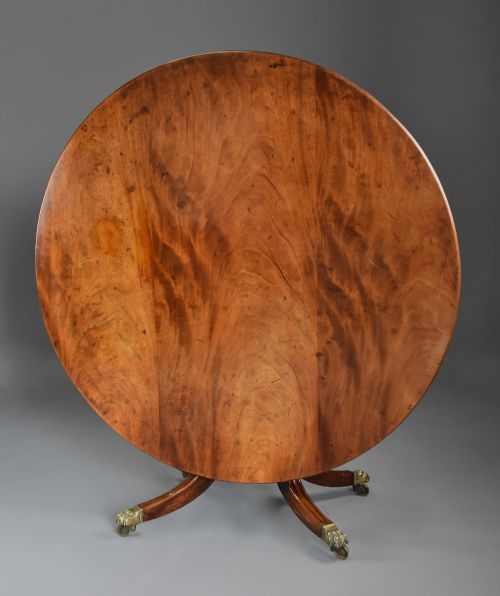
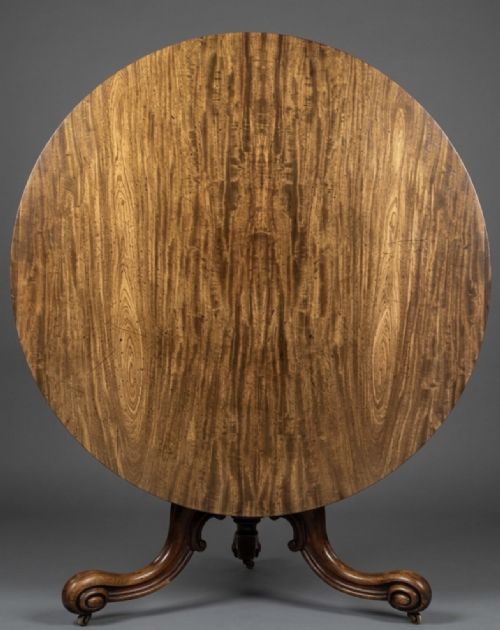
A flame mahogany breakfast table brings dramatic timber figures and generous proportions straight to the centre of the room.
Flame Mahogany Breakfast Table
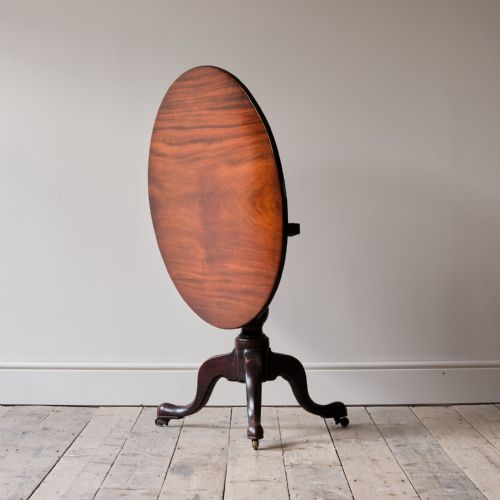
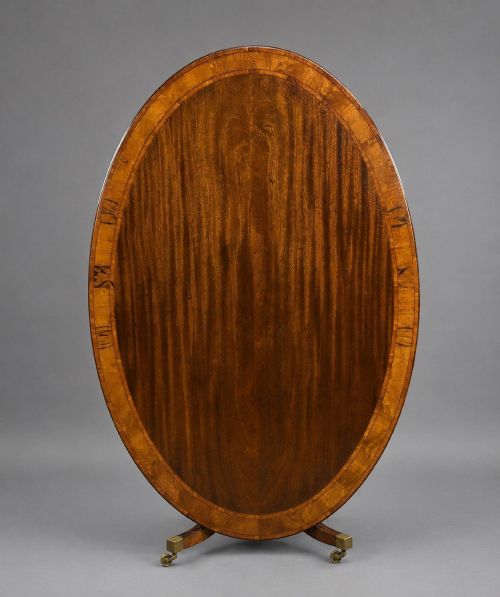
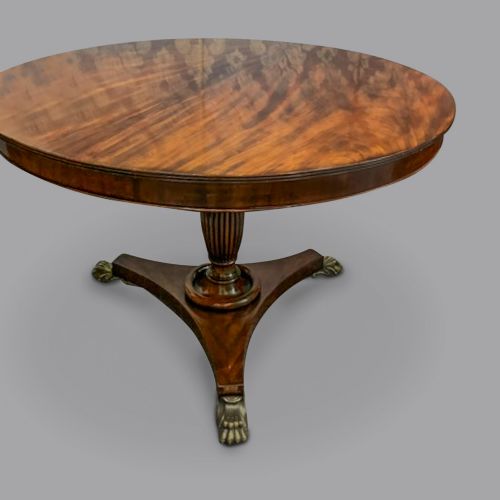
A flame mahogany breakfast table stands as a versatile piece of period furniture designed for formal dining and central room placement. Buyers seeking a flame mahogany breakfast table will most frequently encounter circular or oval tilt-top examples dating from the Regency and Victorian eras. These tables utilise a sturdy central pedestal base, often supported by sabre legs or carved pillars, allowing the circular top to tilt vertically when not in use.
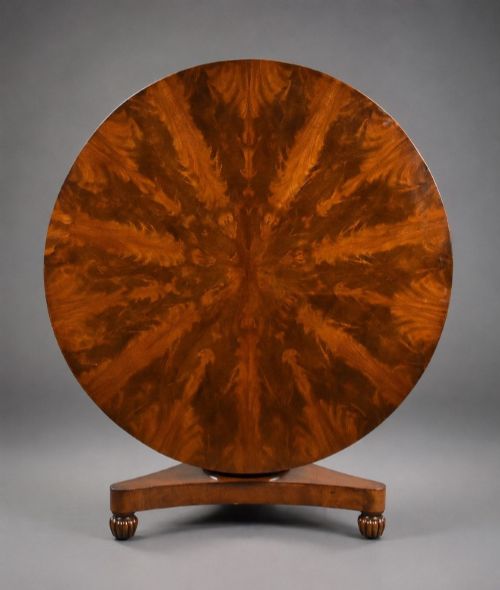
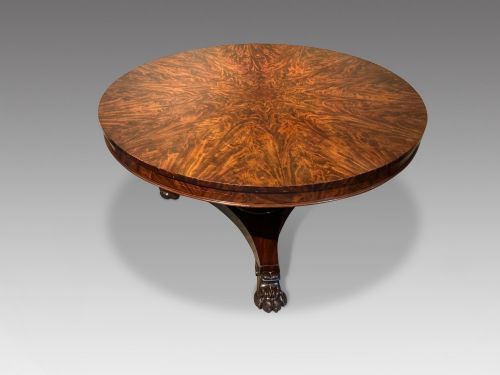
The timber used for these tables displays a distinctive rippled grain pattern, created by cutting across the branch forks of the mahogany tree. Workshops across the Georgian, Regency, and Victorian periods employed this veneer on circular tops to catch the light and create fiery visual depth. Surviving examples demonstrate how makers matched these striking veneers symmetrically from the centre outwards.
Pieces catalogued under this search range from early nineteenth-century Regency designs to mid-Victorian circular formats and tilt-top variants. Many incorporate functional pedestals and brass castors, designed originally to be moved easily around grand townhouses and country residences. The form bridges the gap between occasional centre tables and large dining furniture.
What varies in quality
The depth and symmetry of the veneer figure determine the visual appeal of the surface, with expertly book-matched flame patterns commanding the highest regard. Finer examples display rich patination and careful timber selection across both the tilt top and the supporting pedestal.
Structural integrity rests on the stability of the central column and the firmness of the tilt mechanism. Superior construction shows robust joinery at the pedestal base and precise alignment when the heavy top rests flat.
Object forms recorded on this page include Pembroke tables, tilt-top variants, and large circular centre tables.
Gillows·Walker-Lancaster
The Flame Mahogany Breakfast Table Glossary
- Flame mahogany veneer
- A decorative wood slice cut from the branch forks of the mahogany tree, producing a rippled, flame-like pattern. This figured timber was prized by cabinet makers for creating striking tabletops.
- Tilt top
- A hinged mechanism allowing the tabletop to pivot into a vertical position. This clever engineering saved floor space in grand rooms when the furniture was not in use.
- Crossbanding
- A decorative border of veneer laid around the perimeter of the tabletop with the grain running perpendicular to the central field. It frames the central flame mahogany figure.
- Pedestal base
- A central column supporting the heavy tabletop, usually rising from a tripartite or quadruped platform base. These columns often feature robust carving or plain classical proportions.
Flame Mahogany Breakfast Table: Frequently Asked Questions
What is a flame mahogany breakfast table?
A flame mahogany breakfast table is a large pedestal table featuring a circular or oval top veneered in figured mahogany timber. These pieces typically date from the Georgian, Regency, and Victorian periods.
They were originally designed to serve morning meals or function as grand centre tables in large homes. The defining feature is the dramatic, rippled wood grain arranged symmetrically across the surface.
How do you use a tilt top table?
A tilt top table operates via a mechanical catch beneath the surface that releases the heavy top to pivot vertically. This allowed owners to push the furniture against the wall when the room was needed for other purposes.
In modern homes, the tilting function remains useful for moving the table through narrow doorways or showcasing the figured wood grain as a decorative wall feature.
How do I date a Regency breakfast table?
Dating a Regency breakfast table involves examining the pedestal design, timber choice, and leg configuration. Pieces from this era often feature robust central pillars, brass castors, and sabre legs.
Makers working in the early nineteenth century frequently utilised rich flame mahogany veneers alongside rosewood crossbanding. Comparing the construction methods to documented pieces helps narrow the decade of production.
Are these tables suitable for everyday dining?
These tables provide sturdy surfaces suited for daily use, provided the tilt mechanism and central pedestal remain secure. Their circular shape naturally encourages conversation during meals.
Owners should use heat-resistant mats and coasters to protect the antique polish and delicate mahogany veneer from moisture and temperature marks.