






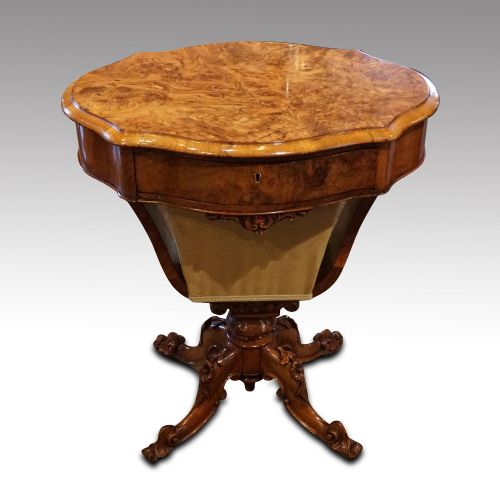
Fitted Work Table
These fitted work table examples are clever multi-purpose pieces designed for sewing and small domestic tasks, offering ingenious compartments that buyers still prize today.
Fitted Work Table
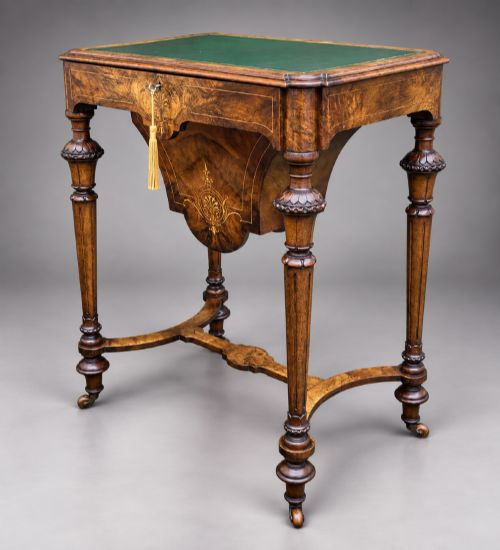
A fitted work table serves as a dual-purpose piece of furniture, combining a functional surface with internal compartments specifically designed for needlework, sewing, and small valuables. Most examples encountered here date from the Georgian, Victorian, and Edwardian eras, spanning the eighteenth to the early twentieth centuries.
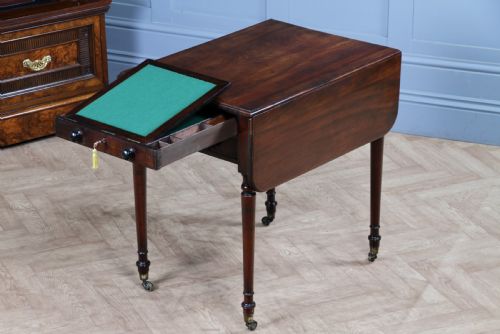
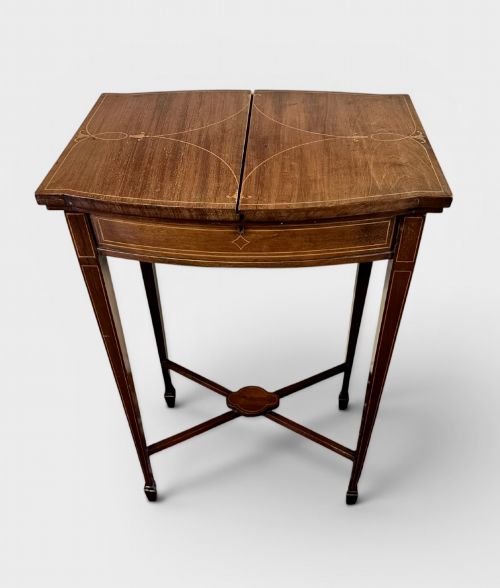
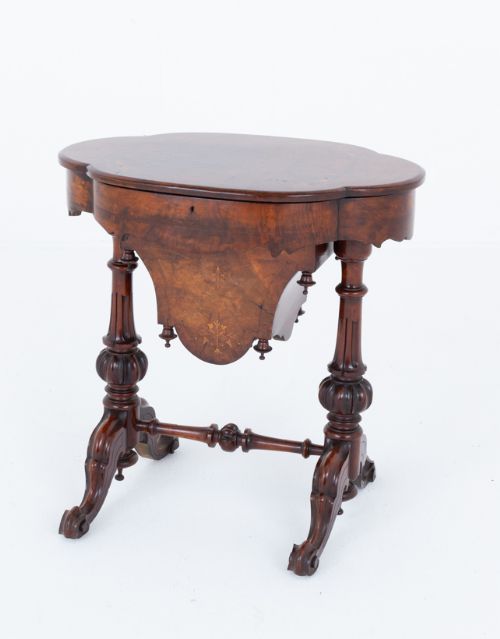
The primary forms on this page include sewing tables, work tables, and occasional tables, alongside related variants like Pembroke and dropleaf designs. Materials range from mahogany and burr walnut to satinwood and maplewood, often enhanced by marquetry, boxwood inlay, and fabric elements.
Geographic and stylistic variations run from traditional British cabinetmaking to Chinese Export, French Provincial, and Anglo-Indian origins. These diverse pieces share an emphasis on concealed storage, incorporating fitted drawers and internal compartments beneath the main surface.
What varies in quality
Quality rests upon the selection of timber veneers and the intricacy of the decorative inlay. Burr walnut and figured mahogany with matched graining distinguish superior examples from plain utility pieces.
The sophistication of the internal arrangement defines the standard of craftsmanship. Tables featuring complex fitted interiors with original compartments demonstrate a higher grade of execution than those with simpler drawer layouts.
Several tables retain deep fabric bags beneath their drawers, designed to catch stray balls of wool.
Mappin & Webb
The Fitted Work Table Glossary
- Pembroke table
- A small occasional table with hinged flaps on either side that drop down. This form frequently incorporates a fitted drawer at one end.
- Marquetry
- Decorative patterns formed by inserting pieces of wood, shell, or ivory into a veneered surface. It is commonly found on the lids of Victorian burr walnut examples.
- Boxwood inlay
- Narrow strips of pale boxwood set flush into a darker wood surface to create geometric borders or lines. This technique highlights the edges of tabletops and drawers.
- Secretaire
- A piece of furniture containing a drawer that pulls down to reveal a writing surface and small pigeonholes. Some work tables combine this feature with sewing compartments.
Fitted Work Table: Frequently Asked Questions
What is a fitted work table?
A fitted work table is a nineteenth or eighteenth-century small table designed for domestic crafts, featuring a top that opens or a drawer that pulls out to reveal internal compartments for sewing tools.
These compartments often include small lidded boxes, shallow trays, and sometimes a fabric bag suspended underneath to hold wool and fabric scraps.
How were these tables used originally?
Upper-class and middle-class households utilised them in sitting rooms and parlours for needlework, embroidery, and correspondence. The fitted interior kept needles, threads, and small personal items organised during social gatherings.
As domestic habits shifted, owners repurposed them as lamp tables or occasional surfaces while retaining the hidden compartments for modern storage.
How do I date a work table?
Dating relies on timber selection, structural proportions, and decorative motifs characteristic of periods like the Georgian, Victorian, and Edwardian eras. Georgian versions often display restrained mahogany lines, while Victorian examples favour heavily figured burr walnut and turned supports.
Internal construction details, such as hand-cut dovetails on the drawers and the type of secondary wood used inside, also indicate the manufacturing period.
Where should I place one at home?
Their compact proportions make them suitable as bedside tables, beside a sofa as an occasional surface, or as a standalone accent piece in a hallway. The finished backs on freestanding models allow them to sit away from walls.
Living with these pieces involves using the surface for lamps or books while benefiting from the concealed storage within the drawers and compartments.