


Fitted Drinks Cabinet
A fitted drinks cabinet brings serious style to your entertaining space while keeping glassware and bottles neatly organised.
Fitted Drinks Cabinet
When you search for a fitted drinks cabinet, you enter a world of sophisticated storage designed specifically for entertaining. These pieces range from grand Art Deco creations to refined Edwardian cupboards and earlier mahogany cellarettes.
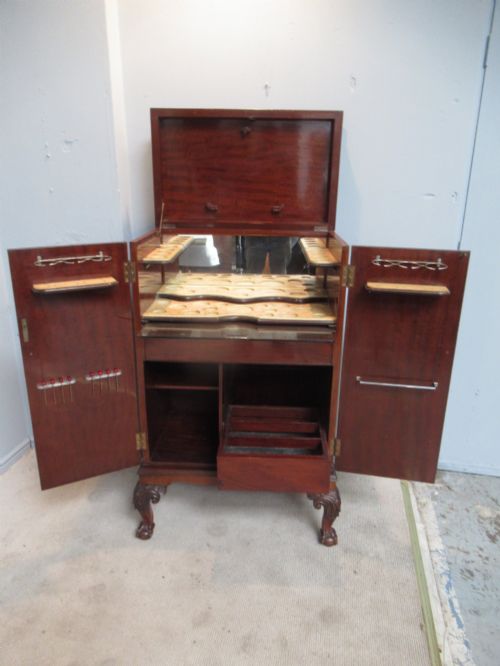
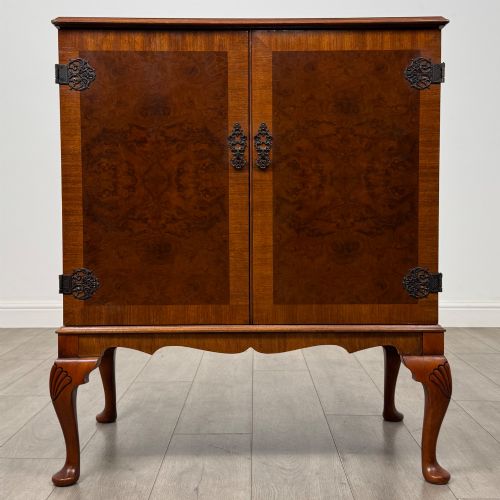
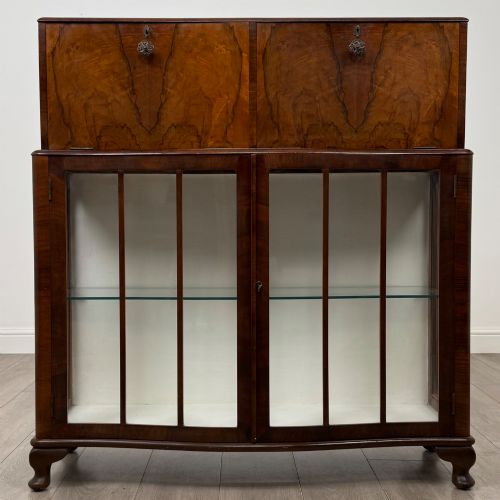
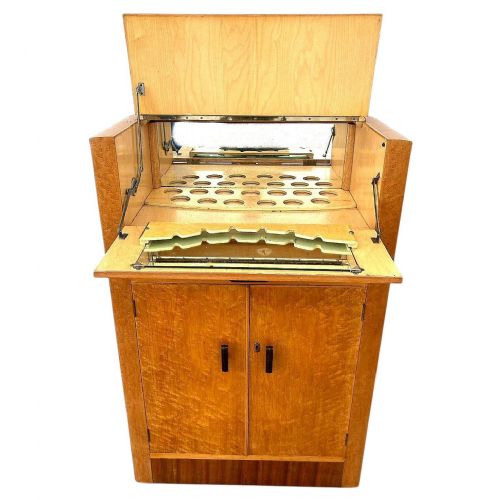
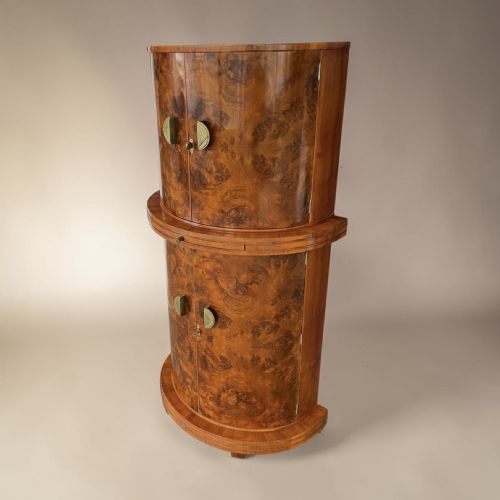
You are most likely to meet Burr walnut and figured walnut examples from the 1930s on this page, often styled as cocktail cabinets with internal mirrors and glass shelves. These are built to house bottles, decanters and cocktail accessories in dedicated compartments.
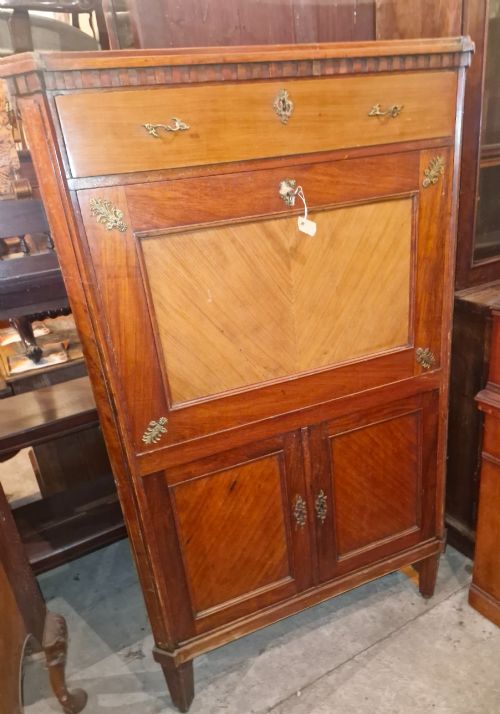
The selection also spans earlier Victorian and Edwardian iterations, including bureau-form cabinets and inlaid satinwood designs. Each version offers a distinct approach to dispensing hospitality with period charm.
How they were made
Cabinetmakers utilised rich timber veneers such as burr walnut, bird's-eye maple and figured mahogany over sturdy carcases of oak or pine. The external surfaces often highlight dramatic grain patterns, polished to a high lustre to showcase the natural beauty of the wood.
Internal spaces frequently incorporate mirrored backs, chrome or brass hardware, and glass surfaces designed to reflect light and display glassware effectively. Specialised fittings like pull-out slides, built-in safes and dedicated bottle racks demonstrate thoughtful internal architecture.
Object types range from compact decanter boxes to large Art Deco sideboards and corner cocktail units.
What varies in quality
The distinction between standard examples and the finest pieces lies in the choice of veneers and the complexity of the interior design. Superior cabinets feature matching burr walnut grains across every door panel and fully fitted mirrored interiors with original lighting or specialised glassware compartments.
Maker attribution also elevates a piece, as demonstrated by workshops such as Epstein or Waring and Gillow. Precision in joinery, the weight of the brass or chrome hardware, and the integrity of the fitted mechanisms separate exceptional examples from mass-produced alternatives.
Harry and Lou Epstein·Waring and Gillow·Withers Safe
The Fitted Drinks Cabinet Glossary
- Cellarette
- A lockable container used for storing wine and bottles, typically positioned near a dining table or sideboard. These precursors to the modern drinks cabinet date back to the eighteenth and nineteenth centuries.
- Burr walnut
- A highly prized timber veneer harvested from the wart-like growths on walnut trees, creating swirling, organic patterns. It became particularly popular during the Edwardian period and the Art Deco era for luxury furniture.
- Metamorphic furniture
- Pieces designed to transform from one form into another, such as a bureau opening up into a cocktail bar. This ingenious engineering allowed dual-purpose utility in period homes.
Fitted Drinks Cabinet: Frequently Asked Questions
What is a fitted drinks cabinet?
A fitted drinks cabinet is a specialised storage piece designed to hold bottles, glasses and bar accessories within dedicated interior compartments. They often feature drop-down preparation flaps, mirrored backs and specialised racks.
These pieces emerged strongly during the Art Deco period and the Edwardian era, evolving from earlier cellarettes and wine coolers. Their primary purpose is to combine elegant exterior design with practical hospitality storage.
How do I identify an Art Deco cabinet?
Art Deco drinks cabinets are characterised by geometric silhouettes, streamlined forms and rich veneers like burr walnut and bird's-eye maple. They frequently date around 1930 and embrace modernist luxury.
Look for contrasting wood grains, polished chrome handles and symmetrical door designs. The interiors often incorporate peach or clear mirror glass and stepped shelving.
Where were these cabinets used?
These cabinets were traditionally placed in drawing rooms, dining rooms or dedicated smoking rooms where guests were entertained. They provided a discreet yet accessible station for serving evening drinks.
Today, they function brilliantly in modern living spaces and dining areas, serving as a focal point for home mixology and sophisticated entertaining.
What is the difference between a cellarette and a cocktail cabinet?
A cellarette is typically an earlier nineteenth-century piece designed specifically to hold wine bottles, often standing on short legs or floor-standing near a dining table. They focus on horizontal bottle storage.
A cocktail cabinet is a taller, twentieth-century form featuring vertical storage, drop-down serving surfaces, and extensive display space for glassware and spirits. They reflect the rise of cocktail culture in the interwar years.