
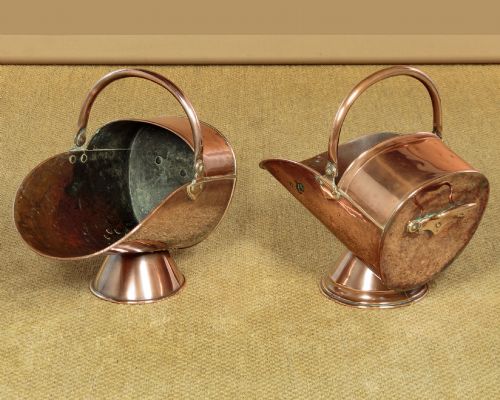


Fireside Copper Log Bucket
When you need a fireside copper log bucket, you are looking at functional hearth vessels that bring warmth and tactile metal texture to a room.
Fireside Copper Log Bucket
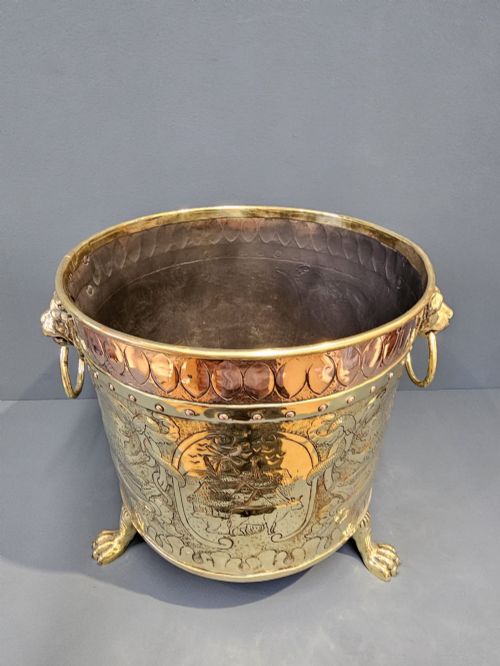
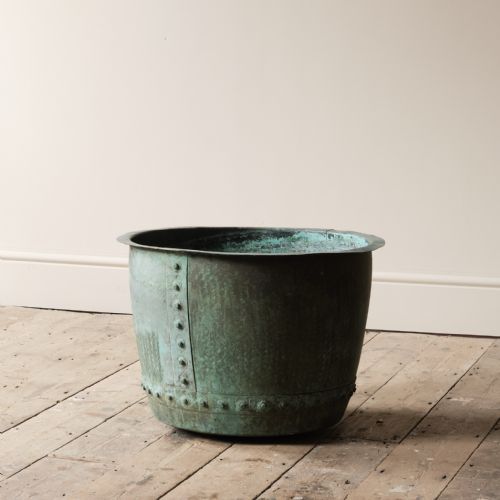
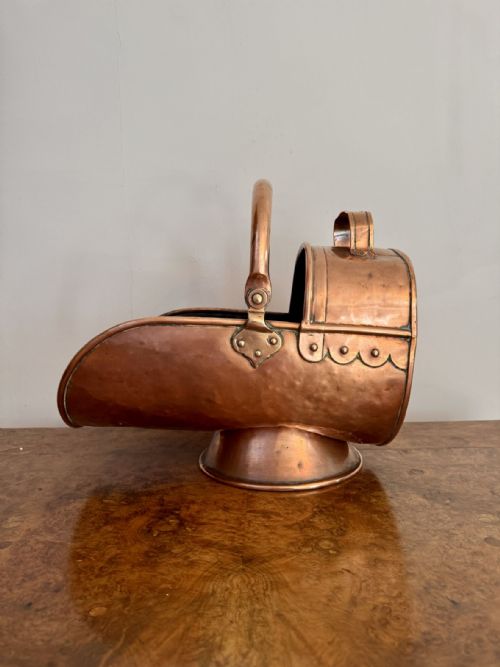
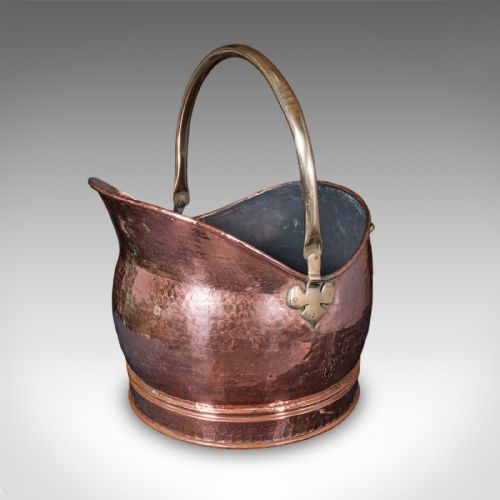
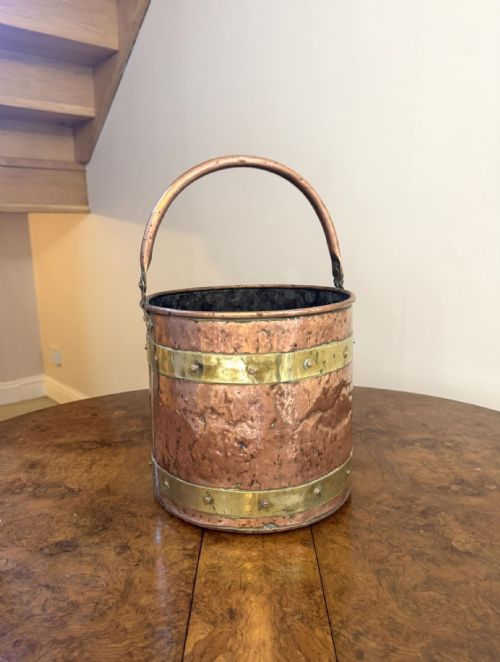
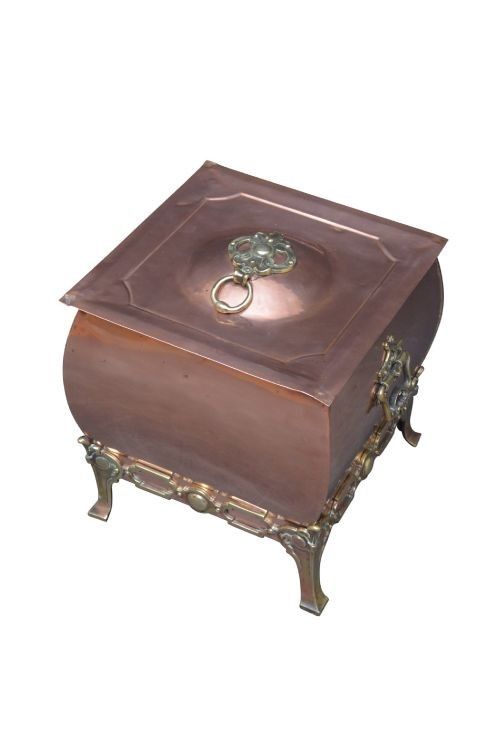
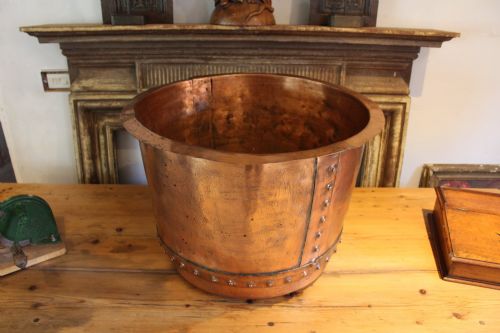
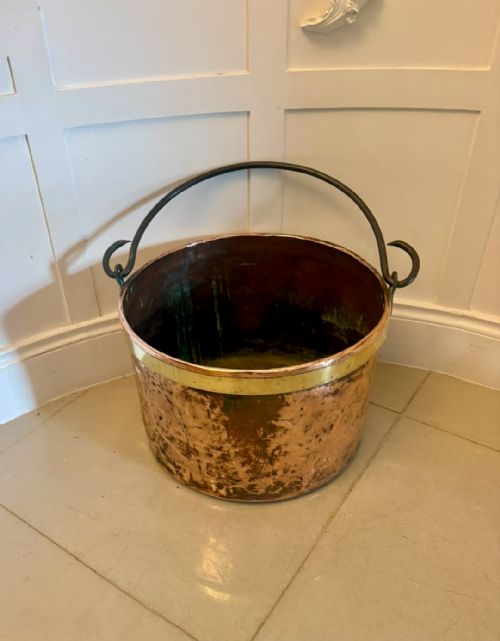
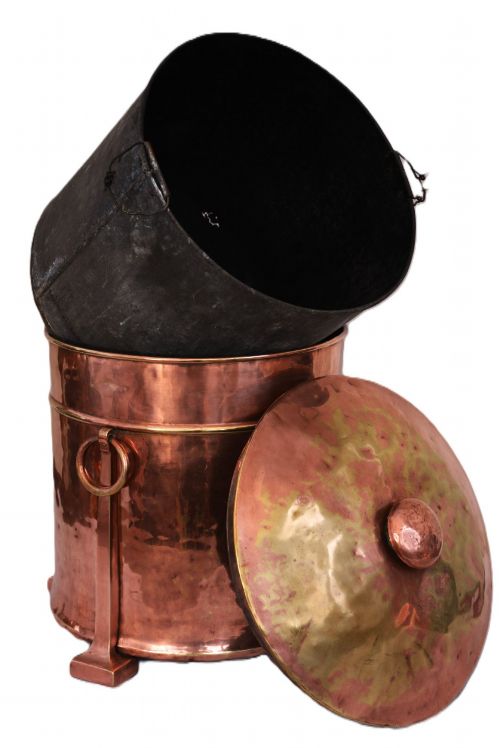
When searching for a fireside copper log bucket, buyers encounter sturdy hearth containers designed to hold fuel near the fireplace. The selections span utilitarian coal scuttles, cylindrical log bins, and flared cauldron forms.
Victorian and Georgian examples dominate the choices, alongside Arts and Crafts and Art Nouveau pieces. Many versions incorporate brass handles, bands, or swing bails for everyday hearth service.
Makers produced these vessels to stand beside the hearth as both fuel stores and decorative accessories. Pieces often double as planters when retired from active coal and wood duty.
Materials and Construction
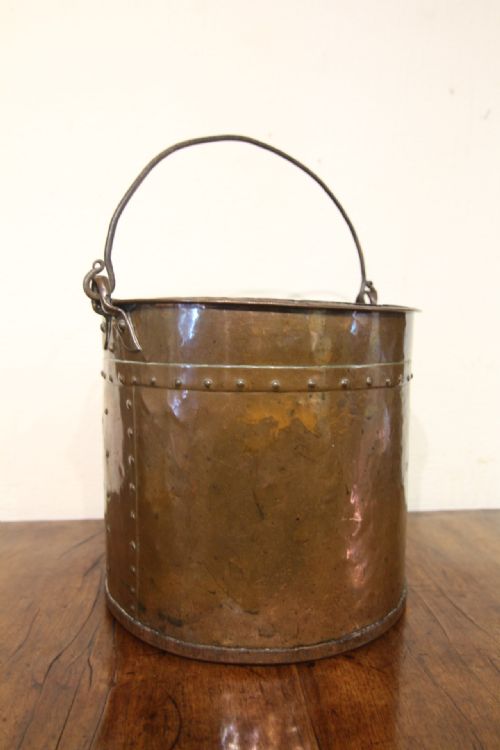
Sheet copper provides the primary body for these vessels, frequently shaped by hand beating or hammering. Riveted joints secure the seams on utilitarian 19th-century examples.
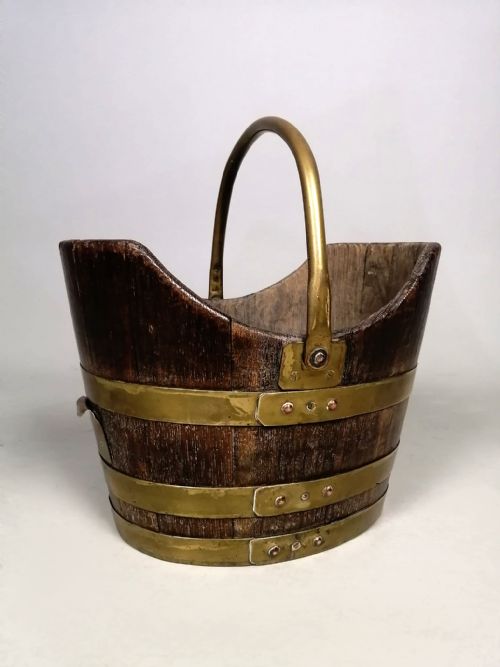
Makers reinforced many pieces with brass bands, rims, and cast handles. Wrought iron swing handles and internal iron frames appear on larger cauldrons and bins.
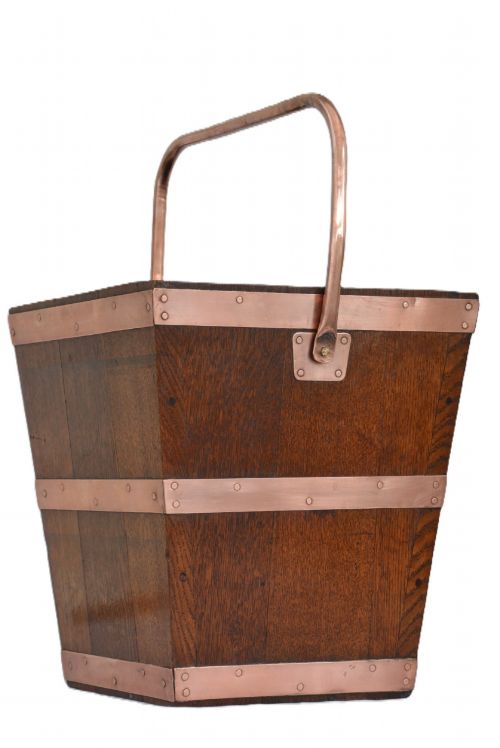
Secondary woods such as oak occasionally form the structural core or stave construction of specific coal buckets. Zinc linings protect certain containers from damp fuel.
Materials recorded across the inventory include copper, brass, wrought iron, oak, and zinc.
Assessing Quality
The integrity of construction separates standard production from superior examples. Heavy-gauge sheet metal and secure rivet work indicate robust workshop standards.
Detailing on handles and applied brass bands reveals the level of craftsmanship. Hand-hammered surfaces show distinct individual punch marks rather than uniform machine stamping.
Proportion and form dictate visual success by the hearth. Well-balanced proportions ensure the bucket holds weight safely without tipping.
The Fireside Copper Log Bucket Glossary
- Coal Scuttle
- A vessel designed specifically for carrying and storing coal by the fireplace. These often feature a sloping helmet shape or a hinged lid.
- Log Bin
- A straight-sided or cylindrical container used to store firewood beside the hearth. These lack the pouring spout of a traditional scuttle.
- Cauldron
- A large round metal pot with a swing handle, often resting on feet or flat bases. Earlier examples show heavy riveted construction.
- Helmet Scuttle
- A coal bucket shaped with a high back and a sloping front lip resembling a helmet. This profile assists with pouring fuel cleanly onto the fire.
Fireside Copper Log Bucket: Frequently Asked Questions
What is a fireside copper log bucket used for?
These vessels store logs and coal neatly beside an active fireplace. They keep fuel accessible while adding metallic warmth to the hearth.
Many owners also repurpose them as large plant pots or umbrella stands when they are no longer used for solid fuel.
How do I clean a copper log bucket?
Gentle washing with warm soapy water removes accumulated dust and soot from the surface. Avoid harsh abrasive cleaners that strip away the aged patina.
Leaving the natural oxidation intact preserves the historical character of Victorian and Georgian metalwork.
Are these buckets safe for holding logs?
Most examples are robustly built from heavy sheet copper with iron or brass reinforcements. They easily support the weight of dry firewood.
Check the base and internal joints to ensure the structure remains stable before loading heavy timber.
How do I tell Victorian pieces from Georgian ones?
Georgian pieces often display simpler, heavier brass banding and hand-forged iron fittings from the 18th century. Victorian items frequently feature embossed ornamentation, helmet shapes, and riveted seams.
Arts and Crafts examples from later periods emphasise hand-beaten surfaces and simpler structural lines.