



Fireplace Coal Hod
These fireplace coal hod examples combine practical fuel storage with period metalwork, offering durable containers designed to sit beside a hearth.
Fireplace Coal Hod
A fireplace coal hod provides a dedicated vessel for holding solid fuel near a domestic fire, taking forms such as buckets, scuttles, bins, hods, and purdoniums.
The selections encountered here span periods from the Georgian and Regency eras through the Victorian and Edwardian periods, stretching into the early twentieth century.
Most items discovered on this page emerge from Victorian and Edwardian workshops, utilising metals and timbers suited to nineteenth-century domestic interiors.
Materials and construction methods
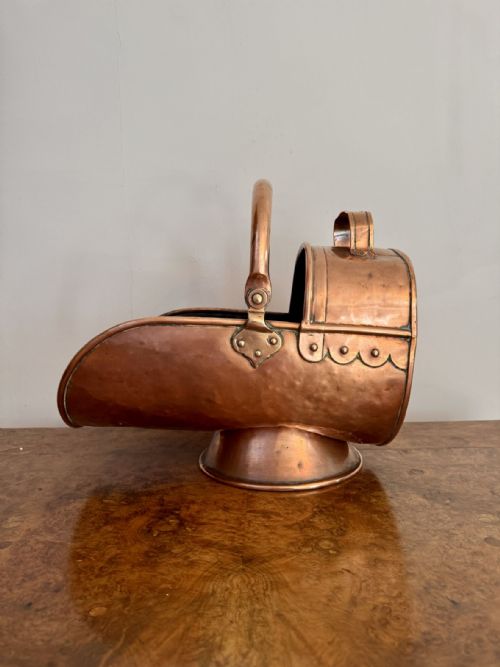
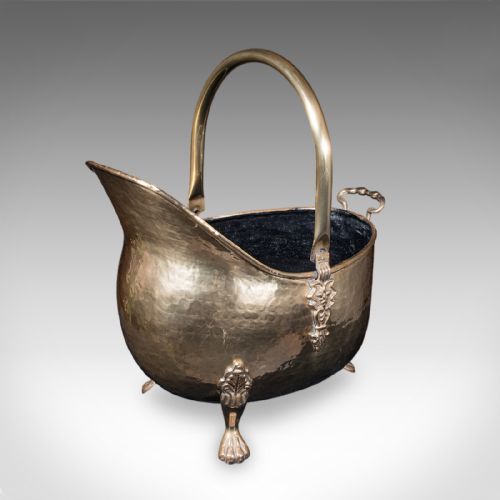
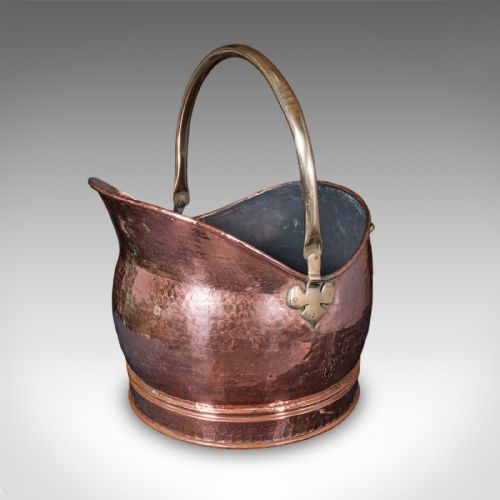
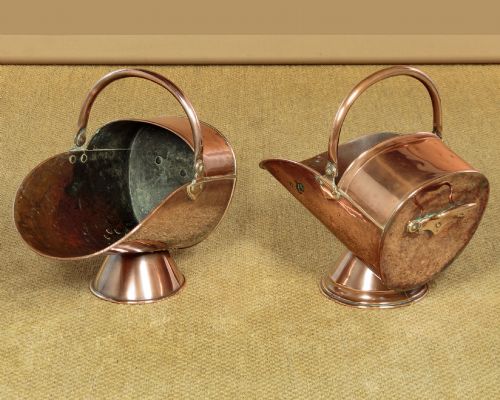
Metalworking dominates production, utilising sheet copper and brass shaped into helmet forms, buckets, and hods, frequently paired with iron or steel components.
Many items employ hand-beaten or riveted construction techniques, joining metal plates securely while decorative brass accents and swing handles are attached.
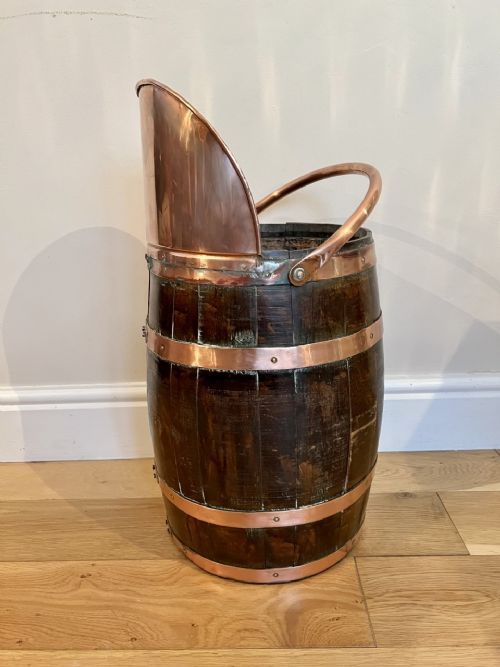
Timber versions incorporate oak, walnut, or other woods, often featuring metal liners, copper bands, or decorative brass mountings to protect the wood from fuel.
Listings feature pieces spanning the Georgian, Regency, Victorian, and Edwardian periods, constructed in brass, copper, oak, walnut, and wrought iron.
Distinctions in construction and finish
Superior examples display heavier gauge metals, robust riveted joints, and crisp hand-finished surface details that endure daily fireside use without structural compromise.
The presence of original matching shovels, internal metal liners, and well-fitted lids elevates a piece above standard utility versions.
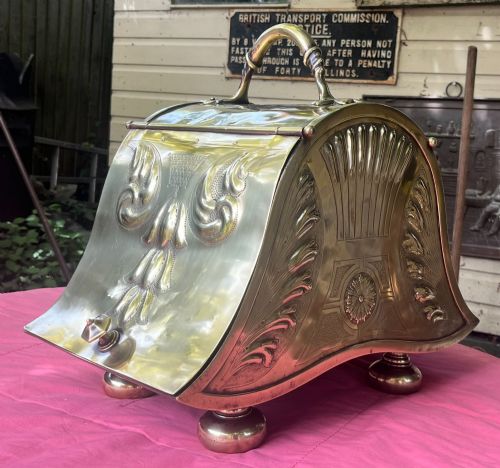
Artistry in design separates basic receptacles from refined items, particularly in hammered copper finishes, art nouveau stylings, or arts and crafts wrought iron details.
Benham and Froud
The Fireplace Coal Hod Glossary
- Coal scuttle
- A container with a flared lip and a handle designed for carrying solid fuel to a fireplace. These often take a helmet shape.
- Coal hod
- A deep bucket or container traditionally used for carrying and storing coal by the hearth. They are made from metal or wood.
- Purdonium
- A domestic coal box, usually made of wood with an internal metal liner and a hinged lid or fall-front door. These gained popularity during the Victorian era.
- Coal helmet
- A specific scuttle shape featuring a high back and a sloping front rim resembling a classical helmet. This design aids in pouring fuel cleanly.
- Liner
- A removable metal insert placed inside wooden coal buckets or purdoniums to catch coal dust and protect the surrounding timber from moisture.
Fireplace Coal Hod: Frequently Asked Questions
How do I use a coal hod?
A coal hod sits beside the fireplace to store a manageable supply of coal or logs for immediate burning.
The swinging handle and balanced shape allow you to lift the container and tip fuel onto the fire using a matching shovel.
Are these items waterproof?
Most metal coal hods and scuttles hold solid fuel without issue, but older riveted joints can develop slight weeping over long periods.
Wooden versions rely on removable metal liners to contain moisture and debris, protecting the timber structure from direct contact with wet fuel.
How do I date a brass coal bucket?
Dating relies on examining the construction marks, handle attachments, and stylistic traits such as art nouveau curves or Georgian proportions.
Hand-beaten surfaces, cast brass feet, and the presence of period fixings help assign pieces to nineteenth-century manufacturing eras.