


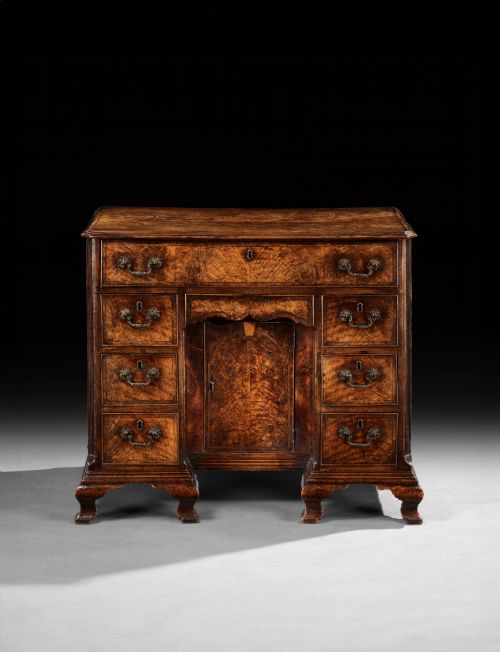


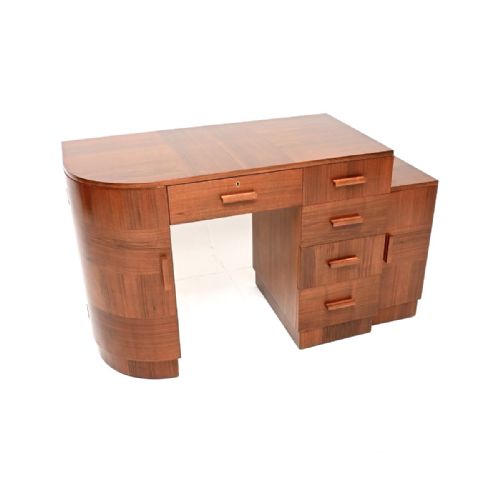


Figured Walnut Dressing Table
A figured walnut dressing table brings warmth and rich timber grain to a bedroom, combining practical surface space with deep drawers for storage.
Figured Walnut Dressing Table
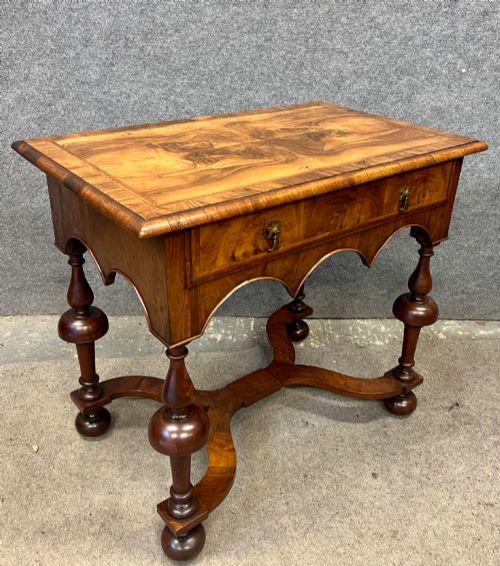
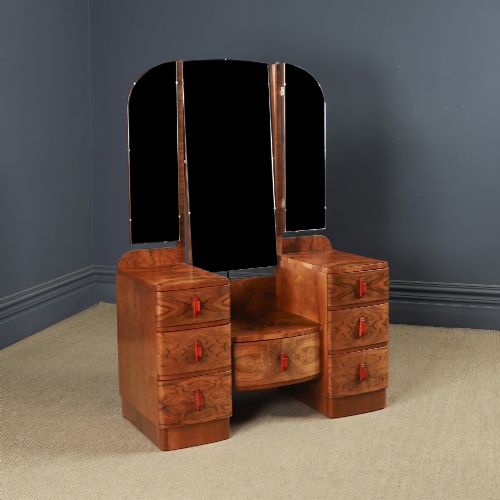
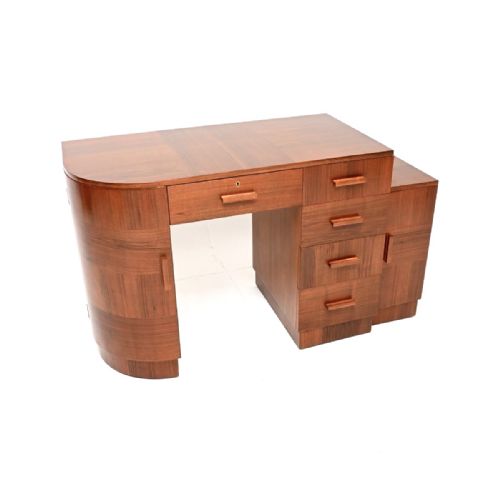
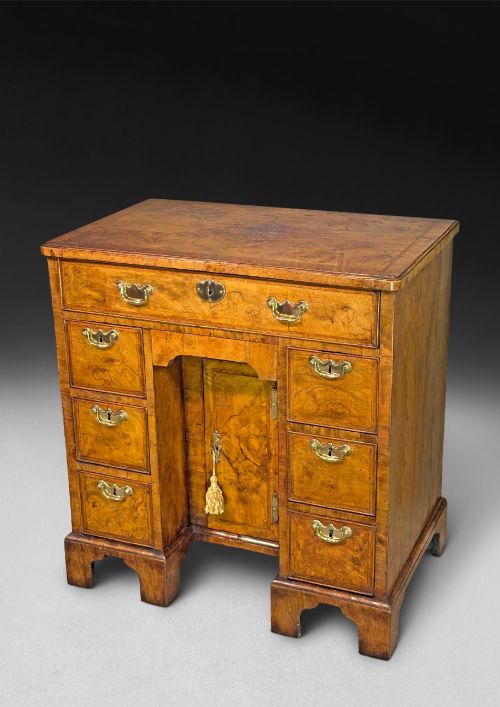
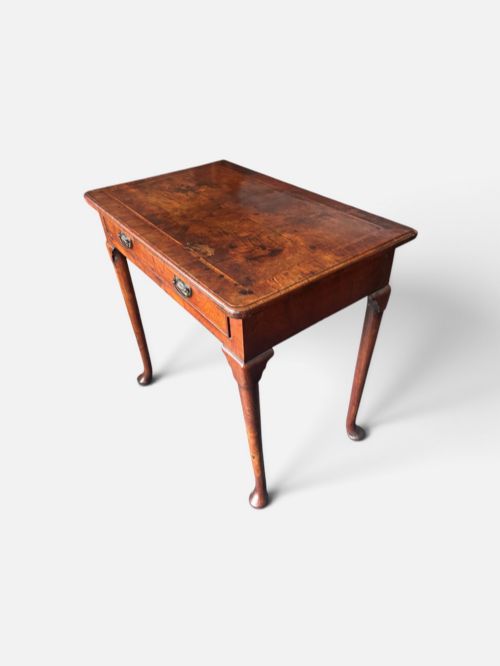
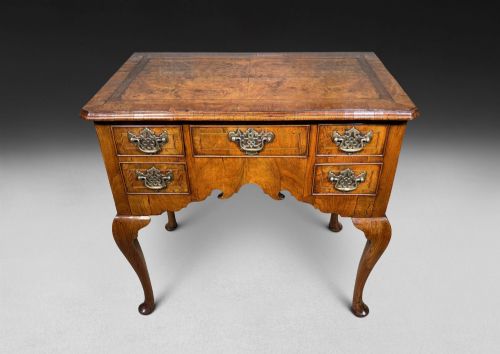
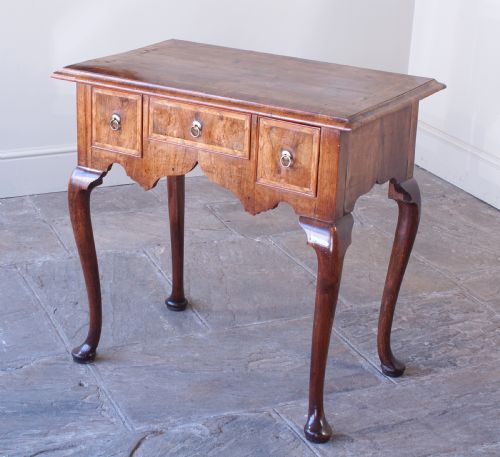
A figured walnut dressing table encompasses various forms designed for personal grooming and writing, often appearing as lowboys, kneehole desks, and vanity tables. These pieces span multiple centuries, ranging from early Georgian and eighteenth-century examples to later Victorian and Art Deco iterations.
The materials utilised across these selections heavily feature walnut, burr walnut, and figured walnut timbers, frequently complemented by brass hardware and glass mirrors. Cabinetmakers built these items using robust secondary woods such as oak to ensure structural integrity within the drawers and carcases.
Stylistic influences vary significantly across the inventory, touching upon Queen Anne, George I, George II, George III, and distinct twentieth-century Art Deco designs. Buyers encounter both primary dressing tables with attached or separate mirrors and versatile lowboys that double as writing surfaces.
How they were made
Craftsmen selected figured and burr walnut veneers for their striking, swirling grain patterns, laying them carefully over solid timber carcases. Herringbone inlay and delicate stringing often bordered the drawer fronts and tabletops of eighteenth-century pieces to create subtle visual contrast.
Joinery techniques relied on precise dovetailing for drawer construction and traditional mortise and tenon joints for the main frames. Finishing involved hand-applied polishes that enhanced the natural chatoyancy and warm tones of the walnut timber.
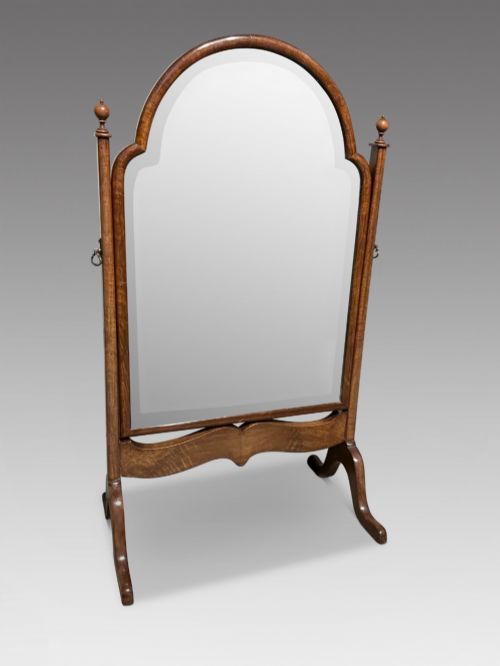
Object forms include lowboys, kneehole desks, console tables, and table mirrors equipped with bureau fitments.
What varies in quality
The choice and matching of veneer significantly influence the visual impact of a piece, with symmetrical book-matching representing higher craftsmanship. Subtle details such as original brass drop handles, escutcheons, and cleanly cut dovetails elevate the standing of an item.
Proportion and the preservation of original surfaces distinguish finer examples from later revivals or heavily restored items. The depth of colour and the preservation of the polished walnut skin determine how well the timber has aged over the decades.
Maurice Adams
The Figured Walnut Dressing Table Glossary
- Figured walnut
- Timber possessing an attractive, highly figured grain pattern caused by branching or growth irregularities in the tree. This wood is sliced into veneers to ornament the primary surfaces of fine cabinetry.
- Lowboy
- A small table with one or more rows of drawers, commonly standing on four tall legs. They originated in the late seventeenth century and served variously as dressing tables, side tables, or writing desks.
- Kneehole desk
- A compact desk or dressing table featuring a central recessed space for the legs, flanked by pedestals of small drawers. Georgian cabinetmakers produced these with considerable elegance.
- Burr walnut
- Wood taken from a tree growth or wart, yielding a swirling, mottled grain full of intricate eye formations. It is prized for high-end decorative veneering.
- Herringbone inlay
- A delicate band of veneer laid in a V-shaped pattern resembling the bones of a fish. It frequently frames the drawer fronts and borders of walnut furniture from the eighteenth century.
Figured Walnut Dressing Table: Frequently Asked Questions
What is a lowboy?
A lowboy is a compact table with drawers, typically used historically as a dressing table or a side table. Its modest proportions make it adaptable for modern spaces.
These pieces offer surface space and drawer storage without overwhelming a room.
How do I date walnut furniture?
Dating walnut furniture involves examining construction methods, hardware types, and stylistic cues. Eighteenth-century pieces often display hand-cut dovetails and distinct timber patination.
Later Victorian and Art Deco examples adopt different structural forms and veneer treatments characteristic of their respective eras.
Are mirrors original?
Mirrors on antique dressing tables and table mirrors frequently show signs of replacement or silvering deterioration over time. Inspecting the glass bevels and the backing boards helps determine age.
Many surviving pieces retain their original mirror plates, though replacement glass remains common in functional pieces.
Where should I place a dressing table?
A dressing table fits well in a bedroom or dressing room, positioned near natural light if used for grooming. Compact forms also function effectively as writing desks in living areas or studies.
The rich tones of walnut complement both traditional interiors and modern minimalist spaces.