
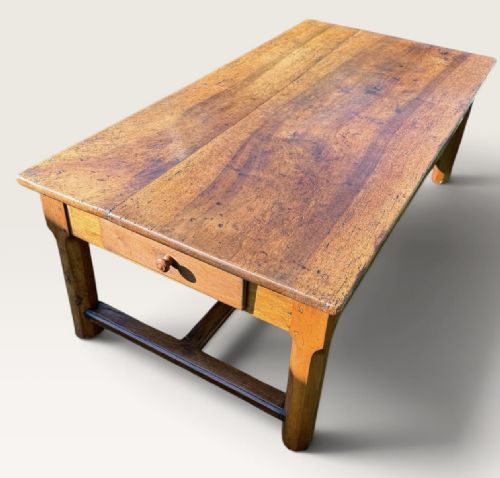
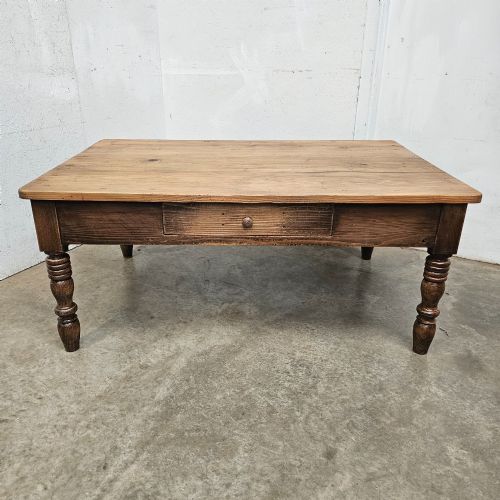
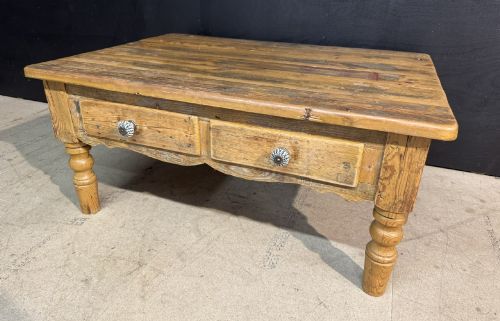
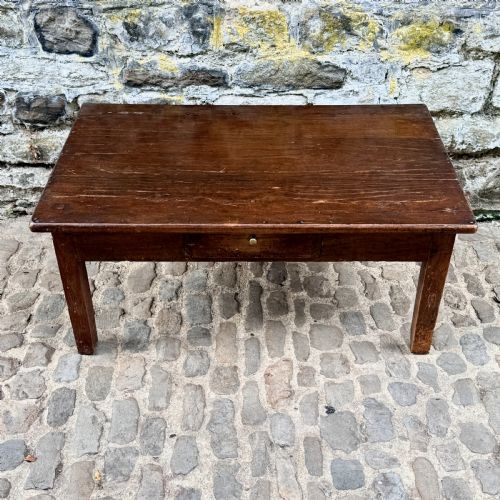
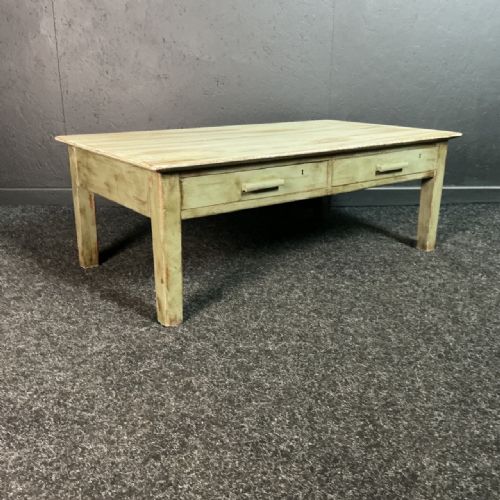
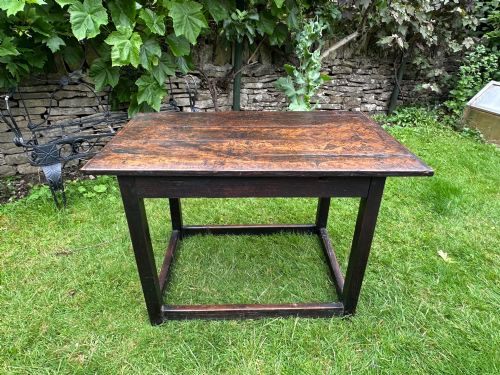
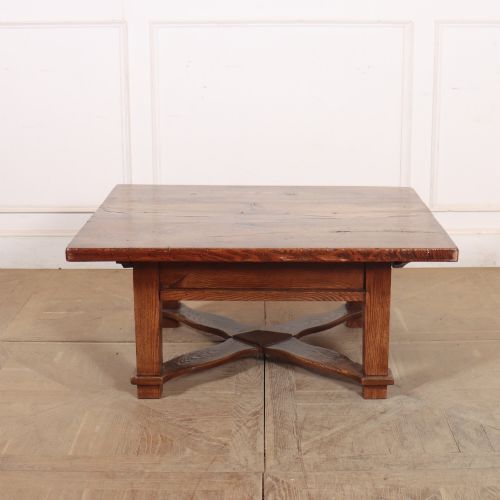


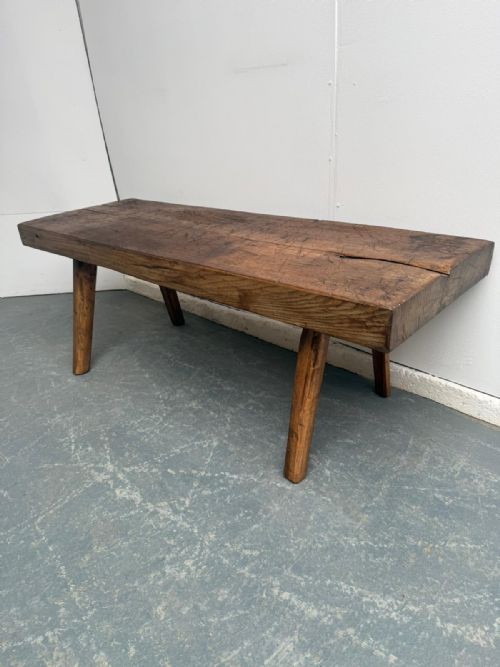


Farmhouse Wooden Coffee Table
These farmhouse wooden coffee table selections bring genuine utility and rustic warmth to a room through solid timbers and honest vernacular construction.
Farmhouse Wooden Coffee Table
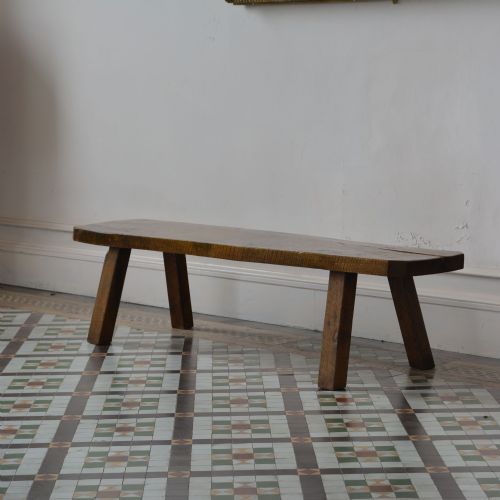
A farmhouse wooden coffee table is a low surface built from domestic timbers, drawing on traditions of country furniture, kitchen tables, and benches. When searching this phrase, buyers encounter pieces fashioned from earlier work tables, dough bins, cheese presses, and pig benches adapted for modern living.
The selection ranges from 18th-century walnut and oak examples to Victorian pine and Edwardian pieces. Buyers meet scrubbed sycamore, elm, cherrywood, and painted hardwoods alongside distinct regional styles including French provincial, Austrian country, and English country.
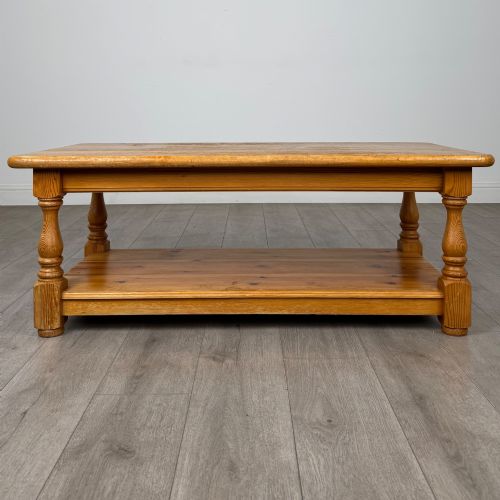
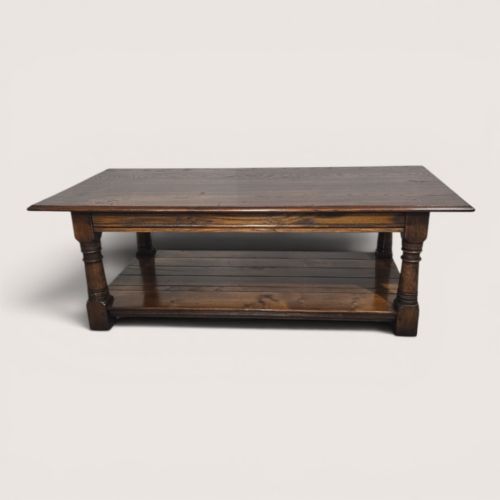
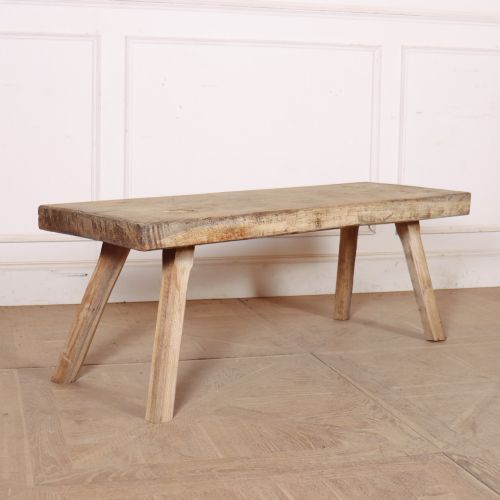
Most items on this page lean towards rustic farmhouse and country aesthetics, utilising thick plank tops and sturdy turned or trestle legs. These low tables offer substantial surface area and deep patination earned through decades of domestic or agricultural use.
How They Were Made
Carpenters constructed these tables using dense hardwoods and conifers like oak, elm, walnut, pine, and sycamore. Planks were joined with simple, robust framing techniques designed to withstand heavy daily use in farmhouses and workshops.
Surfaces often show the marks of hand tools, adzes, and scrubbers, leaving textured grain and natural undulations in the wood. Many pieces integrate drawers with wooden pulls or retain traces of old paint and natural wax finishes.
Several tables began life as cheese presses or dough bins before finding retirement as low coffee tables.
What Varies in Quality
Quality rests in the integrity of the timber and the depth of the natural surface patina. Dense grain in timbers like old oak, walnut, and elm distinguishes superior boards from softer or more uniform modern pine.
Proportion and structural honesty separate better examples from altered items. Pieces retaining their original scrubbed finish, pegged joints, and untouched regional characteristics command greater interest among collectors.
The Farmhouse Wooden Coffee Table Glossary
- Pig bench
- A low wooden bench traditionally used in rural preparation work, repurposed today as a narrow coffee table. These items typically feature thick plank tops and sturdy legs.
- Dough bin
- A deep wooden container with a lid, used historically for rising bread dough and now collected as a low table or storage piece. They display box construction and aged timber.
- Trestle table
- A table structure where the top rests on two or more supporting frames rather than four corner legs. This form appears frequently in French country furniture.
- Scrubbed finish
- A timber surface washed repeatedly with water and soap until the soft grain erodes and leaves a pale, textured finish. This treatment is common on sycamore and elm tops.
- Plank top
- A table surface constructed from multiple wide boards joined edge to edge. This method showcases the natural grain and growth rings of the tree.
Farmhouse Wooden Coffee Table: Frequently Asked Questions
What is a farmhouse wooden coffee table?
A farmhouse wooden coffee table is a low surface created from traditional country timbers, often derived from older utilitarian forms like work tables or benches. These pieces bring historical character and robust construction into domestic living spaces.
They span multiple centuries and regional styles, utilising woods such as oak, pine, elm, and walnut. Each piece displays distinct markings and patination from its previous life.
How do I clean a wooden coffee table?
Cleaning requires a soft, dry cloth to remove dust without disturbing the aged wax or dry timber surface. Avoid harsh chemical cleaners that strip the historic finish and patina.
For stubborn marks, a damp cloth with mild soap can be applied gently, followed immediately by drying. Regular waxing helps nourish older hardwoods like oak and walnut.
Are these tables made from reclaimed wood?
The pieces listed are period items originating from the 18th, 19th, and early 20th centuries, rather than modern reproductions built with reclaimed timber. Their age is genuine, stemming from agricultural and domestic use.
Materials include historical stocks of pine, fruitwood, chestnut, and cherry, shaped by past generations of country carpenters.
How do I style a rustic coffee table?
A rustic coffee table pairs well with neutral upholstery, natural stone, and textiles that complement the aged grain of the wood. Allowing the timber top to remain largely uncovered highlights its natural texture and colour.
Simple objects like ceramic vessels, iron items, or books fit the vernacular aesthetic of country furniture without overwhelming the surface.
What wood types are most common?
Pine and oak appear frequently across 19th-century and Victorian listings, alongside dense hardwoods like elm, walnut, and sycamore. Regional variations introduce cherrywood, chestnut, and painted surfaces.
Each wood species ages differently, giving rise to distinct hues ranging from pale scrubbed sycamore to deep brown walnut.