
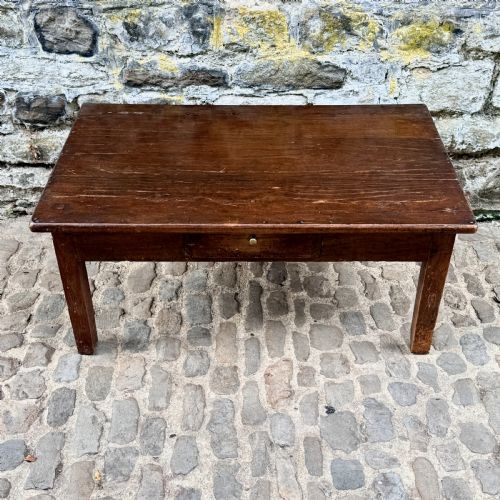
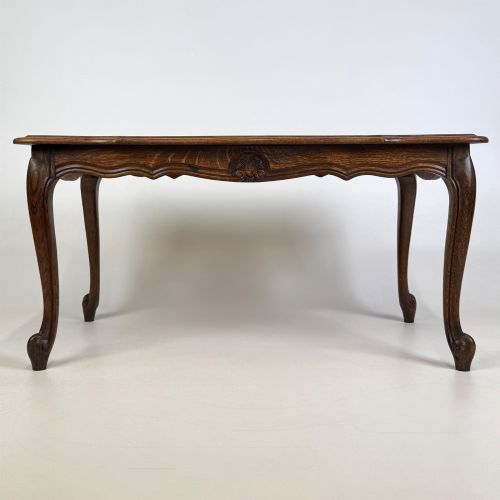
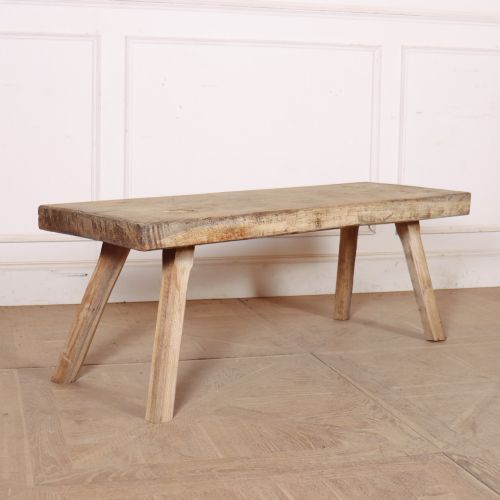


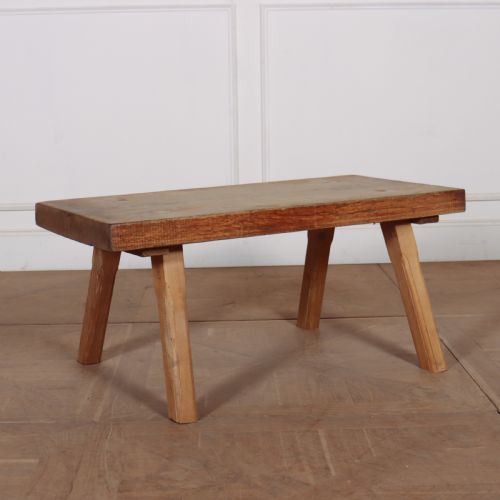


French Oak Coffee Table
A french oak coffee table brings honest timber and provincial utility straight to the centre of a room.
French Oak Coffee Table
A french oak coffee table draws on centuries of domestic craft, appearing in forms ranging from low rustic boards to refined country pieces. Buyers find these tables grounded in proportions suited to everyday living, often carrying the marks of previous utilitarian service.
The pieces on this page span the eighteenth, nineteenth, and early twentieth centuries, alongside Edwardian examples and diverse regional interpretations. Alongside primary oak, the selection frequently incorporates elm, chestnut, sycamore, and fruitwood.
Provincial and rustic farmhouse aesthetics dominate the selection, reflecting a preference for straightforward construction over elaborate ornament. Low tables and altered side tables make up a substantial portion of the available forms.
Materials and Construction
Makers relied primarily on solid oak and secondary timbers like elm, sycamore, and chestnut, joining boards with pegged mortise and tenon joints. Surfaces often reveal the texture of hand-planing and saw marks left by early woodworking tools.
Bleaching, scrubbing, and painting appear across the periods, altering the natural tone of the timber while preserving the underlying grain. Iron hardware and turned legs provide structural support and functional detail on specific examples.
Styles recorded in this category incorporate French Provincial, Rustic Farmhouse, French Country, and Dutch Rococo.
Evaluating Quality
Quality rests upon the integrity of the timber selection and the harmony of the proportions, distinguishing heavy utilitarian boards from lighter domestic furniture. Tables retain more presence when the grain and natural figure of the oak remain uninterrupted by excessive restoration.
The character of the surface finish dictates the visual weight of the piece, whether through an undisturbed early patina or a clean scrubbed treatment. Construction depth, visible in the joinery and leg turnings, separates standard provincial pieces from finer workshop productions.
The French Oak Coffee Table Glossary
- Bleached oak
- Timber treated to lighten its natural dark tone, exposing the grain with a pale finish. This treatment proves particularly common on nineteenth-century French tables.
- Dough bin
- A deep wooden container with a lid, historically used for kneading bread, which is sometimes adapted into a low table. These utilitarian pieces feature heavy sides and simple framing.
- Trestle table
- A design supported by two or more upright frames connected by a horizontal beam. This construction allows for maximum legroom beneath the top.
- Fruitwood
- Dense timber gathered from fruit-bearing trees such as cherry, utilised by provincial makers for contrasting panels or secondary elements. It ages to a warm, rich tone.
- Provincial
- Denoting styles originating from the regions outside the capital, characterised by practical construction and local materials. These items prioritize utility over courtly fashion.
French Oak Coffee Table: Frequently Asked Questions
How do I clean a scrubbed oak table?
Scrubbed timber responds best to dry brushing or a damp cloth without harsh chemical detergents. Excessive moisture damages the dry grain.
Applying a clear beeswax paste helps protect the porous surface from daily spills while maintaining the matte texture.
Are these tables from the eighteenth century?
Eighteenth-century examples exist within the selection alongside nineteenth-century and Edwardian pieces. Earlier items display distinct hand-cut joinery and deeper patina.
Dates derive from construction methods and timber characteristics observed in the physical record.
Do these low tables have drawers?
Certain examples incorporate side drawers for storage, while others maintain an open frame beneath the top. Drawer construction typically utilises hand-cut dovetails.
Configurations depend on whether the piece began as a dedicated low table or underwent adaptation from an earlier form.
What woods appear alongside oak?
Makers frequently paired oak with elm, chestnut, sycamore, and fruitwood within a single piece. These secondary timbers served for tops, stretchers, or internal framing.
Variations in timber reflect regional resource availability in French provincial workshops.