


Facet Cut Wine Glass
When you handle a facet cut wine glass, you hold centuries of optical cleverness in the palm of your hand.
Facet Cut Wine Glass
A facet cut wine glass brings together slender drinking vessels and stemmed goblets shaped by geometric cutting on the stem or bowl. You will frequently encounter Georgian and eighteenth-century examples alongside Victorian, Edwardian, and nineteenth-century pieces.
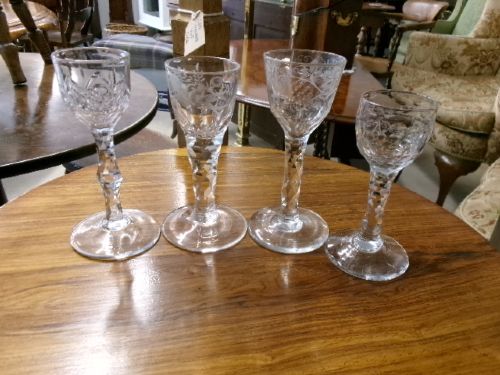
The form spans straightforward cordial and port glasses to elaborately engraved specimens carrying Jacobite symbols, floral motifs, or gilding. Alongside standard wine glasses, the wider evidence reveals related decanters, ewers, and carafes sharing the same cut vocabulary.
Material and Method
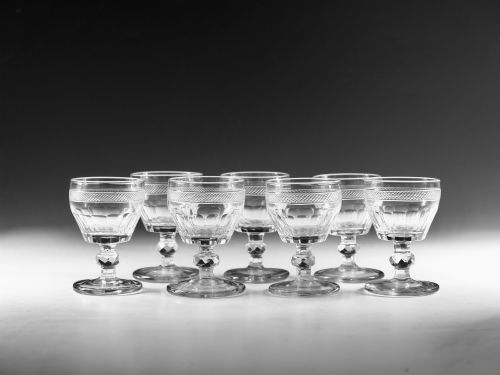
These pieces rely on lead glass, lead crystal, and clear glass shaped through blowing and subsequently worked with abrasive wheels to grind flat facets. This mechanical cutting creates sharp optical angles that catch light differently than mould-blown surfaces.
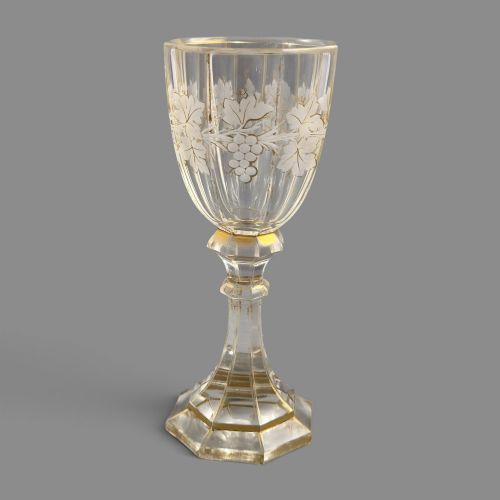
Makers enhanced the structural clarity of the material with diamond moulding, gilding, and copper-wheel engraving. Certain drinking vessels incorporate a folded foot or a thick firing foot for stability during use.
Some eighteenth-century drinkers showed their political loyalties by smashing the glass base after a toast so no lesser health could be drunk from it.
Defining Quality
Quality rests on the crispness of the facet edges and the weight of the metal itself. Sharp, cleanly bounded planes reflect light uniformly, whereas softer cutting lacks the same optical authority.
The integration of secondary decoration matters greatly. Skilled wheel engraving, deliberate gilding, and balanced proportions across the bowl, stem, and wide foot base separate standard workshop output from exceptional examples.
James Giles·Moser Bohemian
The Facet Cut Wine Glass Glossary
- Facet cut
- The application of flat, polished planes to the surface of glass by grinding and polishing on a wheel. This technique creates a series of reflective angles along the stem or bowl.
- Jacobite engraving
- Hidden political symbolism etched onto eighteenth-century glassware to show support for the exiled Stuart cause. These decorations often include roses, buds, and oak leaves.
- Firing foot
- A sturdy, thickened base found on certain eighteenth-century drinking glasses. Originally designed to withstand the sharp impact of being slammed onto a tavern table after a toast.
- Medial knop
- A prominent raised swelling or node situated midway down the stem of a glass. It provides a tactile grip and breaks the vertical line of the faceted stem.
- OXO engraving
- A specific decorative band of cross and circle motifs frequently found encircling the upper bowls of Georgian drinking vessels.
Facet Cut Wine Glass: Frequently Asked Questions
How do I spot an eighteenth-century piece?
Eighteenth-century examples often display hand-polished facets on slender stems paired with folded or heavy trumpet feet. The metal may show subtle surface ripples and tiny air bubbles trapped within the glass mass.
Examine the engraving style carefully, as period pieces feature hand-cut wheel work rather than acid etching. The proportions tend to feel lighter and more organic than later nineteenth-century revivals.
What is a Jacobite glass?
A Jacobite glass carries covert symbols supporting the exiled House of Stuart during the eighteenth century. Look for engraved roses with specific numbers of petals and accompanying oak leaves.
These glasses were used in secret drinking clubs for loyal toasts. Genuine examples require careful attribution through the cutting style of the stem and the specifics of the engraving.
Can I use antique wine glasses?
Using these glasses remains possible, though hand-washing in warm water is essential to preserve the historic surface. Avoid drastic temperature changes to protect the old lead glass from thermal shock.
Their delicate nature and historic value mean many collectors prefer display over daily dining. Handle them by the stem rather than the thin bowl walls.