


Expressionist Landscape Canvas
An expressionist landscape canvas brings raw emotion and bold brushwork to your wall, capturing places through intense colour and charged forms rather than quiet realism.
Expressionist Landscape Canvas
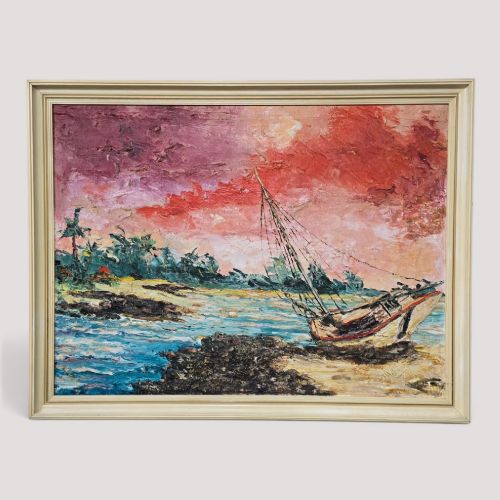
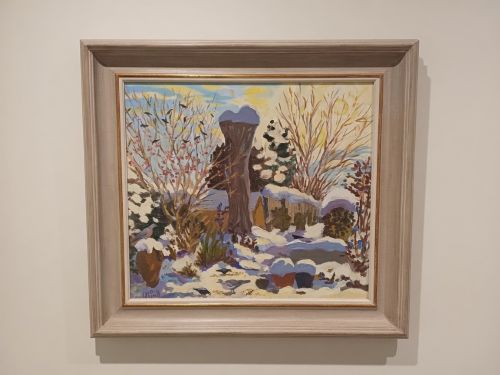
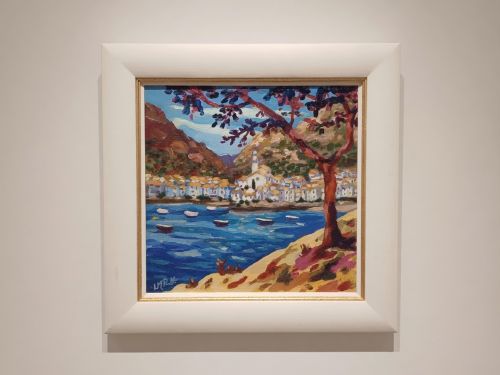
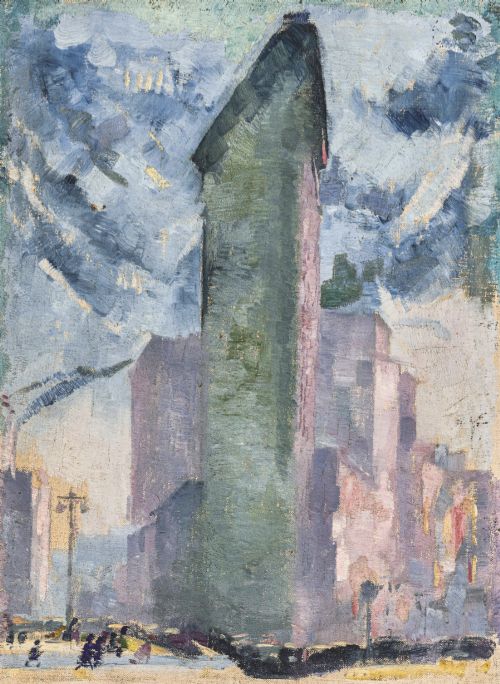
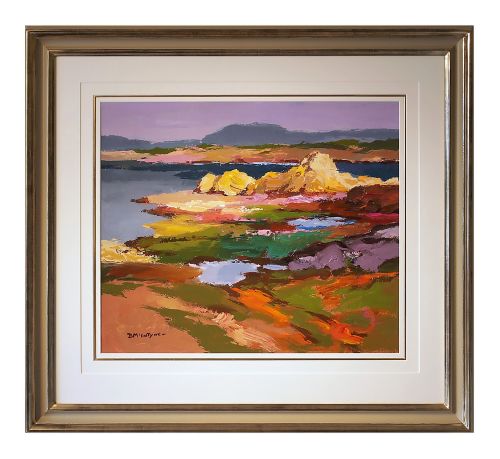
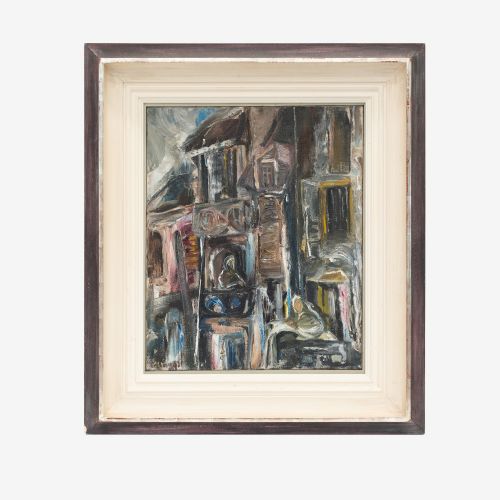
When you search for an expressionist landscape canvas, you encounter works spanning the decades from the early twentieth century through to the nineteen-sixties. These pieces range from quiet village scenes and moody winter views to vibrant Mediterranean vistas and bustling cityscapes, reflecting diverse European traditions.
The most common examples on this page date from the mid-twentieth century, particularly the nineteen-fifties and nineteen-sixties. They often arrive framed in wood, presenting varied subjects from Welsh ponies to Parisian quays and French horse racing scenes.
How they were made
Artists built these compositions primarily using oil paint applied directly to woven canvas or occasionally board. Many works employ thick impasto techniques, laying down heavy pigments that build physical texture and dimension across the surface.
Makers housed their works within complementary wood frames designed to contain and support the stretched canvas. The combination of oil pigment and textured brushwork gives each piece its distinct physical presence.
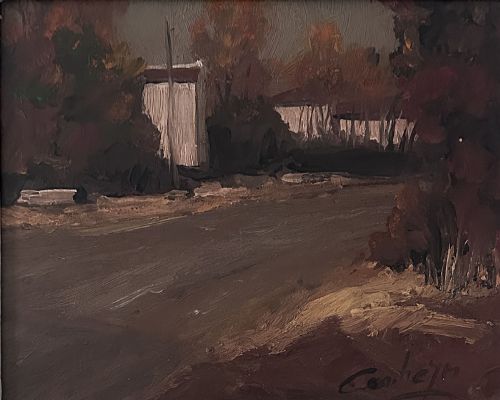
Among the winter scenes and bustling cityscapes, a painted chicken coop quietly holds its ground alongside Parisian quays.
What varies in quality
The strength of an expressionist landscape canvas rests in the confidence of its handling and the coherence of its palette. Stronger examples display a purposeful command over colour and form, where every stroke contributes to the emotional resonance of the scene.
Weaker pieces can rely on formulaic gestures or hesitant application that dulls the impact of the landscape. The most compelling works sustain their intensity across the entire surface, balancing structural composition with expressive freedom.
Lucy Pratt·Alfred Wolmark·Donald McIntyre·Lilian Colbourn·Hazel M Barnett·Gabriel Dauchot·Mercedes Legrand·Emanuele Cappello·Kenneth B Malpass·Hans Kappel Ovre·Lillian M Harrison·Markey Robinson·Pierre Peltier·Yvette Alde
The Expressionist Landscape Canvas Glossary
- Impasto
- Paint applied thickly to a canvas, standing out in relief from the surface and catching the light. This technique accentuates the physical gesture of the brush.
- Fauvism
- A style characterised by strong colours and wild brushwork over realistic representation. Practitioners prioritized painterly qualities and bold colour choices above naturalistic values.
- Mid-Century Modern
- Design and fine art movements spanning the middle decades of the twentieth century. These works lean towards simplified forms and expressive abstraction.
- Canvas
- A heavy woven fabric used as a surface for oil painting. It provides the tensile strength needed to support thick layers of pigment.
Expressionist Landscape Canvas: Frequently Asked Questions
How do I hang a large canvas?
Ensure your wall fixings match the weight of the wood frame and stretched canvas. Secure the hanging wire or brackets firmly to wall studs to keep the painting level.
Position the centre of the canvas at eye level to create a balanced focal point in your room.
Where should I place these paintings?
Keep expressionist canvases away from direct sunlight, radiators and damp spaces to protect the oil paint and wood frame. Stable room temperatures prevent the canvas from warping.
Choose walls with good ambient lighting to bring out the varied textures and bold tones of the pigment.
How do I date an older canvas?
Examine the back of the canvas, stretcher bars and frame for signatures, dates, gallery labels or inscriptions. The materials used, such as specific weaves and older wood frames, offer further clues.
Compare the stylistic traits and brushwork with known works from the artist or period.