
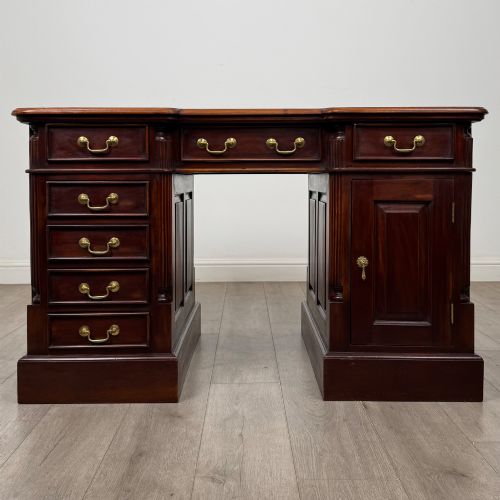
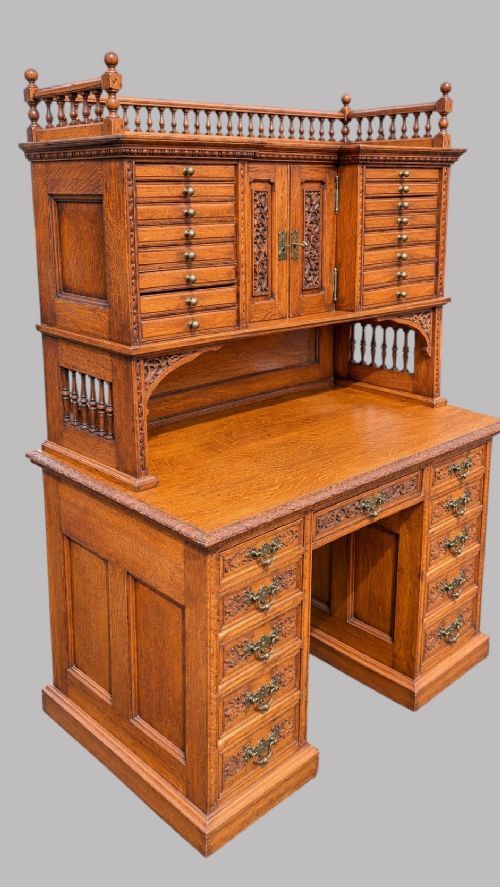
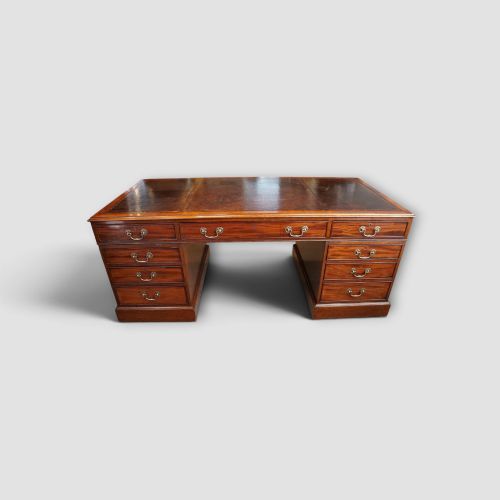


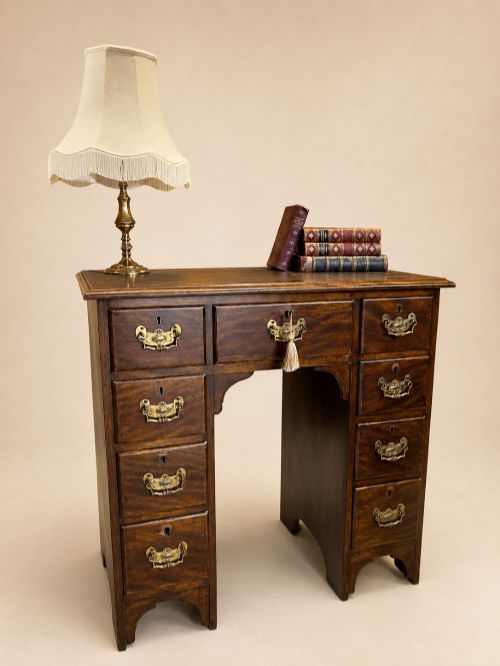
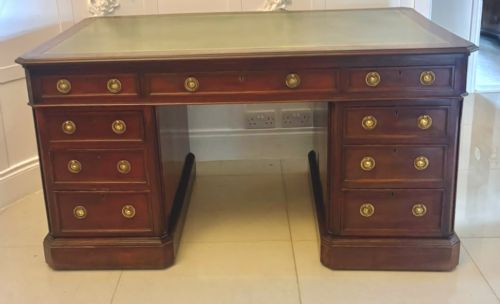
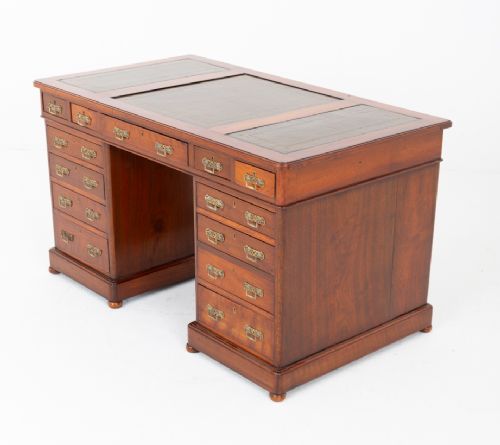
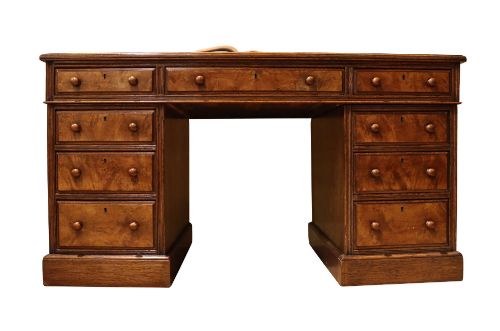
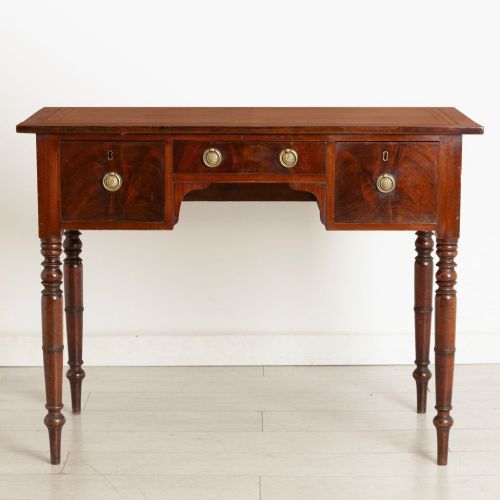
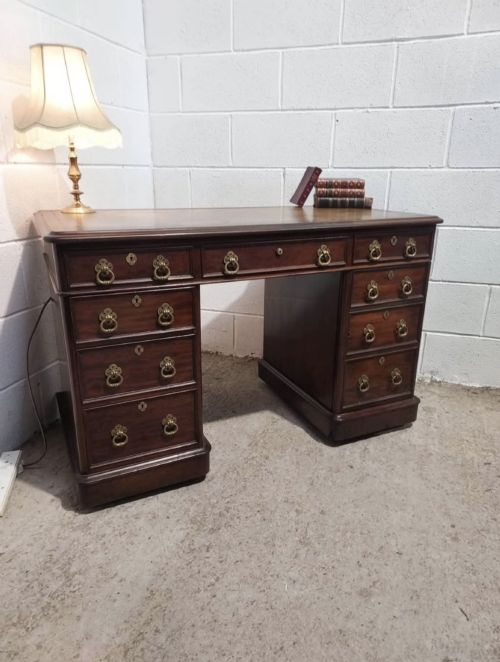
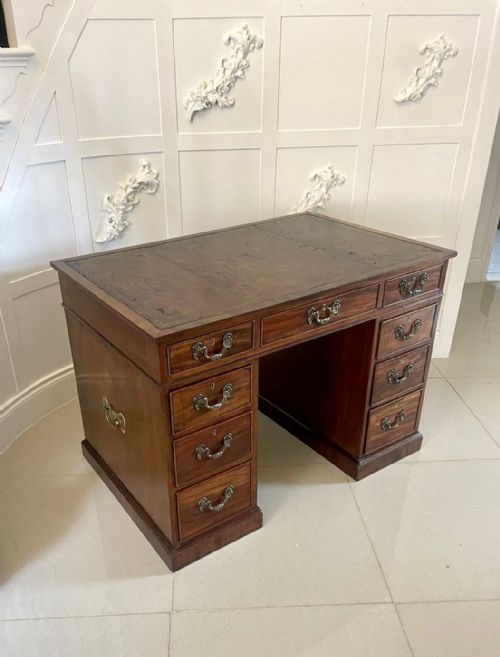
Executive Office Kneehole Desk
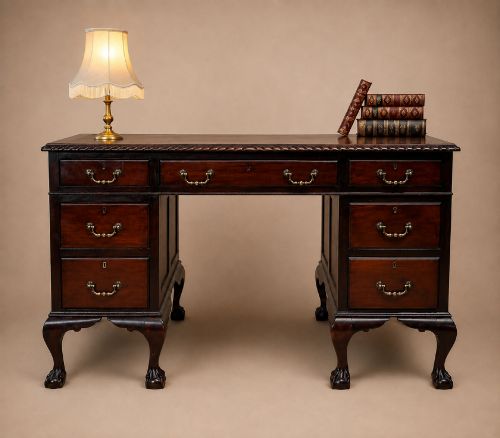
An executive office kneehole desk is a substantial workspace featuring central knee recesses flanked by banks of drawers, designed for serious daily use.
Executive Office Kneehole Desk
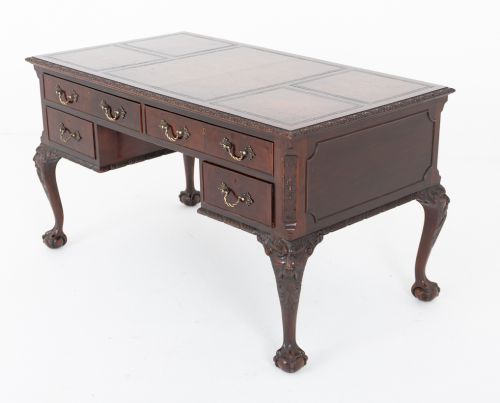
An executive office kneehole desk provides a commanding central workspace with pedestals of drawers on either side of a central recess. These pieces originate across the eighteenth, nineteenth, and early twentieth centuries, spanning periods from Georgian through Victorian and Edwardian up to Art Deco.
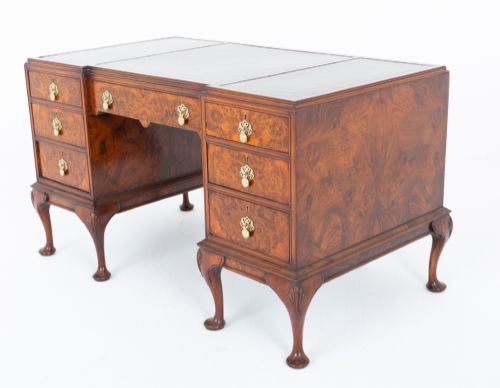
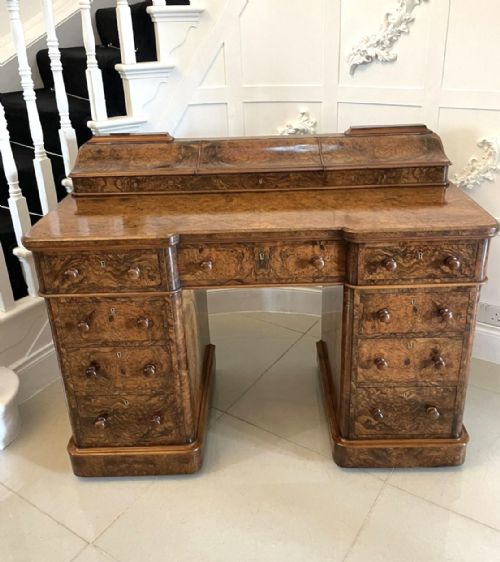
The version most commonly met on this page is the nineteenth-century Victorian mahogany pedestal desk, often equipped with fitted stationery drawers and writing slides. Alongside these, examples in burr walnut, oak, and walnut emerge, with revival styles and twentieth-century modernist interpretations rounding out the selection.
The form suits private studies and grand home offices where storage and surface area are priorities. The integration of pedestals allows substantial storage without sacrificing legroom at the centre.
Materials and construction methods
Timbers such as mahogany, oak, and walnut form the structural backbone of these desks, frequently enhanced by burr walnut veneers selected for their rich figuring. Cabinetmakers utilised solid woods for framing and primary surfaces while applying choice veneers to drawer fronts and top panels.
Writing surfaces are traditionally lined with leather, often tooled with gilt decoration, providing a durable and tactile writing plane. Hardware such as brass handles and drawer pulls complete the construction, alongside fitted internal compartments for stationery and documents.
Secret compartments hidden behind dummy book spines in the pedestals occasionally await the curious new owner.
Assessing quality in execution
Quality reveals itself in the selection of timbers and the precision of the cabinetwork, particularly in the matching of veneers across drawer fronts and the tightness of the drawer dovetails. Superior examples exhibit refined carving, original hardware, and thoughtful internal fitments like stationery drawers and pull-out writing slides.
The integrity of secondary woods used in drawer linings and the presence of makers' signatures or stamps elevate a piece. Lesser examples rely on heavier, uninspired construction or mismatched timber selections that lack the cohesion found in the finest workshops.
Trollope & sons·Maple & Co·Wylie & Lochhead Glasgow·Betty Joel·Gill & Reigate
The Executive Office Kneehole Desk Glossary
- Kneehole
- A central recessed space beneath a desk top designed to accommodate the user's legs. This configuration allows for banks of drawers to flank either side.
- Pedestal desk
- A heavy freestanding desk consisting of two independent drawer pedestals supporting a wide top. They often include cupboards or additional drawers on the reverse side.
- Burr walnut
- A figured wood veneer derived from the abnormal growths on walnut trees. Cabinetmakers prize it for its intricate, swirling grain patterns.
- Writing slide
- A pull-out shelf located immediately beneath the desk top. It provides extra surface area for writing or sorting papers without cluttering the main desk.
- Partners desk
- A large pedestal desk designed for two people to work opposite one another. These pieces feature drawers and cupboards accessible from both sides.
Executive Office Kneehole Desk: Frequently Asked Questions
What is a kneehole desk?
A kneehole desk is a freestanding or pedestal writing table featuring a central recess for the legs, flanked by vertical banks of drawers. This layout provides generous surface space combined with structured storage.
Historically deployed in studies and administrative offices, the form keeps essential papers and writing tools close at hand while maintaining a balanced, architectural silhouette.
How do I date a pedestal desk?
Dating relies on examining timber choices, construction techniques, and stylistic cues such as hardware and leg design. Georgian and Victorian iterations often employ solid mahogany or oak with hand-cut dovetails, whereas later nineteenth and twentieth-century pieces might utilise burr walnut veneers or industrial chrome.
Secondary woods inside the drawers and the presence of original locks or manufacturer stamps offer further chronological markers.
Are these desks suitable for daily work?
These desks are built for heavy administrative duties, offering expansive wooden tops and numerous drawers for modern office supplies. Many incorporate pull-out writing slides to extend the working surface temporarily.
Their robust construction handles computers and paperwork comfortably, provided the chair height aligns with the kneehole clearance.
How should I care for a leather top?
Leather writing surfaces require gentle cleaning with a slightly damp cloth followed by a neutral leather conditioner to prevent drying and cracking. Avoid abrasive cleaners and excessive moisture.
Using blotters during heavy writing protects the leather from ink stains and physical indentation over time.