



Executive Leather Desk Armchair
An executive leather desk armchair anchors a study with deep timber frames and supple hides.

Executive Leather Desk Armchair
An executive leather desk armchair combines robust timber frames with upholstered hide to provide a heavy seating option for writing tables and home studies. These chairs appear in several regional vernaculars and formal revivals, drawing on historical forms to suit working rooms.
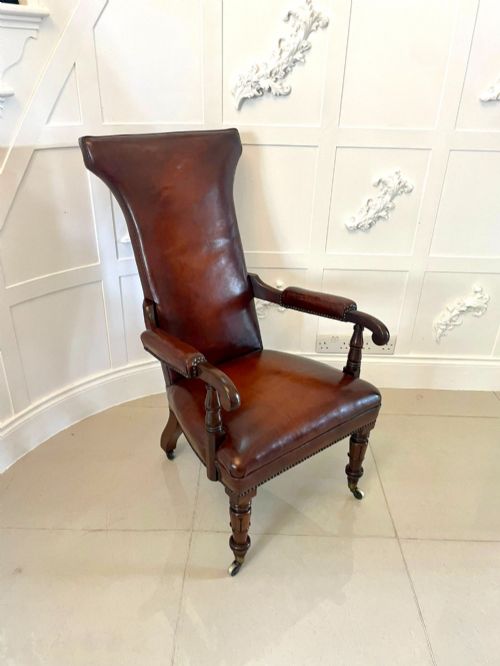
Most examples found here date from the nineteenth and early twentieth centuries, spanning Victorian, Edwardian, and Regency periods. Buyers frequently encounter revolving mechanisms, swivel bases, and fixed library armchairs constructed from durable hardwoods.
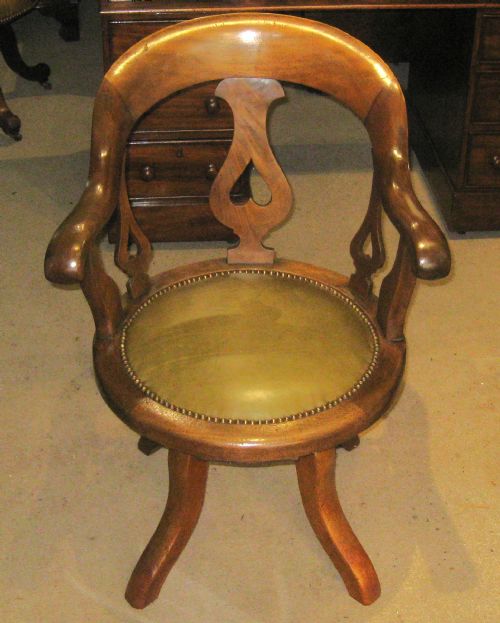
Makers adapted classical cabinet-making traditions into functional office furniture. The resulting forms range from simple bow backs to buttoned reading chairs and pivoting desk seats.
Materials and construction
Carpenters utilised dense hardwoods such as mahogany, walnut, oak, and rosewood for the primary frames to withstand daily pivoting and weight bearing. Brass fittings, cast iron swivels, and brass castors often reinforce the base and mobility of the seat.
Upholstery workers stretched leather across padded seats and backs, frequently securing the edges with brass clout nails. Timber components were turned, carved, or joined using traditional mortise and tenon methods to ensure structural longevity.
Several gentleman's gaming chairs hide their swivel mechanics beneath deep mahogany frames, ready for long evenings of intense card play.
Assessing quality
Quality rests upon the density of the primary timber and the integrity of the internal joinery. Chairs that retain their original swivel mechanisms and uncompromised wooden frames demonstrate superior craftsmanship.
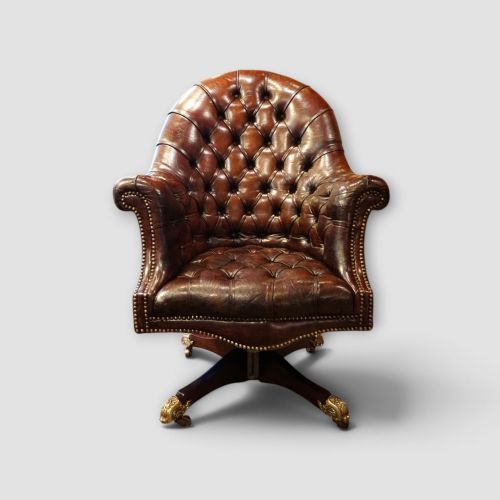
The grade of the leather and the depth of the hand-stitched buttoning indicate the original workshop tier. Well-preserved patination on both the timber and the hide distinguishes superior examples from later replacements.
WM Heywood Chair Co
The Executive Leather Desk Armchair Glossary
- Revolving desk chair
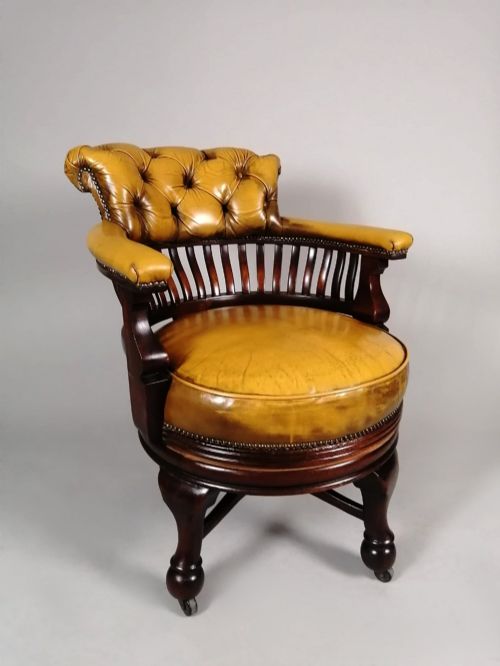
- A seating form fitted with a central spindle and undercarriage that allows the occupant to turn freely. This mechanism often includes a wooden or cast iron spider base.
- Gainsborough style
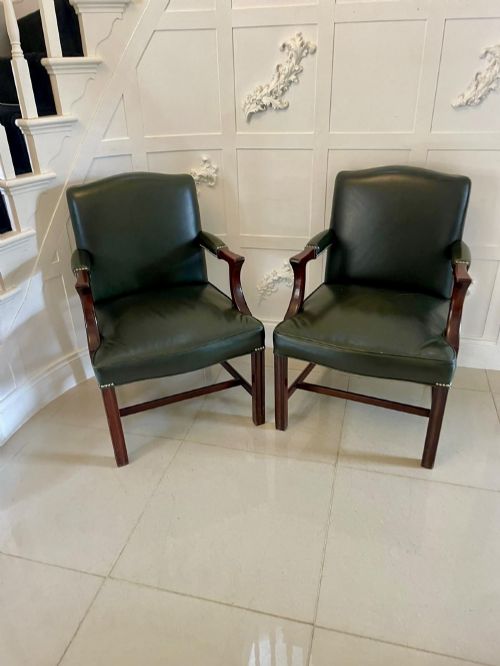
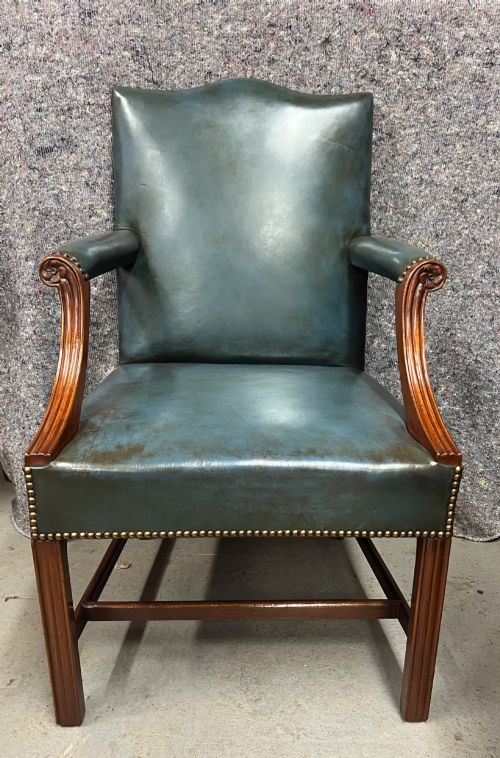
- A roomy upholstered armchair with open padded arms, low sides, and short legs designed for writing desks. Eighteenth-century models inspired later Victorian and Edwardian copies.
- Library armchair
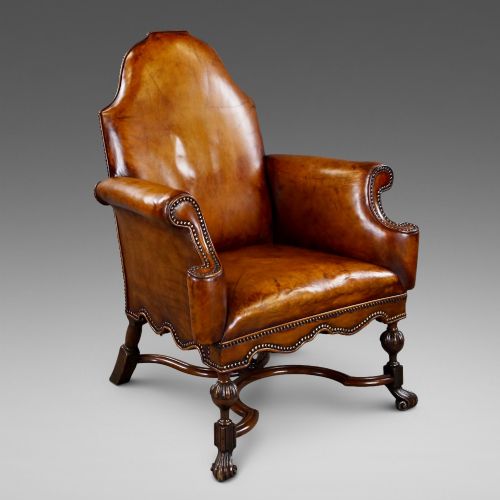
- A comfortable upholstered chair meant for reading rooms, typically featuring padded armrests and a supportive high back. These pieces often combine mahogany or walnut frames with leather upholstery.
- Bow back
- A curved wooden backrest rail that sweeps continuously around the upper frame to form the arm supports. This construction offers structural rigidity in swivel and office seating.
- Buttoned leather
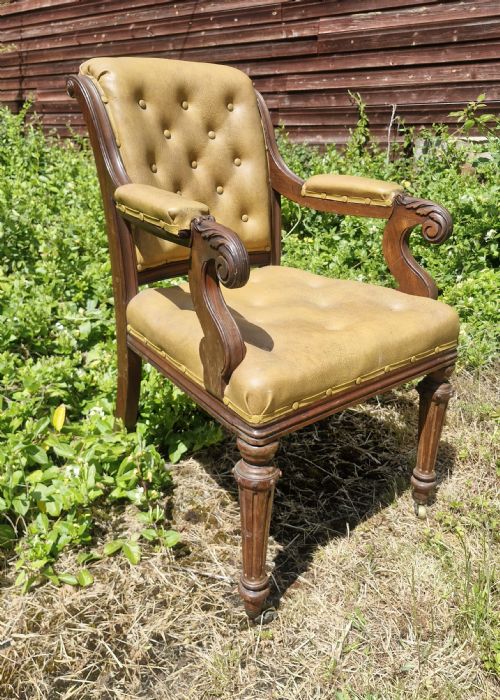
- An upholstery technique where leather is pulled tight and secured with deep indentations held by buttons or tufts. This method creates a patterned, resilient surface on the backrest.
Executive Leather Desk Armchair: Frequently Asked Questions
How do I care for antique leather?
Apply specialised leather balms periodically to maintain suppleness and prevent the hide from drying out.
Keep the chair away from direct heat sources and strong sunlight to avoid fading and cracking.
Are these chairs comfortable for daily work?
Many Victorian and Edwardian office chairs feature ergonomic curved backs and padded seats designed for prolonged seating.
Revolving and swivel models offer mobility similar to modern desk chairs while retaining traditional timber construction.
How do I identify a Victorian desk chair?
Victorian examples frequently display dense mahogany or walnut frames paired with buttoned leather and heavy brass castors.
Turned wooden spindles and mechanical swivel bases became increasingly common during the late nineteenth century.
What is the difference between a library and a desk armchair?
Library armchairs generally prioritize deep cushioning and stationary frames suitable for reading rooms and domestic studies.
Desk armchairs often incorporate pivoting mechanisms, revolving bases, or narrower proportions to fit neatly beneath writing tables.