
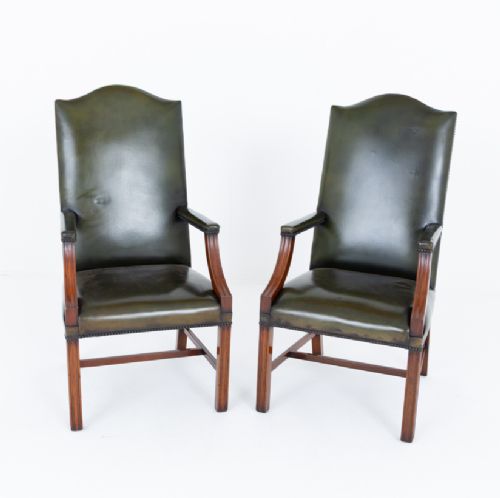


Georgian Revival Library Chair
These georgian revival library chair options offer sturdy timber frames and deep upholstery designed for long hours at a desk or by the hearth.

Georgian Revival Library Chair
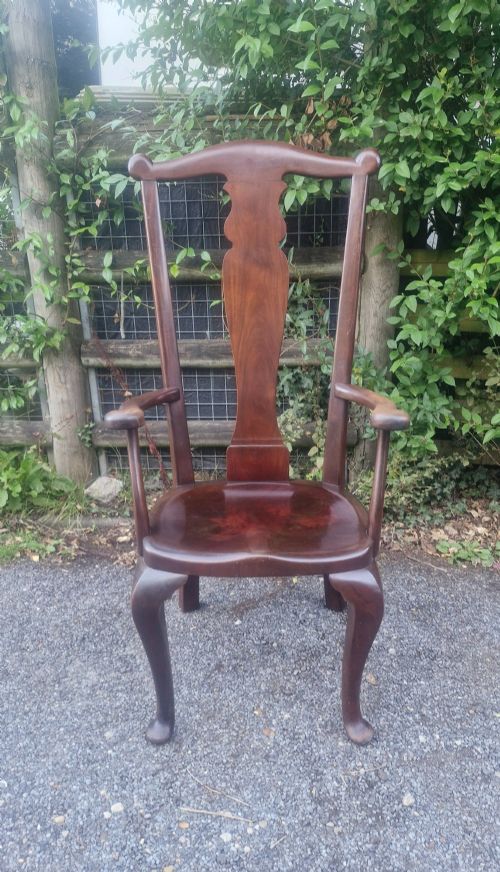
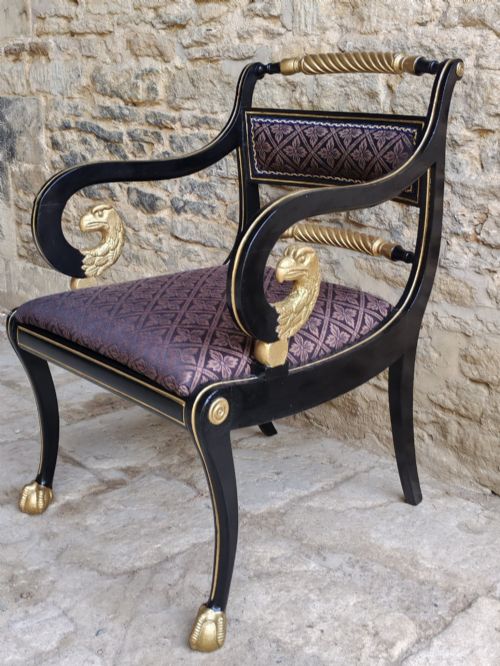
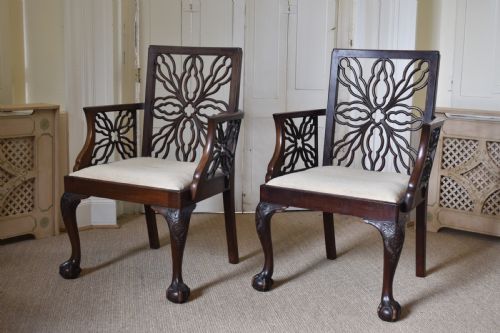
A georgian revival library chair brings together comfortable seating and formal proportions rooted in eighteenth-century design traditions. Most examples found here date from the late nineteenth century into the early twentieth century, taking the form of open armchairs or desk armchairs.
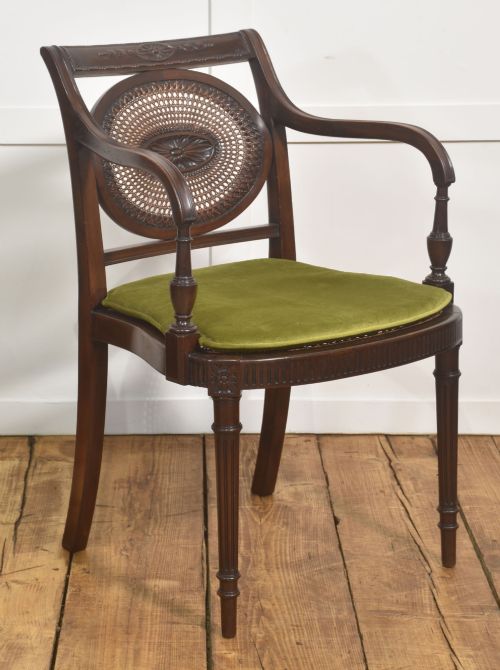
The styles range from Chippendale and Sheraton revivals to grand Regency interpretations. Buyers encounter timber frames fitted with cane panels, leather upholstery, or textile covers suited to study spaces and drawing rooms.
Materials and construction
Makers built these pieces primarily using solid mahogany and walnut frameworks, occasionally incorporating lighter satinwood or beech for secondary structural parts. Timber surfaces frequently feature intricate carving, inlay work, or polished finishes.
Seating areas rely on traditional upholstery methods supported by brass hardware, woven cane, and durable leather or textile coverings. Open armchair designs often incorporate padded armrests and substantial claw and ball feet.
Design influences stretch from eighteenth-century Sheraton and Chippendale models through to Edwardian interpretations.
Distinctions in quality
The standard of a georgian revival library chair rests on the crispness of the timber carving and the integrity of the underlying frame. Superior pieces display thoughtful proportions and careful timber selection rather than purely mechanical production.
Detailing such as hand-tooled leather, tightly woven cane panels, and robust joinery elevate an armchair above simpler domestic seating. The weight and grain of the mahogany or walnut dictate the overall presence of the piece.
The Georgian Revival Library Chair Glossary
- Bergere armchair
- An upholstered seat featuring enclosed cane sides and back panels, popular in period revival furniture. This form provides a lighter visual weight while maintaining solid timber support.
- Gainsborough chair
- A wide, high-backed armchair with padded arms and open sides designed originally for writing desks. These seats typically rest on square or carved legs.
- Chippendale revival
- A style drawing on mid-eighteenth-century motifs such as carved ribbon backs and claw and ball feet. Makers resurrected these designs during the Victorian and Edwardian eras.
- Sheraton revival
- A neoclassical style characterised by slender tapered legs, symmetrical geometry, and delicate inlay work. This approach reflects late-eighteenth-century elegance adapted for later homes.
Georgian Revival Library Chair: Frequently Asked Questions
What is a library chair?
A library chair is a sturdy, comfortable armchair designed for reading rooms and studies, often featuring upholstered pads on the arms.
These seats provide upright support suitable for writing desks or reading tables while maintaining decorative presence.
How do I date a revival chair?
Dating relies on examining timber patination, construction methods, and secondary woods beneath the upholstery.
Revival pieces from the late nineteenth or early twentieth century often combine older aesthetic forms with industrial wood-working techniques.
Are cane panels durable?
Woven cane panels offer flexible and breathable support when properly tensioned across a chair frame.
Careful use ensures these woven sections last for decades without requiring complete re-caning.
Where should I place a desk armchair?
Desk armchairs suit studies, libraries, or home offices where comfortable seated work takes place.
Their substantial timber frames and upholstered seats also function well as accent chairs in larger living spaces.