

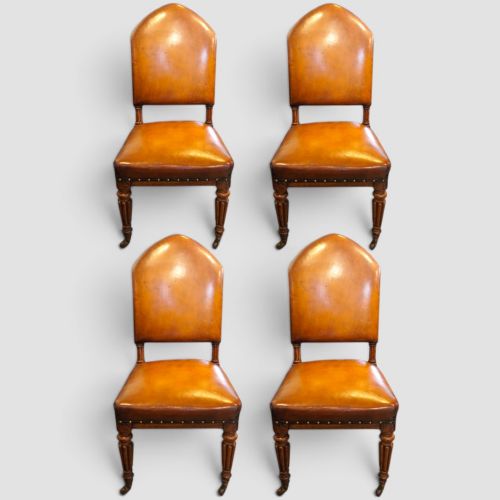
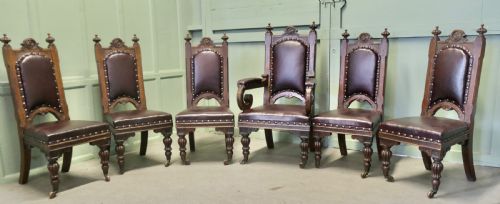
Leather Desk Seating
Leather desk seating brings together period timber and hide upholstery to anchor a study with enduring proportion and utility.

Leather Desk Seating
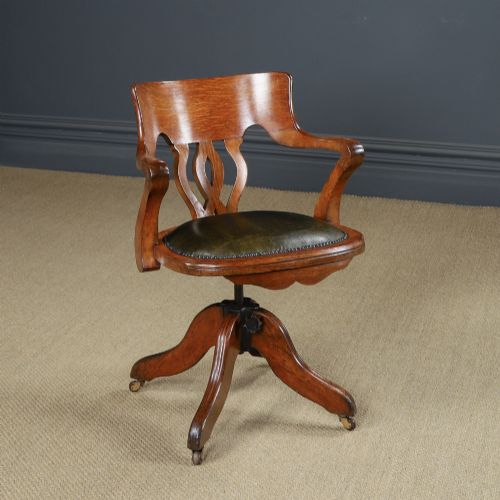
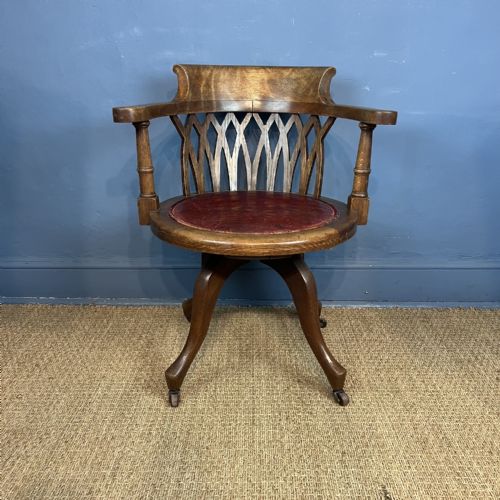
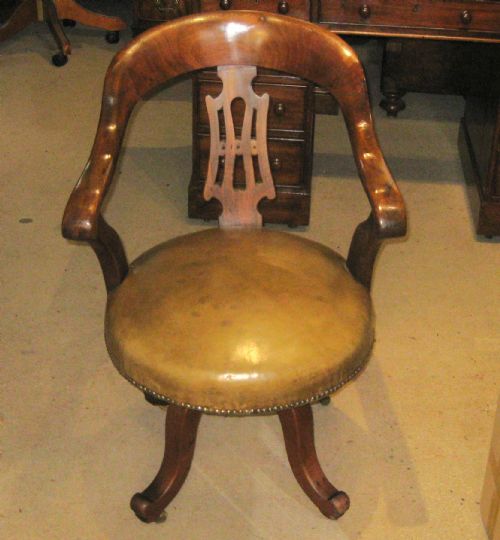
Leather desk seating encompasses revolving office chairs, swivel armchairs, and library seating designed for sustained work. The pieces appearing most frequently range through the Victorian and Edwardian eras into the early twentieth century.
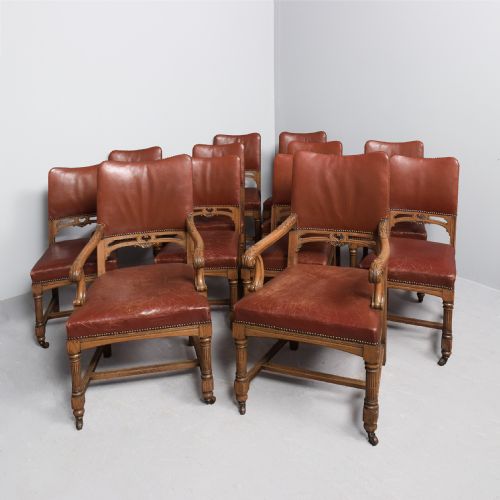
Makers utilised robust timbers such as mahogany, oak, and walnut to build these functional seats. Forms span from revolving desk chairs with brass mechanisms to open armchairs and Gainsborough chairs upholstered in leather.
Materials and construction
The primary timber structure relies on mahogany, oak, or walnut, joined with traditional framing techniques. Leather is stretched over padding and secured to the seat or back rail.
Revolving and swivel examples incorporate brass hardware, iron spindles, and tilt mechanisms that permit movement. Secondary materials like cane appear in supporting panels alongside metal framing on specific office models.
Listings feature eighteenth-century pieces alongside Victorian and Edwardian examples, built primarily from mahogany and oak with leather upholstery.
Craftsmanship and distinction
Distinctions in quality rest on the selection of timber grain, the depth of hand-carved detailing, and the integrity of the structural joinery. Finer examples display superior timber selection and balanced proportions throughout the frame.
The finish of the leather upholstery and the complexity of the swivel or tilt mechanism differentiate standard utility seating from high-grade library chairs and architect-designed pieces.
Gillows·Bruce James Talbert
The Leather Desk Seating Glossary
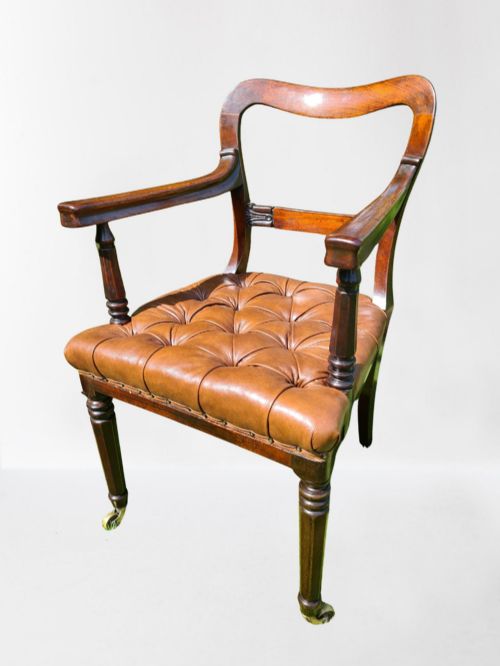
- Gainsborough chair
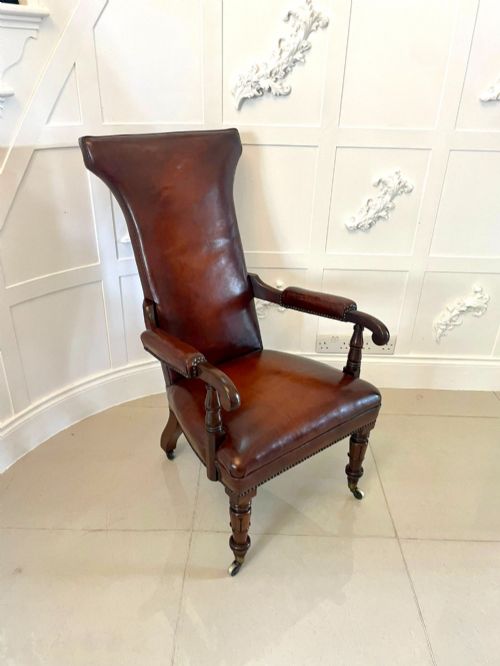
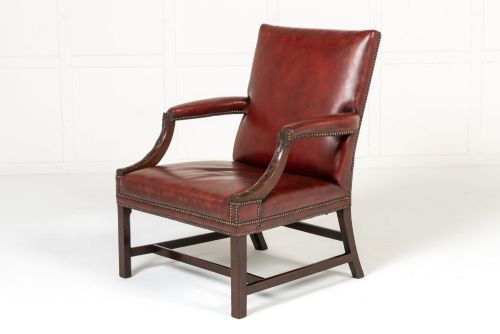
- An upholstered armchair with a wide seat and padded arms, originating in the mid eighteenth century. It was traditionally used at a desk or in a library.
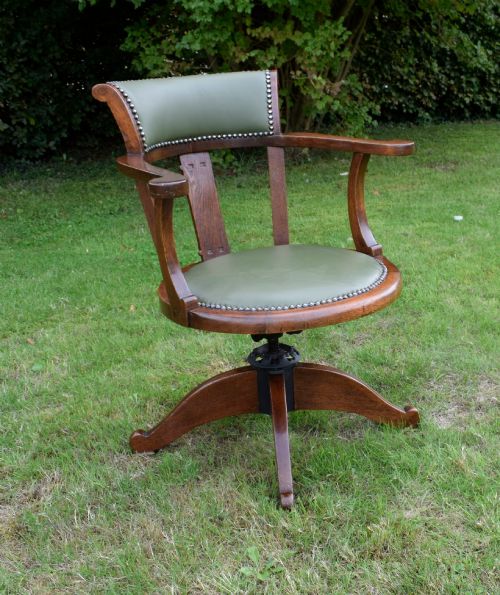
- Revolving desk chair
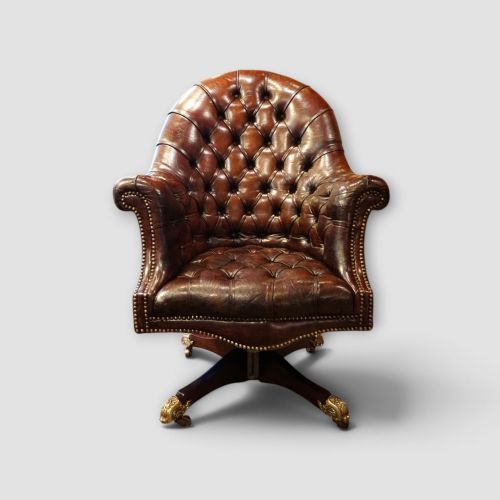
- A seat mounted on a central swivel pivot, often featuring a wooden or iron screw mechanism to adjust height. These models frequently utilise mahogany or oak frames.
- Bergère
- An enclosed upholstered armchair with a wooden frame where the sides are panelled in woven cane or upholstered. This style appears across Regency and Edwardian pieces.
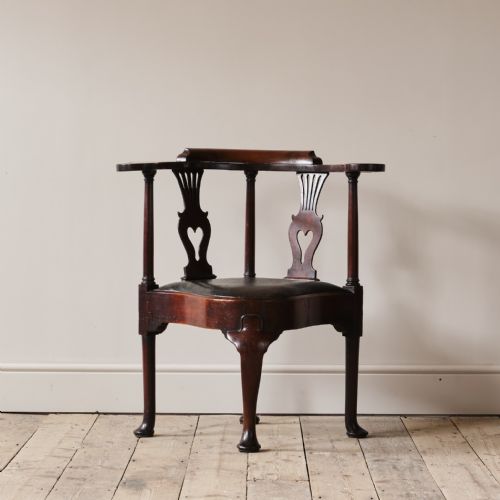
- Corner chair
- A seat designed to fit into the angle of a room, featuring a diagonal orientation with a square seat and a curved back rail supported on turned pillars.
Leather Desk Seating: Frequently Asked Questions
What defines a genuine period desk chair?
A genuine period desk chair combines timber species appropriate to its era, such as mahogany or oak, with traditional joinery methods. Mechanics on revolving models will show the hand-forged iron or brass components typical of nineteenth-century workshop production.
Evidence of age is found in the natural wear of the wood and the patina of the hide upholstery. The presence of makers' marks or specific regional carving styles further confirms the origin of the piece.
How do I maintain leather upholstery?
Maintaining vintage leather requires gentle cleaning with a soft cloth and the application of specialist leather balms to prevent the hide from drying out. Avoiding direct sunlight and excessive heat protects the natural grain from cracking over time.
Regular dusting keeps abrasive particles out of the creases and tufting. Preserving the original leather maintains the character and historic integrity of the chair.
Can I use an antique desk chair daily?
Most period desk chairs are constructed from solid hardwoods like mahogany and oak, making them structurally sound for regular use. Swivel and tilt mechanisms should be checked to ensure safe movement before daily deployment.
Choosing a sturdy Victorian or Edwardian swivel model provides both functional support and historical charm for a modern workspace. Proper adjustment of the height prevents undue strain on the wooden frame and joints.
What is the difference between a Gainsborough and a standard desk chair?
A Gainsborough chair is a wide, upholstered armchair designed for reading or writing, featuring open padded arms and a fixed base. Standard desk chairs often incorporate swivel mechanisms, height adjustment, and more compact proportions for office use.
Gainsborough models prioritise generous seating and decorative wood carving, whereas desk chairs focus on mobility and mechanical utility. Both styles utilise leather upholstery suited for a study or library setting.