

Executive Home Office Desk
An executive home office desk commands the room, bringing historical craftsmanship and leather writing surfaces to modern workspaces.
Executive Home Office Desk
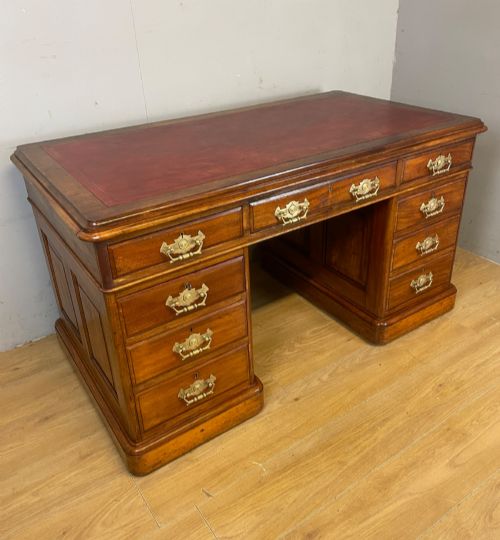
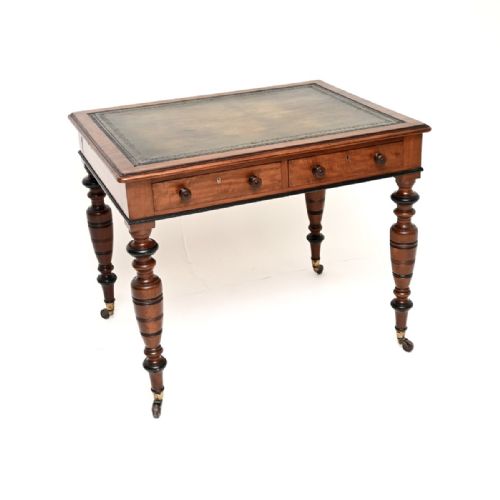
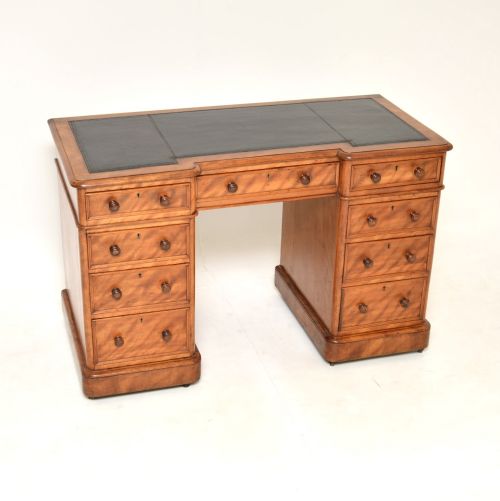
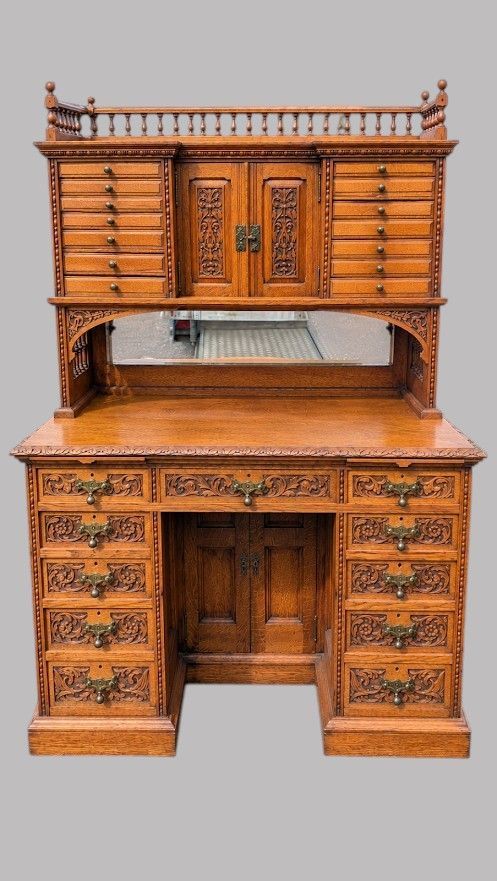
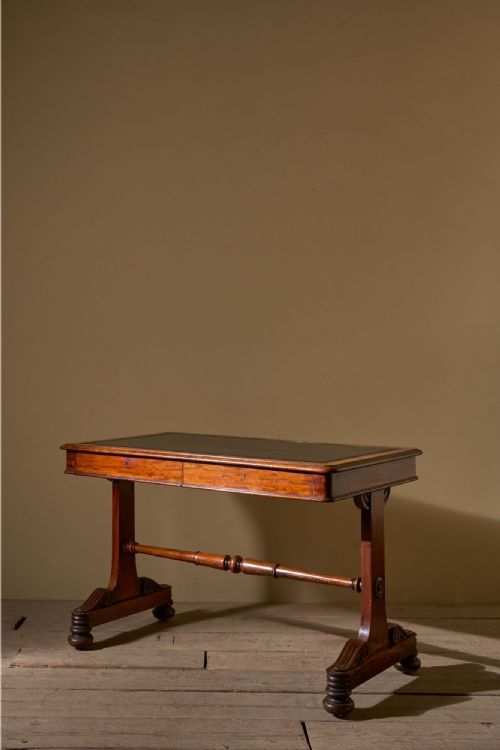
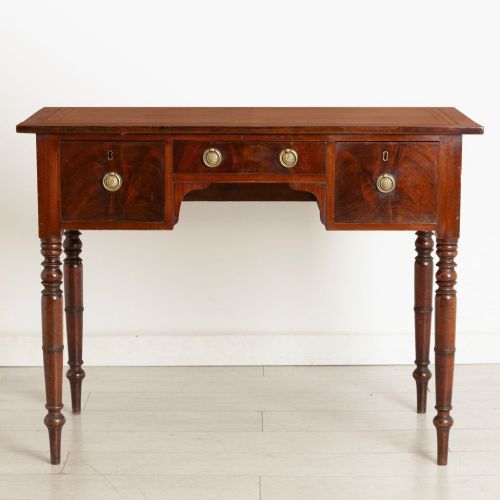
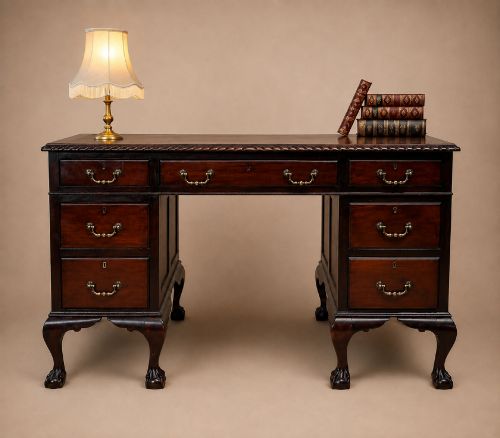
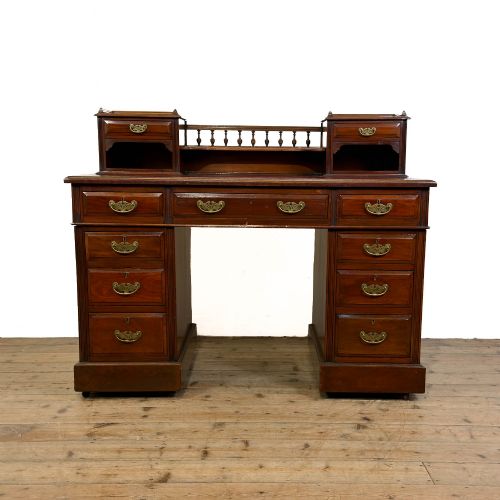
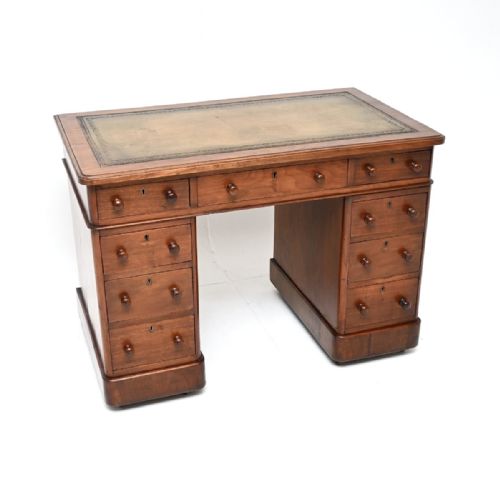
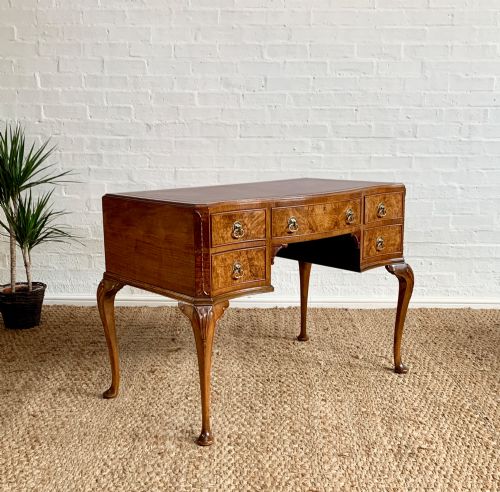
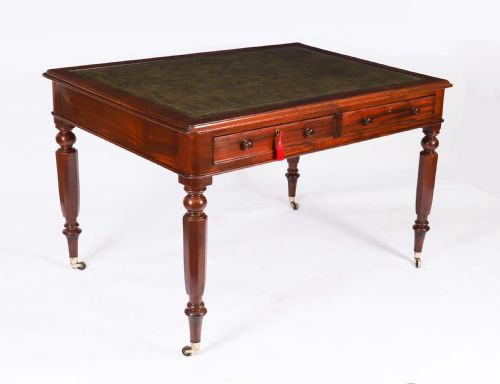
The executive home office desk encompasses substantial workspace furniture designed for serious correspondence and daily administration. Pieces meeting this description range from pedestal desks and partners desks to writing tables and kneehole configurations.
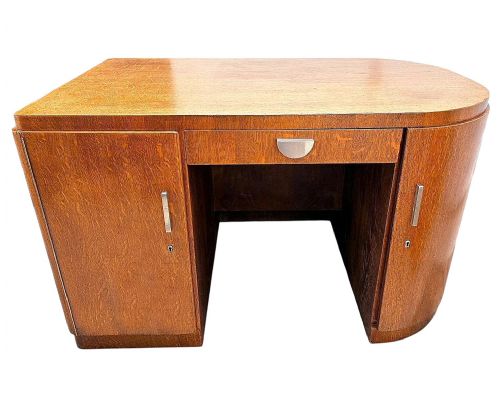
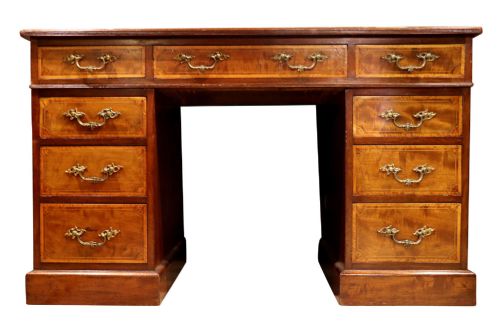
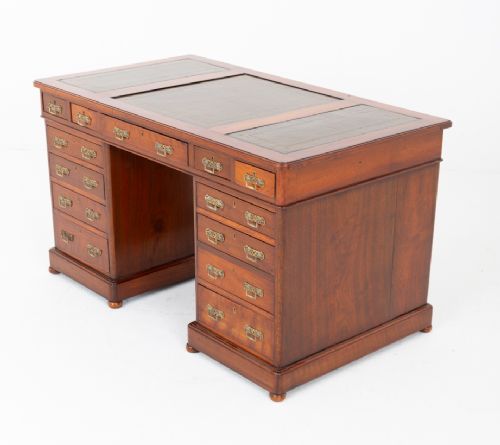
Victorian examples dominate the selection, frequently constructed in mahogany or walnut with inset leather tops. These pedestal forms sit alongside Edwardian variations, earlier nineteenth-century pieces, and twentieth-century Art Deco modernist interpretations.
Makers such as Edwards & Roberts, Hobbs & Co., and Wylie & Lochhead produced many of these utilitarian yet decorative furnishings. Buyers select these large desks to anchor a study with functional period design.
Materials and construction
Cabinet makers utilised dense hardwoods including mahogany, walnut, and oak to build the primary carcases and drawer structures. Burr walnut and satinwood veneers added decorative grain patterns to drawer fronts and writing surfaces.
Writing surfaces typically feature tooled leather inserts in black or green, bordered by blind tooling or gilt decoration. Brass handles, escutcheons, and occasional structural mounts complete the assembly of these heavy timber pieces.
Many partners desks hide secret pencil drawers beneath the main writing slide for confidential notes.
Distinctions in grade
Superior examples retain their original brass hardware, working locks, and patinated leather writing inserts rather than modern replacements. The choice of timber grain, particularly figured burr walnut or substantial flame mahogany, elevates a piece above standard utility furniture.
Joinery execution defines the build standard, visible in the precision of dovetailed drawer boxes and the stability of twin pedestals. Workshop provenance, recorded through maker stamps or paper labels, separates standard cabinet work from documented master pieces.
Edwards & Roberts·Hobbs & Co.·Wylie & Lochhead·Johnstone & Jeanes·Heal and son·Maple & Co·Wolfe & Hollander
The Executive Home Office Desk Glossary
- Pedestal desk
- A freestanding office table featuring two banks of drawers supporting the main writing surface. These are designed to stand centrally or against a wall.
- Partners desk
- A large double-sided desk with drawers and cupboards on both faces, allowing two people to work opposite one another. These frequently date to the nineteenth century.
- Kneehole desk
- A compact desk featuring a central recess for the user's legs, flanked by pedestals of smaller drawers. This form often dates to the Georgian and Victorian periods.
- Tooled leather
- Leather writing surfaces decorated with pressed or gilded patterns along the perimeter. This provides a durable and smooth texture for handwriting.
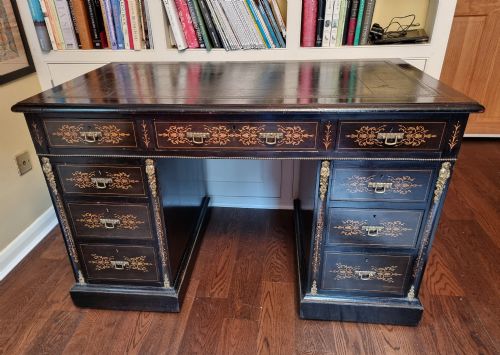
- Ebonised wood
- Timber treated to resemble ebony through staining and polishing. This dark finish appears on specific Victorian and aesthetic movement pieces.
Executive Home Office Desk: Frequently Asked Questions
What is a partners desk?
A partners desk provides workspace on both sides with matching banks of drawers and cupboards.
This double-sided design allowed two people, such as business partners or bankers, to work face to face.
How do I care for leather desk tops?
Leather writing surfaces require gentle cleaning with a damp cloth and occasional application of appropriate leather cream.
Avoid harsh chemicals or excessive moisture to preserve the gilt tooling and prevent the material from drying out.
Are these desks suitable for modern computers?
Large pedestal and partners desks offer substantial surface area for modern computer equipment and paperwork.
Their robust timber construction readily supports contemporary office technology while maintaining a traditional aesthetic.
How do I distinguish Victorian from Edwardian desks?
Victorian desks generally display darker timber tones, heavier carvings, and traditional brass hardware.
Edwardian pieces often incorporate lighter satinwood or mahogany veneers with simpler, more restrained decorative schemes.