





Equestrian Brass Decor
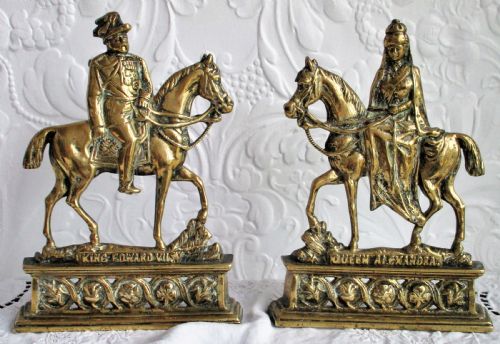
These pieces of equestrian brass decor bring utilitarian harness ornaments, heavy doorstops and hunting horns straight from the stable into the country house.
Equestrian Brass Decor
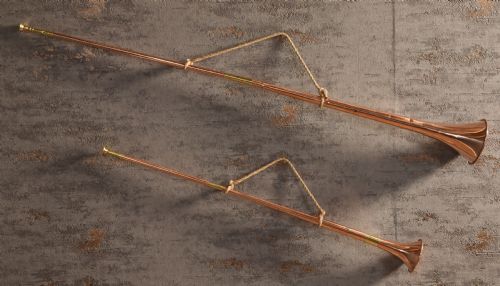
When you search for equestrian brass decor, you are looking at items shaped by the nineteenth and early twentieth-century horse world, ranging from Victorian horse brass martingales to brass chimney ornaments and desk accessories. These objects encompass items utilised in traditional coaching and riding, such as coaching horns, crop hooks and saddle-mounted novelties.
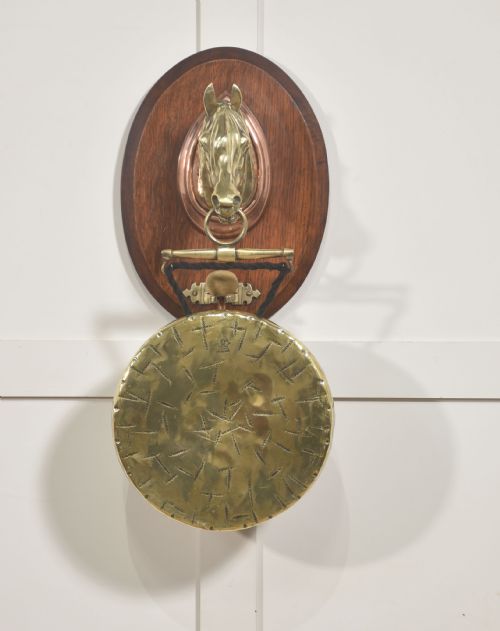
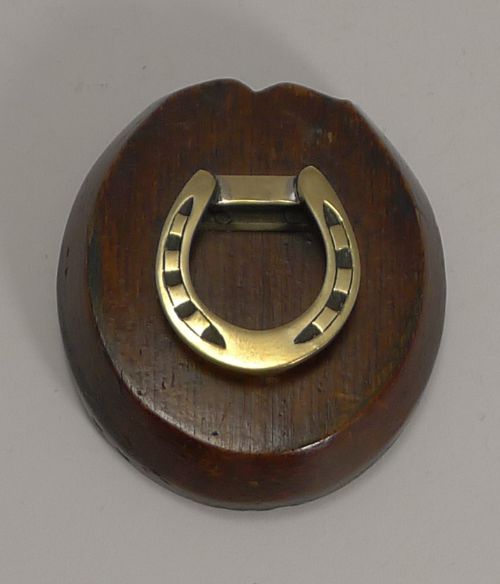
The versions you are most likely to meet on this page include heavy brass doorstops, horse brasses, and oak-mounted dinner gongs or paper clips set with horse heads and horseshoes. They date predominantly from the Victorian and Edwardian periods, stretching from the eighteen-eighties into the nineteen-twenties.
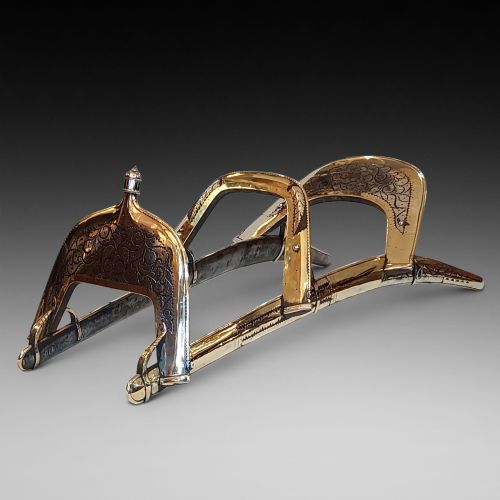
The selection also includes rarer forms such as silver-mounted horse's hoof inkwells, bevelled mirrors in horseshoe frames, and ceremonial camel saddles reflecting nineteenth-century decorative metalwork. Each piece serves either as a direct working remnant of equestrian life or as a decorative object fashioned from brass, copper, oak and leather.
How they were made
The majority of these items rely on cast brass and sheet copper, shaped into sturdy doorstops, horns and wall mounts that endure heavy daily use. Foundry work and hand-finishing dominate the production of doorstops and chimney ornaments, whilst metal spinning creates the tapered tubes of coaching horns.
Many items combine polished brass with natural materials such as seasoned oak, carved wood and sturdy leather straps. This mixed-media construction appears in items like oak book slides, dinner gongs and horseshoe paper clips, where metal mounts are secured to wooden backplates.
A Victorian horse's hoof preserved as an inkwell proves that nineteenth-century desk furnishings could take surprisingly literal inspiration from the stable.
What varies in quality
The integrity of the construction where brass meets oak, glass or leather dictates the grade of desk accessories and wall plaques. Solid assembly and carefully bevelled mirror glass separate standard utilitarian items from finer decorative collectables.
The Equestrian Brass Decor Glossary
- Horse brass
- A brass plaque once used to decorate the harness of heavy draught horses. These stamped or cast ornaments often feature regional motifs and symbols.
- Martingale
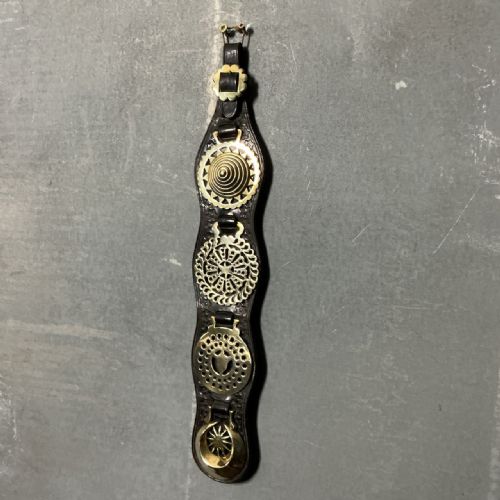
- A strap or set of straps that fastens a horse's noseband to its girth, frequently adorned with a vertical line of polished brass plaques.
- Doorstop
- A heavy weighted object, often cast in brass as an animal or figure, designed to keep heavy interior doors propped open.
- Coaching horn
- A long brass or copper horn sounded by coachmen to signal the approach of a horse-drawn mail or stagecoach.
- Dinner gong
- A suspended metal disc or resonant metal plate struck with a mallet to announce meals in large country houses.
- Book slide
- An expanding rack placed on a desk or shelf to hold books upright, often fitted with decorative metal ends.
Equestrian Brass Decor: Frequently Asked Questions
What are horse brasses?
Horse brasses are decorative metal plaques that were attached to the leather martingales and harnesses of working horses during the nineteenth century. They served both as traditional adornment and as protective amulets.
Today, these brasses are collected for their varied designs, which include geometric patterns, royal portraits, and animal motifs.
How were coaching horns used?
Coaching horns were sounded by guards on horse-drawn stagecoaches to warn other road users of their approach and to signal toll gates to open. Their long, tapered brass or copper bodies produced a loud, carrying note.
In domestic settings, they transitioned into decorative items for country houses and halls.
Where were doorstops placed?
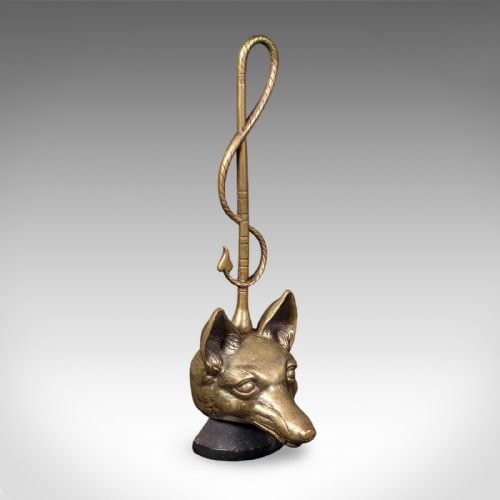
Heavy brass doorstops were kept on the floor inside large rooms and hallways to prevent heavy doors from slamming shut in draughty country houses. Subjects like foxes, horses and human figures were weighted to hold open solid timber doors.
They functioned as practical tools that doubled as decorative focal points near hearths and entrances.
How do I date these items?
Dating relies on stylistic markers, manufacturing techniques, and materials such as oak backplates, bevelled mirror glass, and cast brass versus stamped metal. Victorian and Edwardian pieces often bear specific motifs linked to royal jubilees or traditional hunting culture.
Comparing the wear on leather, wood and metal helps establish whether an object dates from the nineteenth century or the early twentieth century.