






Antique Horse Brasses
These antique horse brasses are the traditional cast brass ornaments once carried by working horses, sought after today for their rich metalwork and working history.
Antique Horse Brasses
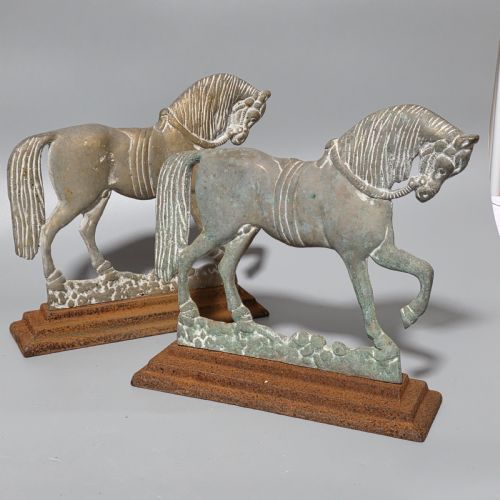
Antique horse brasses are decorative metal plaques that collectors meet in Victorian and nineteenth-century forms, originating from working harness equipment. They display a range of traditional English styles and symbols, reflecting the days of horse-drawn transport.
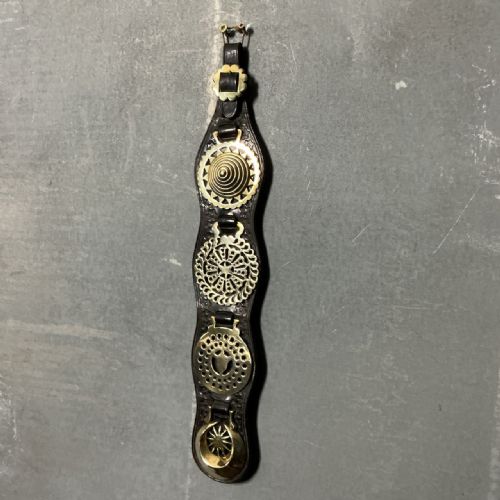
Most examples found on this page consist of cast brass pieces designed to be mounted on leather martingales or displayed on their own. The selection spans the nineteenth century, capturing the domestic and working equestrian history of the period.
How they were made
These items are produced primarily from cast brass, utilising traditional founding methods to shape detailed motifs and emblems. The metal takes on a warm golden tone through polishing and handling.
Leather straps and martingales frequently accompany the metalwork, showing period stitching and hand-dyed finishes. Iron and bronze elements also appear in related mountings and associated equestrian gear.
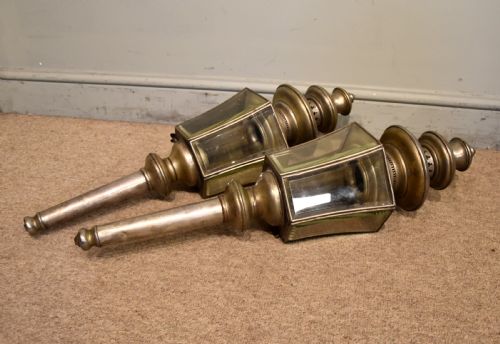
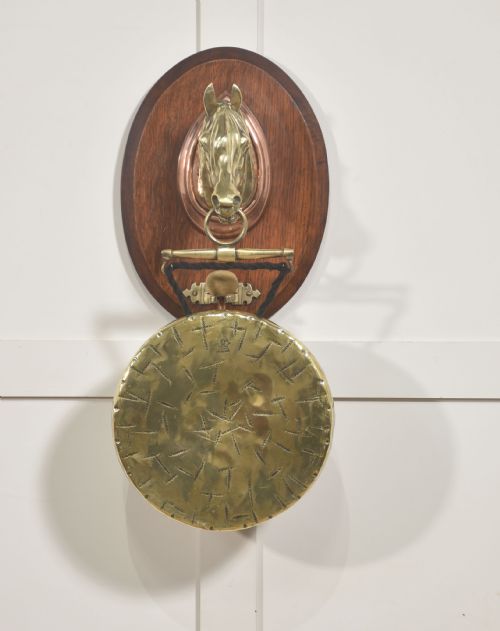
Carriage lamps and doorstops occasionally join the stable gear, keeping watch over hallways instead of horses.
What varies in quality
Quality rests upon the crispness of the casting and the depth of detail in the brass relief. Finer examples show sharp edges and clear motifs rather than smoothed or rounded surfaces.
The weight of the metal and the integrity of the original mounting leather dictate the standing of a piece within the range. Superior items retain their original polish and show honest signs of period use.
Thomas Anelli·Daris·Wilson·Brasher
The Antique Horse Brasses Glossary
- Martingale
- A strap or set of straps used to hold a horse's head in position, which traditionally displayed rows of brass ornaments. These leather backings carry the brasses in formation.
- Cast brass
- Metal poured into a mould to form a specific shape while liquid. This method allowed makers to produce uniform decorative plaques in large quantities.
- Victorian
- Relating to the reign of Queen Victoria, a period spanning the mid-nineteenth to the early twentieth century. Much of the surviving equestrian brasswork dates from this era.
- Georgian
- Pertaining to the reigns of the Hanoverian kings from 1714 to 1837. Items from this era exhibit earlier stylistic traits in metalwork and design.
Antique Horse Brasses: Frequently Asked Questions
What were antique horse brasses used for?
These brass ornaments were attached to the leather harnesses and martingales of heavy working horses and carriage animals. They served as decoration during transport and trade.
In addition to decoration, many traditional designs were believed to offer protection or bring good luck to the horses and their owners on the road.
How should I display horse brasses at home?
Collectors commonly mount the brasses on their original leather martingales and hang them vertically on interior walls. This shows the traditional arrangement of the ornaments as they appeared on working harnesses.
Alternatively, individual pieces can be displayed on shelves or mounted on wooden backing boards to highlight the cast metal details.
How do I care for antique brass?
Antique brass requires minimal cleaning to preserve its aged surface and dark patination. Dusting with a soft, dry cloth is usually sufficient for regular maintenance.
Harsh metal polishes should be avoided because they strip away the historic patination that accumulates over centuries of handling and exposure.
How can I tell the age of a horse brass?
Dating relies on examining the casting technique, the weight of the metal, and the style of the design. Earlier examples often feature hand-finishing marks and heavier brass construction.
The accompanying leather straps and stitching styles also provide clues to the period, as methods changed between the Georgian and Victorian eras.