
Equestrian and Sporting Art
Equestrian and sporting art captures the energy of the hunt, the paddock, and the racecourse through centuries of oil paintings, watercolours, and prints.
Equestrian and Sporting Art
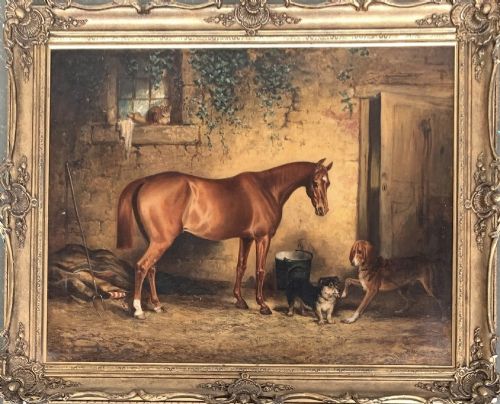
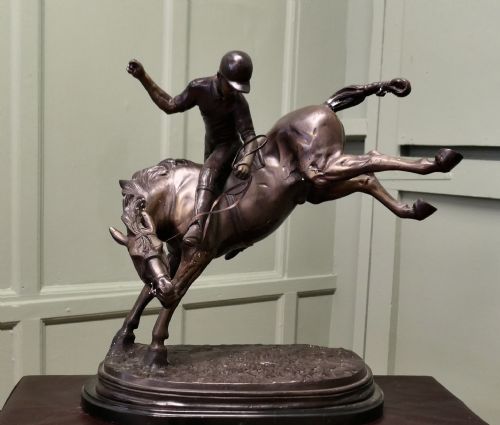
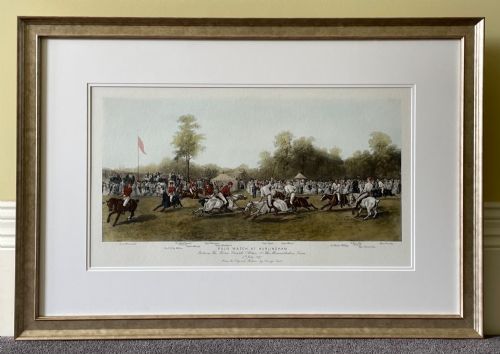
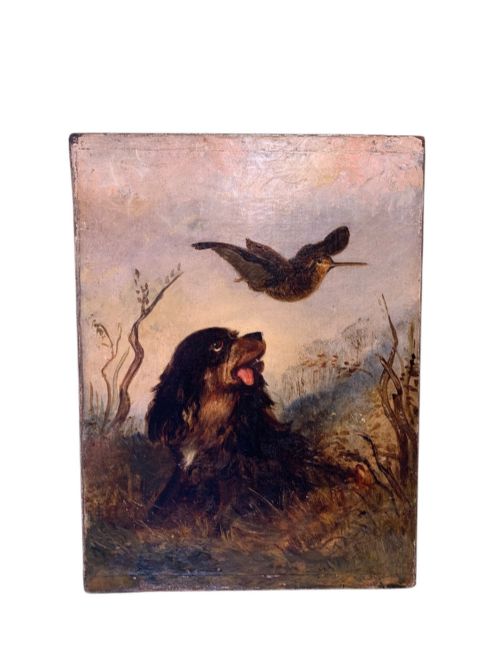
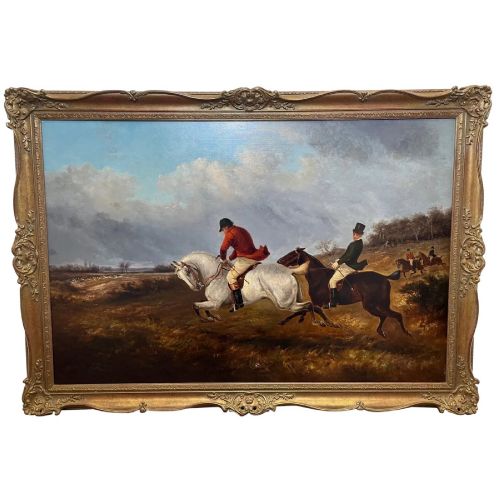
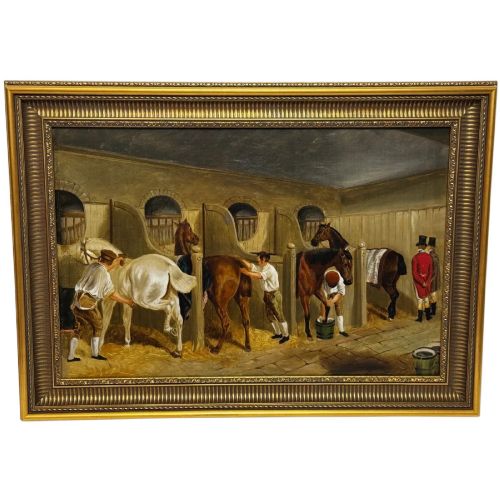
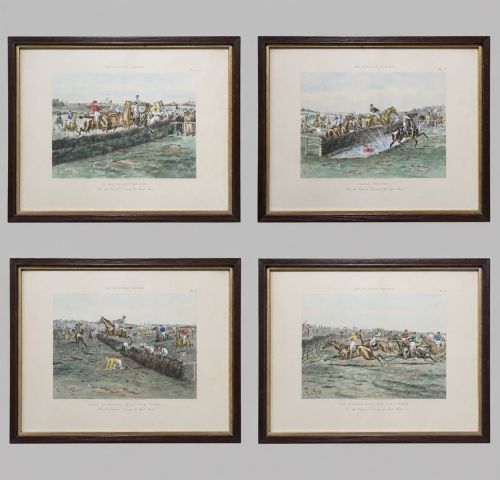
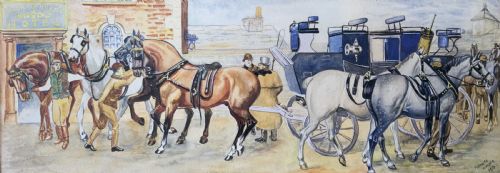
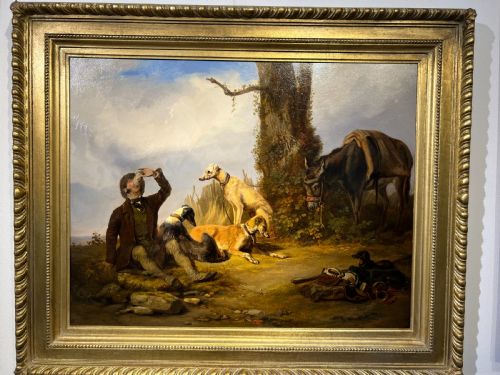
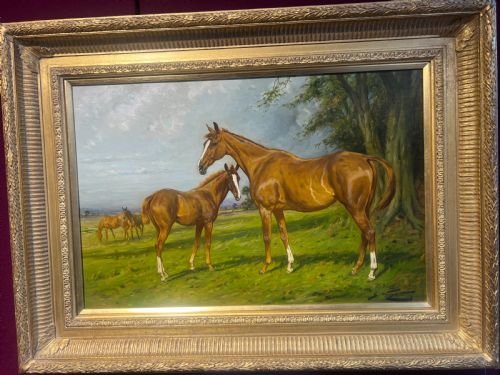
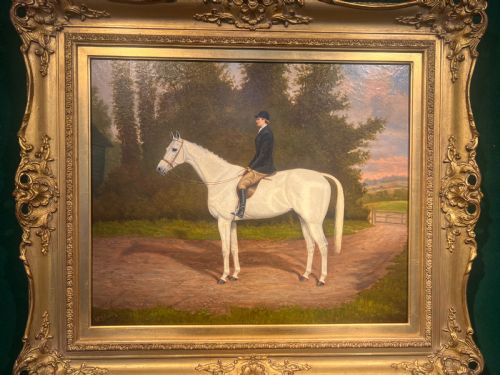
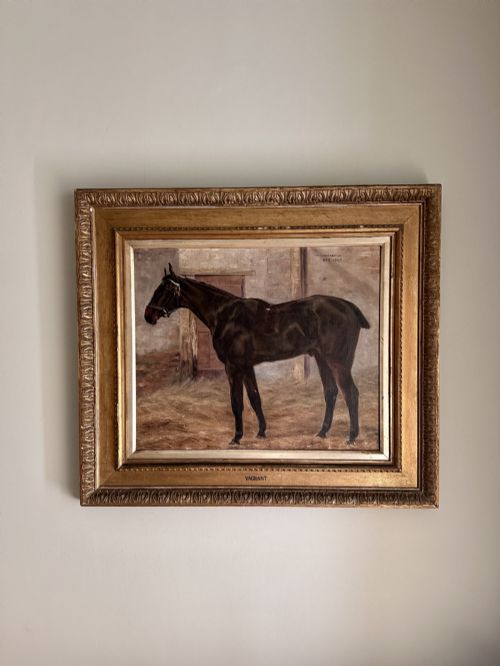
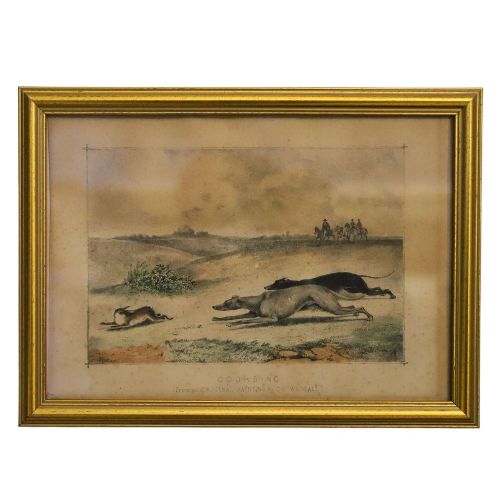
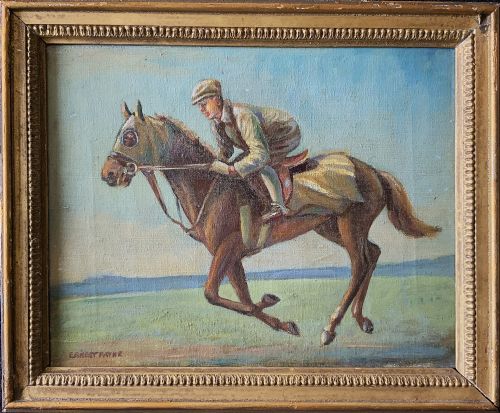
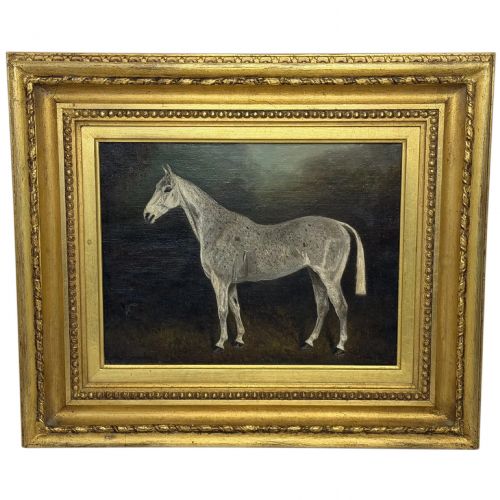
Equestrian and sporting art encompasses depictions of horses, hounds, field sports, and racing scenes across various periods from the nineteenth century into the mid-twentieth century. The selection ranges from detailed equine oil portraits and coaching oils to lithographs and watercolours capturing polo matches and hare coursing.
Oil paintings on canvas dominate the selection, alongside works in pastel, gouache, and ink on paper. Framed prints and aquatints provide additional variety for collectors interested in historical sporting imagery.
How they were made
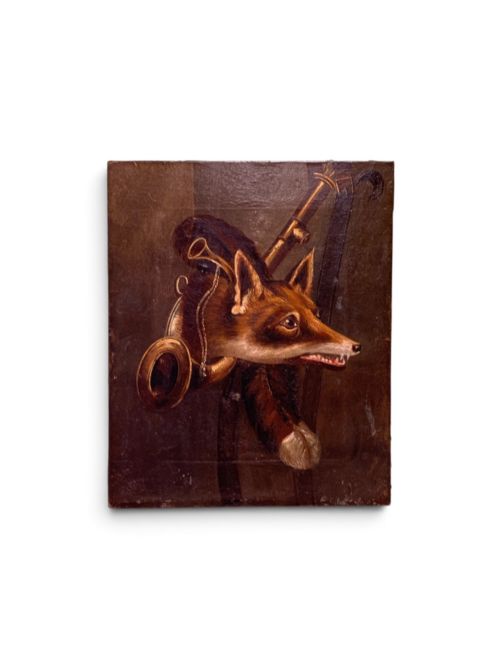
Artists utilised oil paint on canvas or wood panels, applying pigments to build up textures in animal coats and landscapes. Watercolours and pastels on paper offer a lighter touch, often paired with ink outlines.
Frames play a structural and aesthetic role, with giltwood, oak, and walnut mouldings enclosing the paintings, drawings, and prints.
Listings feature oil paintings, watercolours, and lithographs from the nineteenth century to 1960.
What varies in quality
Quality rests in the anatomical accuracy of the horses and hounds, alongside the artist's ability to render movement in gallops, jumps, and races. Stronger works display confident brushwork and balanced composition within the landscape or stable interior.
The materials and framing contribute to the overall standard, with period gilt frames and well-preserved paper works indicating higher execution standards.
Thomas Smythe·Sir Edwin Henry Landseer·George Wright·William Albert Clarke·Henry Barraud·Fred Fitzpatrick·C. H. Weigall·Ernest Payne·Edward Priestley·Philip Rideout·Thomas Walker Bretland·John Frederick Herring Snr·John Ferneley Senior·John Rattenbury Skeaping·Cecil Charles Windsor Aldin·John Arthur Lomax·Albert Clark·Anne Goldthwaite
The Equestrian and Sporting Art Glossary
- Aquatint
- An intaglio printmaking technique that produces tonal effects resembling watercolours through acid etching on a copper plate.
- Giltwood
- Wood that has been treated with a thin layer of gold leaf or powder, commonly found on traditional picture frames.
- Lithograph
- A planographic printing method based on the repulsion of oil and water, widely used for nineteenth-century sporting prints.
- Gouache
- An opaque water-based paint that dries to a matte finish, allowing for vibrant highlights in works on paper.
Equestrian and Sporting Art: Frequently Asked Questions
What subjects appear in equestrian and sporting art?
The works depict racehorses, hunters, polo matches, coaching scenes, and fox hunting with hounds.
Animals and rural landscapes form the primary focus of the imagery.
Which periods do these pieces come from?
The selection spans the nineteenth century through the Victorian and Edwardian eras into the mid-twentieth century.
Dates range from early nineteenth-century prints to 1960s paintings.
What mediums are used in these artworks?
Artists worked in oil on canvas or wood, watercolour, pastel, gouache, and ink on paper.
Printmaking methods such as aquatint and lithography also appear frequently.
How should these framed works be displayed?
They suit traditional or transitional interiors, often hung in studies, hallways, or living rooms.
Placement should avoid direct sunlight to protect pigments and paper.