

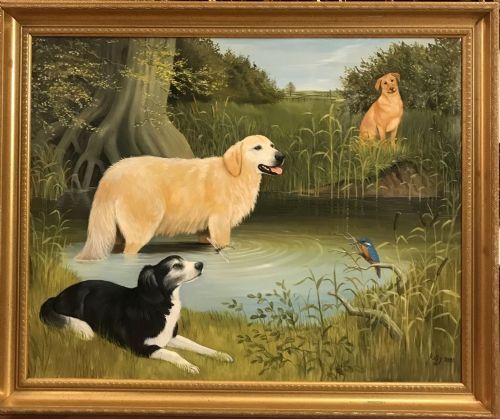


Sporting Dog Oil Painting
Sporting dog oil painting captures working hounds and gun dogs in canvas, spanning centuries of canine portraiture and field sports.
Sporting Dog Oil Painting
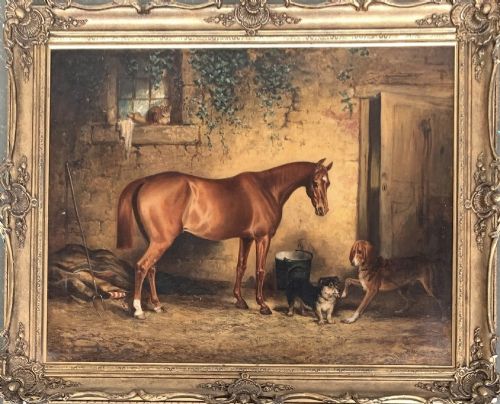
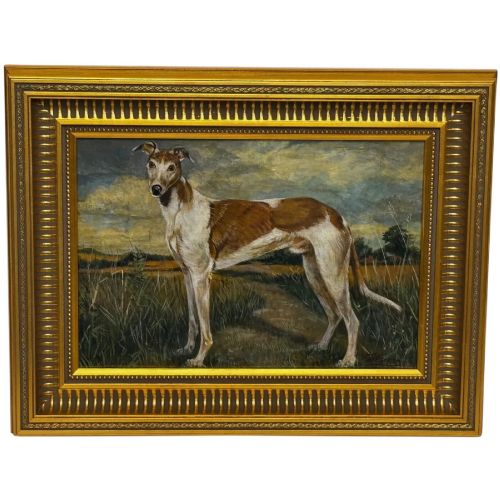
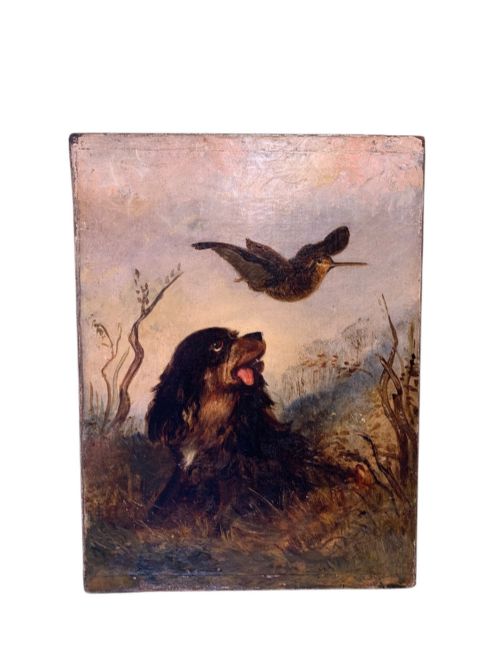
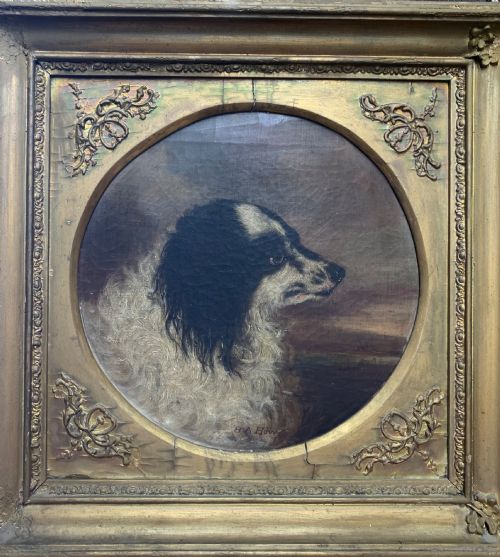
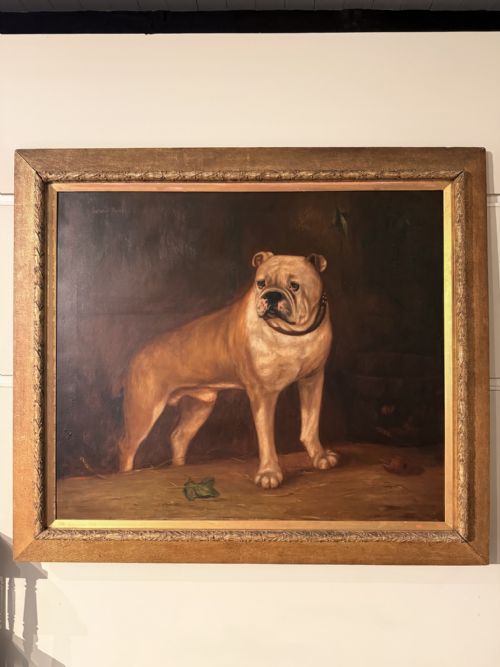
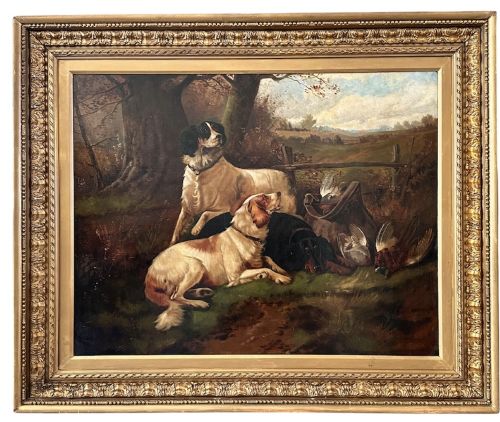
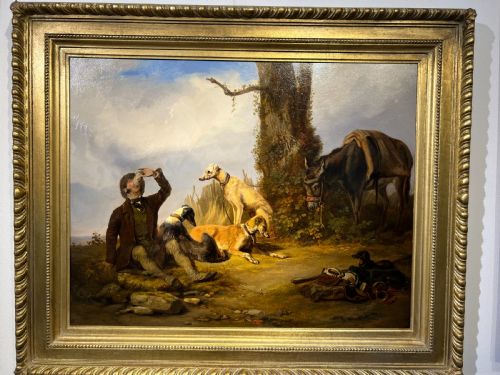
A sporting dog oil painting depicts hounds, gun dogs, and terriers, often shown alongside game or within expansive rural landscapes. These works frequently record specific working dogs, prized champions, or treasured family pets from bygone estates.
The selections available here lean heavily into nineteenth-century and Victorian traditions, alongside mid-twentieth-century examples. Works span from naive early studies to detailed academic portraits of spaniels, setters, pointers, and retrievers.
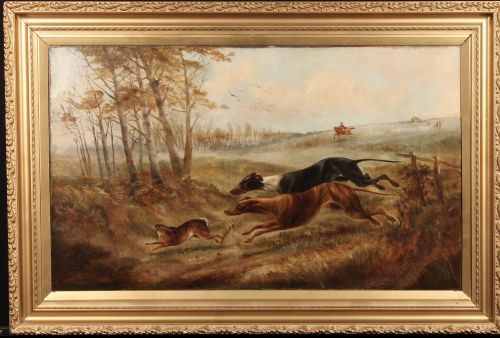
Canvases range from intimate cabinet pieces to large framed works set in period giltwood frames. Collectors encounter everything from solitary hound portraits to dynamic scenes of dogs engaged in hare coursing and pheasant shooting.
How They Were Made
Artists worked primarily with oil paint applied to stretched canvas or wooden board, occasionally utilising artist's palettes as a unique base. Brushwork varied from tight, realistic rendering of fur and feather to looser, more expressive impasto typical of working field sketches.
Framing played an integral role in presentation, with many period works housed in heavy moulded gilt or gilded wood frames. Pigments were layered to build depth in the landscape backgrounds, while the dogs themselves received meticulous attention to light across their coats.
Several paintings capture terriers caught mid-mischief, guarding rat traps or keeping watch over a litter of puppies.
What Varies in Quality
Anatomy and expression separate standard field records from masterworks, as accomplished painters captured the intelligent gaze and correct skeletal structure of specific breeds. The handling of the surrounding landscape also dictates standard, moving beyond mere backdrops to integrated atmospheric environments.
Condition of the oil paint and canvas integrity influence overall quality, noting whether a piece retains its original surface without extensive overpaint. The presence of a clear signature, attribution to a known animal artist, or a documented historical subject elevates the standing of the work.
Henry Barraud·George Armfield·John Sargent Noble·Sir Edwin Henry Landseer·John Emms·John Frederick Herring Senior·William Barraud·Samuel Raven·George E Sharpe·Colin Graeme Roe·Valentine Thomas Garland·John Trivett Nettleship·Fannie Moody·Edwin Frederic Holt·Robert Cleminson·Alfred Duke·Michael Lyne·Henri Schouten
The Sporting Dog Oil Painting Glossary
- Oil on Canvas
- Pigment mixed with drying oil applied to a woven fabric support stretched across a wooden frame. This medium allowed artists to blend colours smoothly and build rich surface textures.
- Giltwood
- Wood carved and covered with a thin layer of gold leaf or metallic gilt. It provided ornate framing that complemented the warm tones of nineteenth-century oil paintings.
- Gun Dog
- A classification of canine bred to assist hunters in finding and retrieving game. These subjects formed a central focus for British sporting artists.
- Naive Art
- Work produced by an artist without formal academic training, often characterised by flat perspective and charming simplicity. These pieces offer an honest record of rural life.
- Impasto
- Paint applied thickly to a canvas so that the brush or palette knife marks remain clearly visible. This technique adds tactile dimension to the rendering of dog coats and foliage.
Sporting Dog Oil Painting: Frequently Asked Questions
What is a sporting dog oil painting?
These works are historical oil paintings focusing on hounds, terriers, and gun dogs, created to celebrate working animals and prized companions.
They reflect the deep British tradition of field sports and canine companionship spanning the nineteenth and twentieth centuries.
How were these paintings displayed?
Period works were traditionally hung in country houses, shooting lodges, and estate libraries alongside hunting trophies and firearms.
Today, they suit both traditional studies and contemporary interiors, often anchored by their original giltwood frames.
How do I identify the dog breed?
Artists often recorded specific physical traits like coat texture, ear shape, and build to distinguish spaniels, pointers, setters, and collies.
Comparing the depicted animal to historical breed standards helps reveal whether the subject is a working spaniel, a bloodhound, or a terrier.
Are these works signed by the artist?
Many examples feature artist signatures, monograms, or period inscriptions on the front or reverse of the canvas.
Unsigned works are frequently attributed to particular schools or circles based on brush technique, handling of anatomy, and landscape style.