


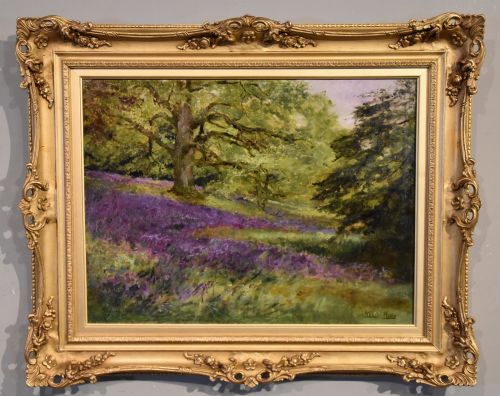

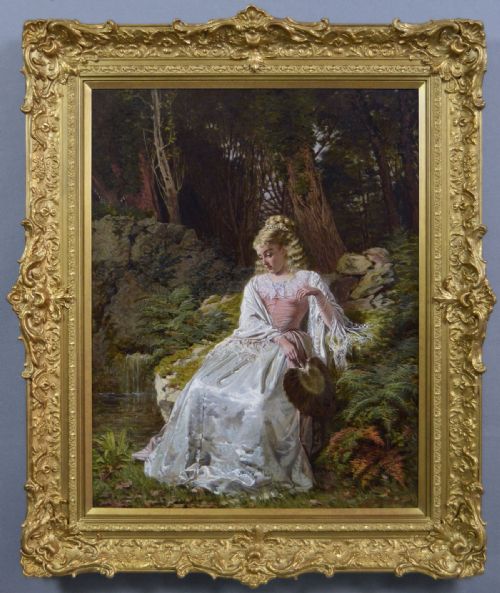


Green Woodland Oil Painting
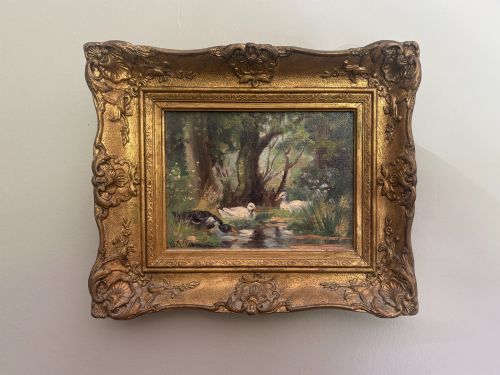
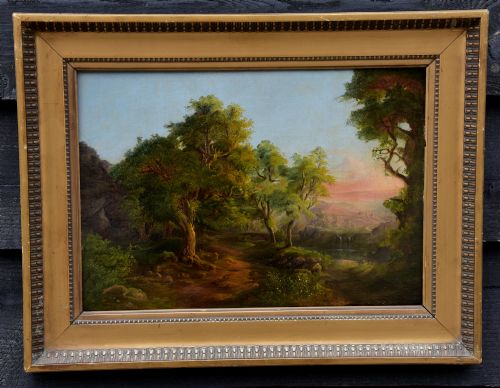
A green woodland oil painting captures the depth of leafy canopies and country paths through the rich handling of pigment.
Green Woodland Oil Painting
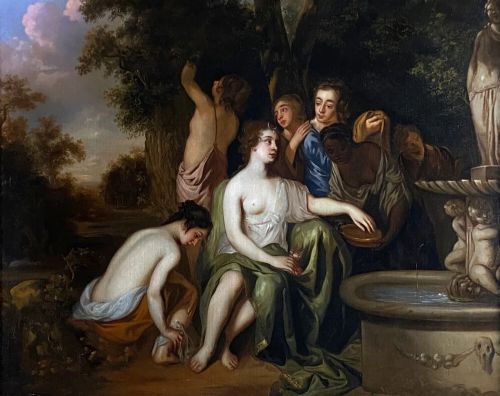
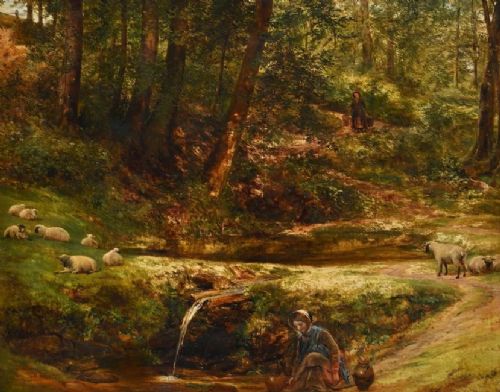
A green woodland oil painting depicts trees, forest floors, and shaded paths rendered through pigmented oils. These works span multiple centuries, capturing romantic vistas, pastoral scenes, and quiet rustic corners.
The selections on this page range from Victorian canvases to mid-century works, often featuring cattle, figures, or streams nestled among dense timber. Many pieces reflect British and French traditions, utilising naturalistic and impressionist approaches to foliage.
Buyers encountering this phrase will find landscapes executed on both canvas and board. The scale ranges from intimate panel paintings to large framed exhibition pieces.
How They Were Made
Artists painted primarily with oil paint on stretched canvas or prepared wooden boards. The medium allowed for slow drying times, enabling painters to blend green and earth tones seamlessly across the surface.
Many frames incorporate gesso and gold leaf or gilt ornamentation to complement the depth of the painted foliage. Wooden stretchers and panels provide the underlying structural support for the pigment layers.
Styles represented include British Impressionism, Barbizon School, and nineteenth-century romanticism.
What Varies in Quality
The strength of a green woodland oil painting rests in the handling of light filtering through branches and the control of palette depth. Superior compositions demonstrate a confident balance between deep shadows and illuminated clearings.
The handling of the brushwork distinguishes finer academic or impressionist examples from more formulaic decorative works. Mastery is evident when pigment conveys the texture of bark and the translucency of leaves with economy.
Richard Sebastian Bond·William H Myers·Sir Peter Lely·Thomas W Lascelles·Richard Redgrave·Paul Desire Trouillebert·Henry Yeen King·Thomas Bromley Blacklock·Thomas Edward Roberts·James Mallard Bromley·John Wright Oakes·James Proudfoot·Abraham Hulk Jnr·Thomas Hollingsworth·Ernest Higgins Rigg·Edward H Holder·George F Wetherbee·John Falconar Slater·Lester Sutcliffe·Walter Emsley·Charles Edmond Rene His·Kershaw Schofield·Charles Duval·George Neil
The Green Woodland Oil Painting Glossary
- Canvas
- A heavy woven fabric stretched across a wooden frame to serve as a support for oil painting. It provides a flexible and durable ground for layered pigment.
- Gesso
- A primer mixture consisting of a binder mixed with chalk or plaster, applied to wood panels or canvas before painting. It creates a smooth and stable surface for oil colours.
- Barbizon School
- A nineteenth-century French movement focused on realistic landscape painting inspired by the forest of Fontainebleau. Practitioners prioritized direct observation of nature.
- Impressionism
- A style developed in the nineteenth century characterised by relatively small, thin, yet visible brush strokes and an emphasis on accurate depiction of light. It changed how artists recorded outdoor woodland scenes.
- Gilt
- A thin layer of gold applied to wood or gesso surfaces, frequently seen on antique frames. It adds a warm metallic border that enhances the tones within the painting.
Green Woodland Oil Painting: Frequently Asked Questions
What periods do these paintings date from?
The works span several centuries, with examples originating from the seventeenth through to the mid-twentieth century. Victorian and early twentieth-century pieces appear frequently.
Each era brings distinct stylistic approaches to natural scenery, moving from classical compositions to impressionist interpretations of light and leaf canopy.
How should I clean an oil painting?
Surface dust should be removed very gently with a soft, dry brush by someone experienced with antique care. Moisture and household cleaners must be avoided entirely.
Professional conservators should handle deeper cleaning or varnish removal to protect the delicate layers of oil pigment underneath.
Are these paintings signed by the artists?
Many of the works retain original signatures, inscriptions, or attribution notes left by the artist or later cataloguers. These signatures often help place the piece within a specific regional school or period.
Unsigned works rely on stylistic evidence, canvas stamps, and framing details to indicate their age and origin.
How do I hang a heavy framed canvas?
Large framed oil paintings require secure picture hooks fixed directly into wall studs or appropriate masonry fixings. The weight of the wooden frame and gesso ornamentation demands robust support.
Positioning the work away from direct sunlight and severe temperature fluctuations protects both the canvas and the wooden stretcher from warping.