


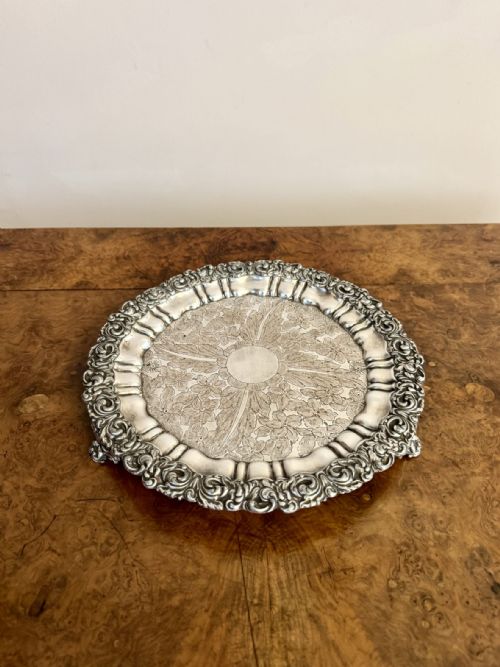
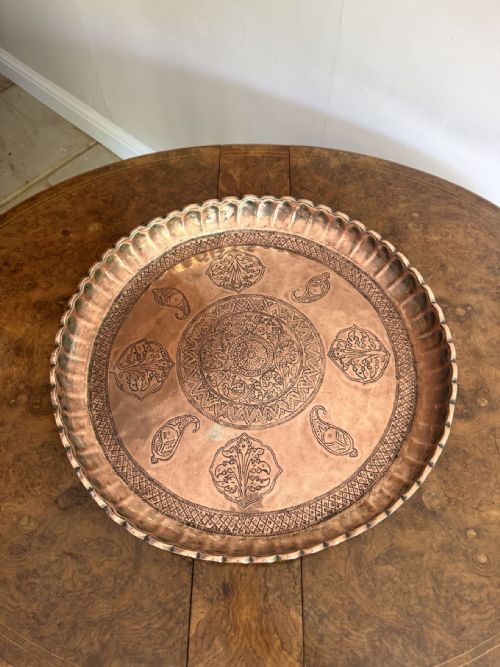
Engraved Tea Tray
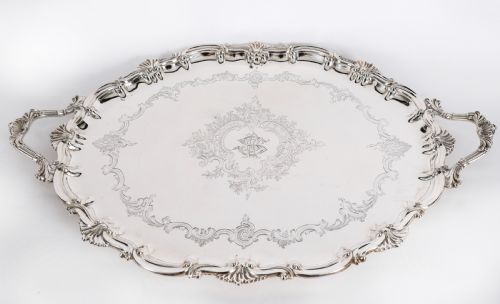
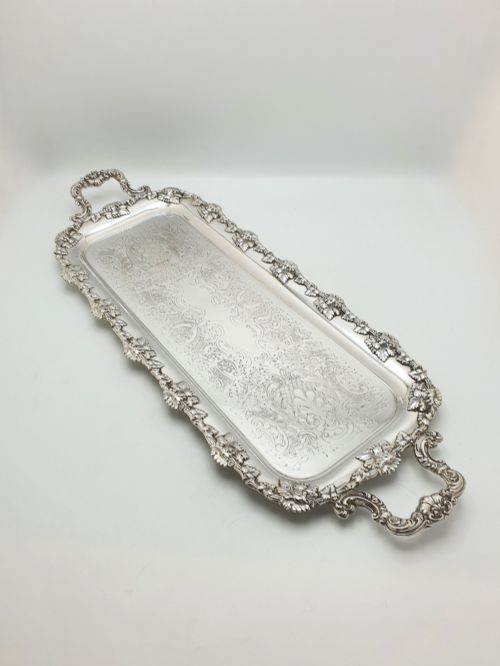
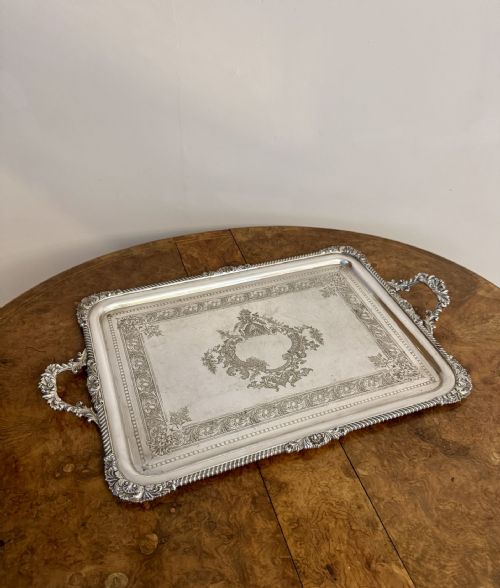
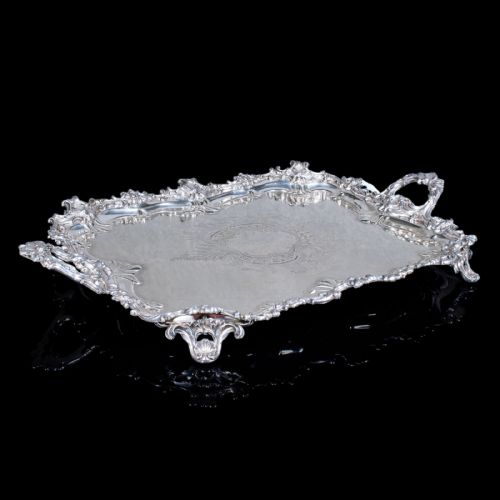
An engraved tea tray brings weight and pattern to a room, offering a broad metallic surface covered in chased or etched ornamentation.
Engraved Tea Tray
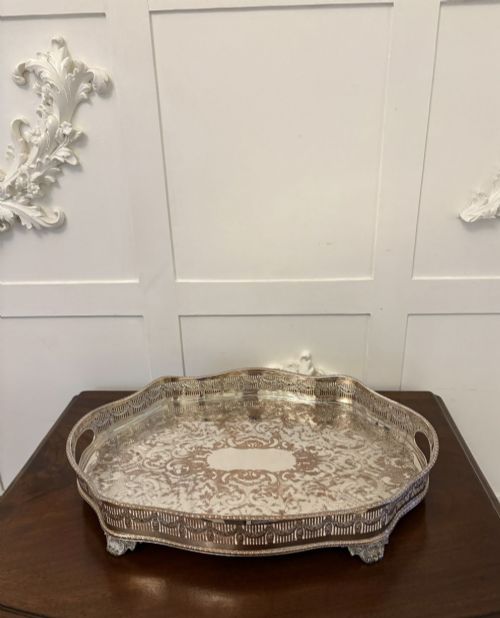
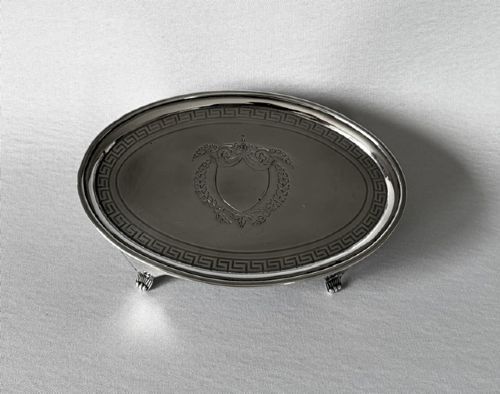
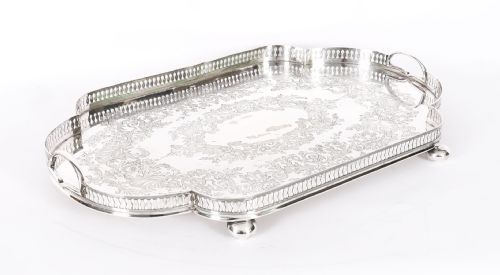
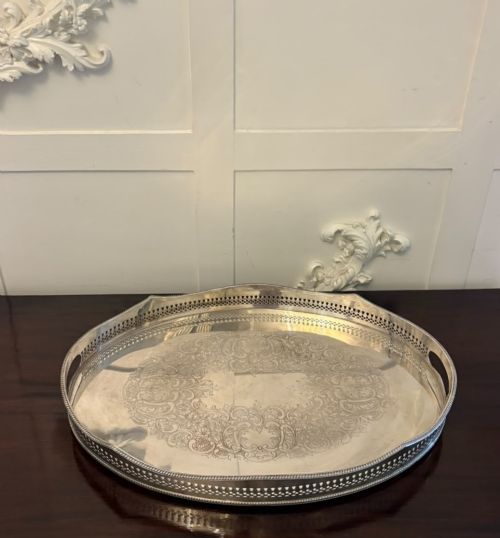
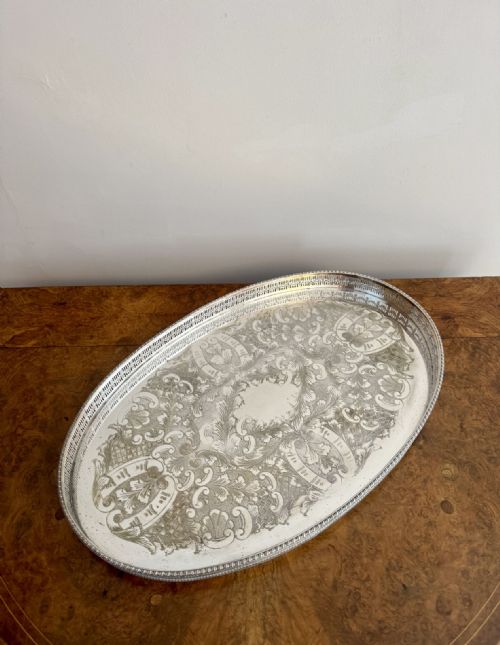
An engraved tea tray is typically encountered in silver plate, sterling silver, copper or brass, taking the shape of large ovals, circles and rectangular gallery trays with pierced or solid raised borders. These pieces span from the Georgian period through the Victorian and Edwardian eras, extending into early twentieth-century designs influenced by Arts and Crafts makers and international styles.
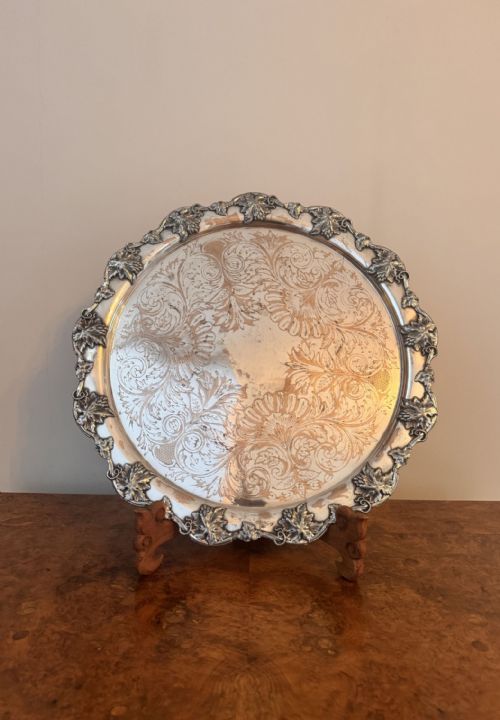
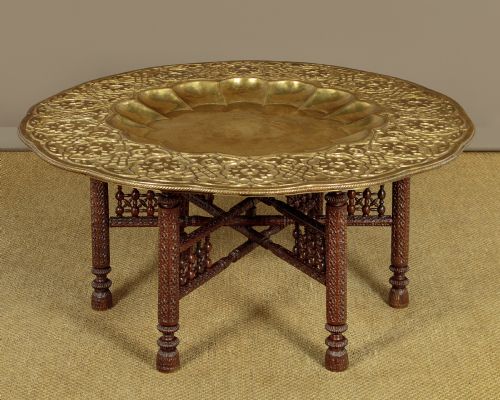
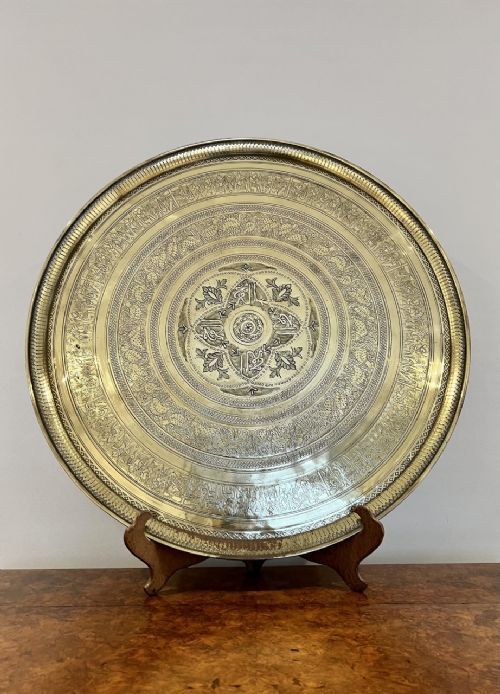
The primary forms serve distinct domestic functions, ranging from afternoon tea service platters and salvers to smaller teapot stands and larger tray-top tables supported by folding bases. Oval serving platters and circular trays dominate the selection, often carrying elaborate surface engraving that covers the central field with foliate scrolls, geometric motifs or classical patterns.
Originating across British workshops in Sheffield and London, alongside continental and overseas traditions such as Anglo-Indian, Persian and Mamluk Revival styles, these trays reflect diverse manufacturing backgrounds. Buyers encounter domestic presentation pieces alongside heavy brass and copper wares produced for export or decorative domestic use.
Materials and Technique
Makers utilised base metals such as copper, brass and nickel silver as foundations, applying methods like silver plating, Old Sheffield plating or electroplating to achieve a durable metallic finish. Sterling silver examples offer solid construction, while mixed metal pieces combine copper and brass highlights within the engraved field.
Engraving and chasing were executed by hand using specialised gravers and punches to cut crisp lines and depressed patterns into the metal surface. Pierced galleries were either sawn from sheet metal or cast in sections before being soldered to the tray base, and applied borders incorporated cast elements like grapevine motifs or scrolls.
Listings feature silver plate, copper, brass, and sterling silver across Victorian, Edwardian, and Georgian periods.
Defining Quality
The distinction between standard production and superior work rests on the crispness and depth of the hand engraving, the thickness of the underlying metal plate, and the rigidity of the raised gallery or handles. Heavier gauge metals resist bending under the weight of a full tea service, while finer chasing retains sharp detail across the central field without thinning the plating underneath.
Construction methods also separate the output of prominent makers from lesser workshops, visible in the neatness of soldered joints, the weight of cast applied borders, and the balance of the tray when rested upon a flat surface. Pieces produced by established firms maintain structural integrity and consistent silver coverage even after decades of polishing.
James Deakin·Mappin & Webb·Thomas Bradbury & Sons·Hugh Wallis·John Harrison·Harrison Bros·Christofle·J Dixon & Sons
The Engraved Tea Tray Glossary
- Salver
- A flat plate or tray, typically made of silver or silver plate, used for serving drinks or presenting items. They often rest on small feet and feature an engraved border.
- Gallery Tray
- A tray featuring a raised pierced or solid metal border around the perimeter. This architectural rim prevents items from sliding off during transit.
- Sheffield Plate
- An early method of fusing a thin sheet of sterling silver to a thicker copper core by heat and pressure. It was largely superseded by electroplating in the nineteenth century.
- EPNS
- Electroplated Nickel Silver, a common base metal composition coated with a layer of silver using an electrical current. It provided an affordable alternative to solid silver.
- Cairoware
- Nineteenth-century brass and copper metalwork from Egypt, often inlaid with silver or copper wire and engraved with Islamic geometric patterns. These items were widely collected by European travellers.
Engraved Tea Tray: Frequently Asked Questions
How do I clean an engraved tea tray?
Maintenance requires a soft cloth and a gentle silver polish formulated to lift tarnish without abrading the thin metallic layer beneath. Vigorous rubbing should be avoided around engraved lines where polish residue can accumulate.
For copper or brass pieces, non-abrasive cleaners preserve the original patina without stripping the surface metal. Regular dusting prevents buildup in the recessed channels of the engraving.
Can I use these trays for serving food?
Silver-plated and sterling silver trays function effectively for serving drinks and dry items during social gatherings. Care must be taken with acidic foods or liquids that might react with older metal surfaces or exposed base metals.
Many examples serve equally well as decorative accents on sideboards or coffee tables when not in active use. Placing protective mats beneath heavy teapots prevents scratching on the central engraved field.
How do I date a silver plated tray?
Dating relies upon stylistic markers such as Victorian scrollwork, Edwardian pierced galleries, or Arts and Crafts simplicity, alongside any maker marks stamped into the reverse. The transition from Old Sheffield Plate to electroplated nickel silver during the nineteenth century offers a broad chronological anchor.
Maker stamps and registry marks provide further confirmation of production eras. Comparing the weight and construction style against documented workshop periods helps narrow the manufacturing decade.
What is the difference between a salver and a tea tray?
Salvers generally feature short supporting feet and a more formal presentation format, traditionally used for serving single glasses or letters. They tend to be circular or smaller in overall proportion.
Tea trays are designed with greater surface area to accommodate teapots, creamers and sugar basins, often including handles for secure transport. Gallery trays add a raised border specifically to keep multiple vessels contained during movement.