

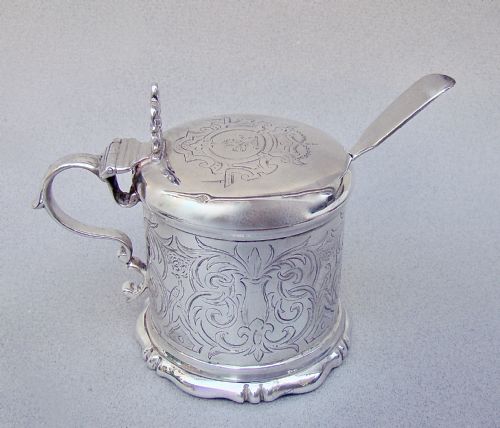


Engraved Sterling Silver Mustard
These engraved sterling silver mustard pots are small silver vessels for the dining table, offering charm and utility to any collector.
Engraved Sterling Silver Mustard
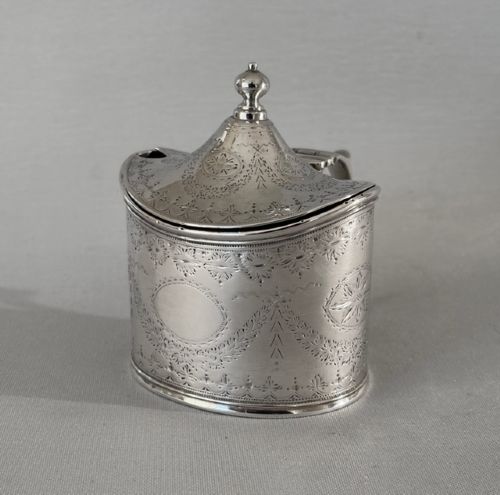
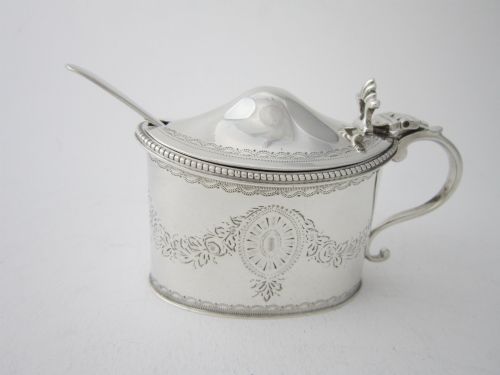
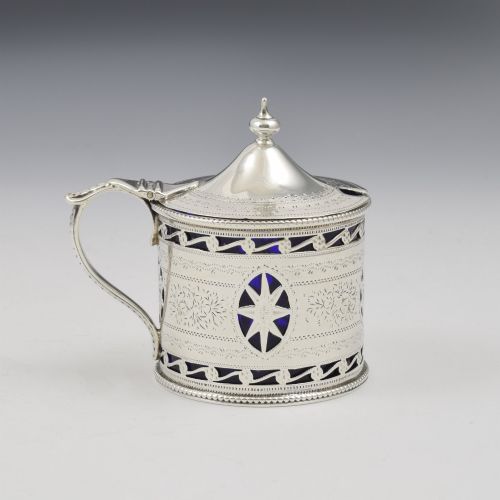
An engraved sterling silver mustard pot is a functional table vessel designed to hold mustard, appearing across the Georgian, Regency, and Victorian periods up to the George V era. These small containers are often found in oval or octagonal forms, sometimes featuring openwork or pierced designs that reveal an inner lining.
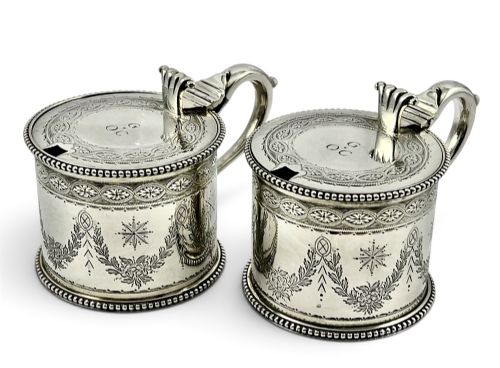
The most common version to meet on this page is the Victorian sterling silver mustard pot, frequently produced in forms such as drums or oval bodies. Makers from the nineteenth and early twentieth centuries applied detailed engraving to the exterior surface of these condiment pots.
Pieces from the Georgian and Regency periods also appear, alongside later George V examples shaped in a Georgian style. These tablewares served a distinct purpose at formal dining settings, often paired with matching cruet sets of the same period.
What varies in quality
Quality in these mustard pots rests on the crispness of the engraving and the structural integrity of the silver body. Superior examples display deep, sharp hand-engraving that remains clear across the curved or flat panels of the vessel.
The presence of a matching interior liner, such as original cobalt glass, elevates a piece. Maker marks stamped into the sterling silver also distinguish better workshops, showing clear hallmarks from prominent silversmiths.
Engraved Sterling Silver Mustard Retail Price Guide 2026
Typical asking prices for engraved sterling silver mustard among the pieces listed under this phrase on Sellingantiques today, from the lower quarter to the upper quarter. They describe what is for sale here now, not the wider market.
Cobalt glass liners survived centuries of mustard because mustard fears the dark.
Nathan & Hayes·Charles & George Fox·Robert Hennell I·William Neale & Son·Charles Stuart Harris
The Engraved Sterling Silver Mustard Glossary
- Sterling silver
- A silver alloy containing 92.5 percent silver by mass and 7.5 percent other metals, usually copper. This standard alloy provides the durability required for functional tableware.
- Cobalt glass
- A deep blue glass used frequently for the inner liners of condiment vessels. The rich colour provides a striking visual contrast when viewed through pierced silver walls.
- Hallmark
- An official mark stamped on items made of precious metals in Britain. These marks indicate the maker, the assay office, and the year of manufacture.
- Cruet set
- A matched group of small condiment containers used at the dining table for holding items like mustard, salt, and pepper. These sets often share a common silver style and period.
- Piercing
- A decorative technique where portions of the metal sheet are cut away to form openwork patterns. This method lightened the visual weight of Victorian drum mustard pots.
Engraved Sterling Silver Mustard: Frequently Asked Questions
What is a silver mustard pot?
A silver mustard pot is a small tabletop vessel designed to hold prepared mustard during meals. These items became standard additions to formal dining tables from the Georgian period onward.
They usually feature a hinged lid and an integrated handle, often accompanied by a small spoon. Inside, a glass liner protects the precious metal from the condiment.
How were these pots used?
These vessels sat on dining tables to serve mustard to guests during meals. Servants or diners used small spoons to transfer the condiment from the pot to their plates.
Because mustard can tarnish silver quickly, manufacturers inserted removable glass liners into the pots. This allowed the container to be cleaned easily after use without damaging the outer metal.
How do I date a silver mustard pot?
Dating relies primarily on the hallmarks stamped into the sterling silver body. These tiny impressions reveal the assay office, the maker, and a specific date letter corresponding to the year of manufacture.
Stylistic elements like oval shapes, drum forms, or specific engraved motifs also point toward periods such as the Georgian era or the Victorian reign.