

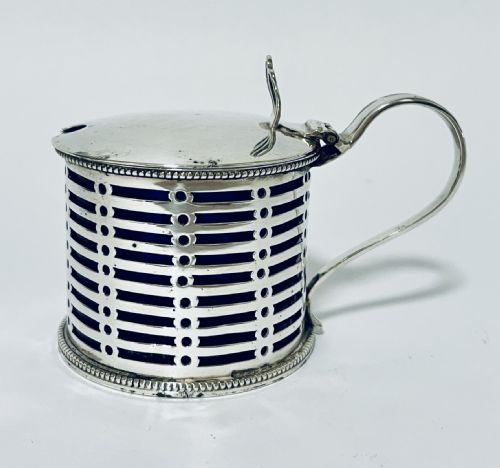


Sterling Silver Mustard Drum
These sterling silver mustard drum pieces bring precise geometry and bright metal to the dining table, offering a neat cylindrical form that collectors prize.
Sterling Silver Mustard Drum
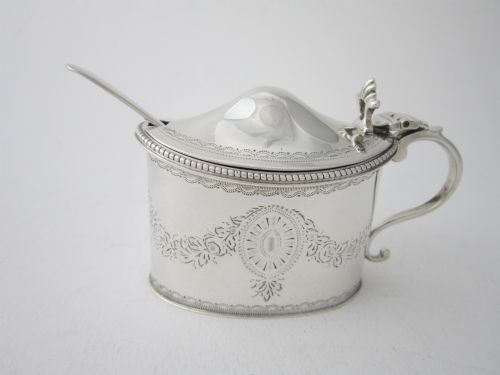
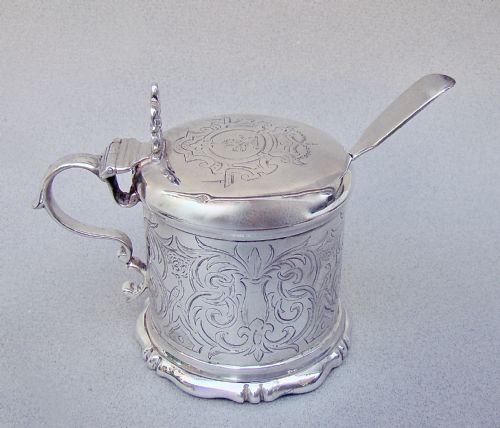
When you search for a sterling silver mustard drum, you are looking at small cylindrical tableware vessels designed specifically to hold mustard on the dining table. These pots display straight vertical walls reminiscent of miniature drums, often fitted with flat hinged lids and scroll handles.
On this page, you are most likely to meet pieces from the Georgian, Victorian, and Edwardian periods. These examples frequently showcase traditional forms spanning the eighteenth and nineteenth centuries, reflecting the evolving tastes of British silver manufacturing.
How they were made
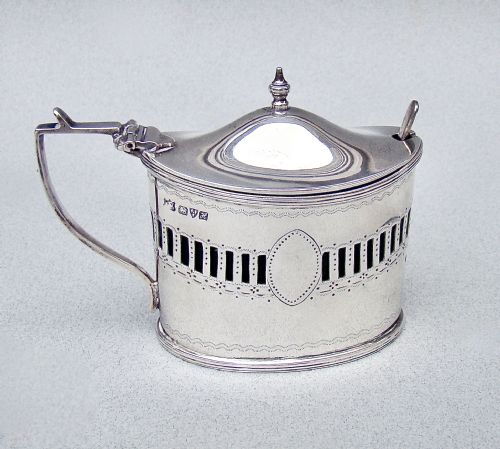
Silversmiths formed these cylindrical bodies by rolling sheet silver and soldering the vertical seams, then attaching flat bases and hinged lids. Many examples incorporate intricate pierced work or engraving directly into the silver wall.
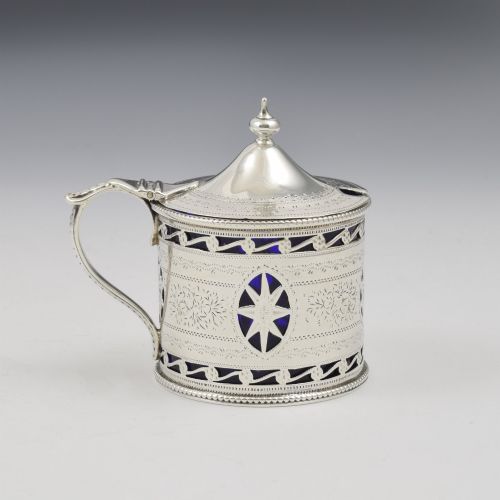
Inside the metal casing, makers fitted removable liners usually made from cobalt blue glass. This contrasting glass protected the sterling silver from the corrosive properties of mustard while adding vibrant colour through the open piercing.
Sterling Silver Mustard Drum Retail Price Guide 2026
Typical asking prices for sterling silver mustard drum among the pieces listed under this phrase on Sellingantiques today, from the lower quarter to the upper quarter. They describe what is for sale here now, not the wider market.
These miniature drums kept table condiments safely locked away while giving Georgian dining rooms a surprisingly martial beat.
What varies in quality
The distinction between ordinary and superior pieces often lies in the crispness of the piercing and the weight of the metal used in the body and handle. Heavier gauge silver resists denting and maintains sharper decorative edges along the rim and foot.
Maker attribution also dictates standing, with pieces bearing marks from notable silversmiths commanding greater interest. The presence of a matching or period-correct cobalt glass liner adds further integrity to the piece.
Alfred Marston·Nathan and Hayes·Charles and George Fox·Charles Fox II·Charles Stuart Harris
The Sterling Silver Mustard Drum Glossary
- Pierced work
- A decorative technique where patterns are cut out of the silver sheet to reveal the glass liner beneath. This openwork style lightens the visual weight of the drum.
- Cobalt glass
- A deep blue glass used as an insert inside openwork mustard pots. It provides a striking visual contrast against the polished sterling silver exterior.
- Drum
- A cylindrical container shape with straight vertical sides, flat top, and bottom. This architectural form defines the specific profile of these mustard pots.
- Hallmark
- A series of stamped marks on the silver indicating the maker, assay office, and year of testing. These stamps provide the historical timeline for each object.
Sterling Silver Mustard Drum: Frequently Asked Questions
How do I date a silver mustard pot?
Dating these pieces relies primarily on the hallmarks stamped into the silver, which record the assay office and the specific year of manufacture. Stylistic clues such as piercing designs and handle shapes also help narrow down the period.
The listings here span several eras, from mid eighteenth-century George III examples through to early twentieth-century revivals. Examining the typography of the maker marks provides further chronological context.
Why do these pots have glass liners?
Condiments like mustard contain vinegar and other acidic compounds that react poorly with silver over extended periods. Inserting a glass liner protected the metal body from tarnishing and corrosion.
Cobalt blue glass was the preferred choice because its rich colour complemented the reflective quality of polished sterling silver. These liners lift out easily for cleaning.
How should I display a mustard drum?
These small vessels work well displayed within a dining room cabinet or as part of a larger collection of Georgian and Victorian tableware. Their compact size makes them easy to group together on a shelf.
Placing them where natural light catches the polished silver and the coloured glass liner brings out the fine details of their construction.