
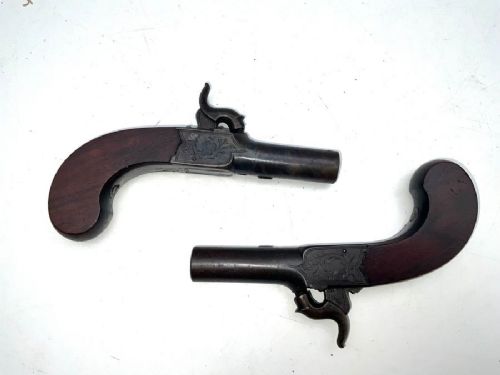
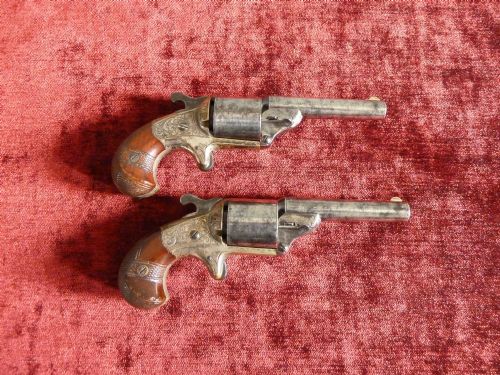
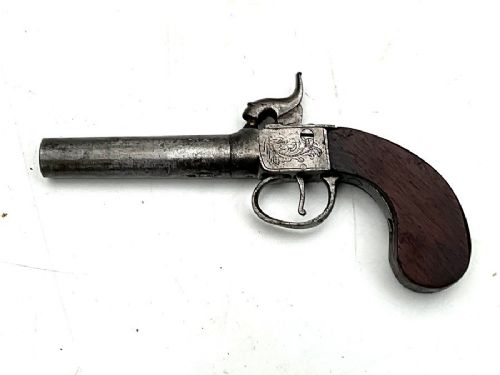

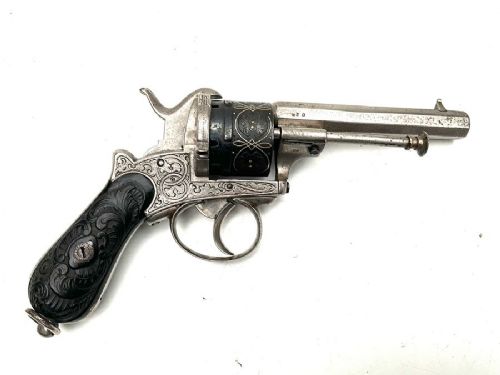
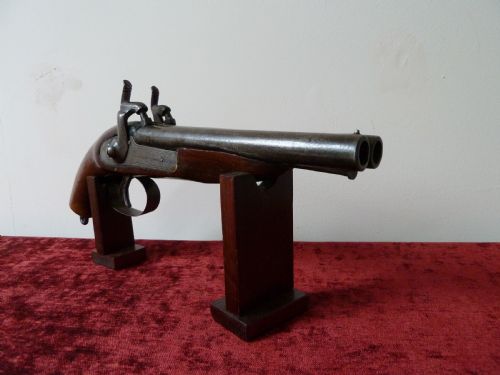


Engraved Steel Handgun
An engraved steel handgun carries centuries of functional craft, combining iron and steel mechanics with refined surface decoration.
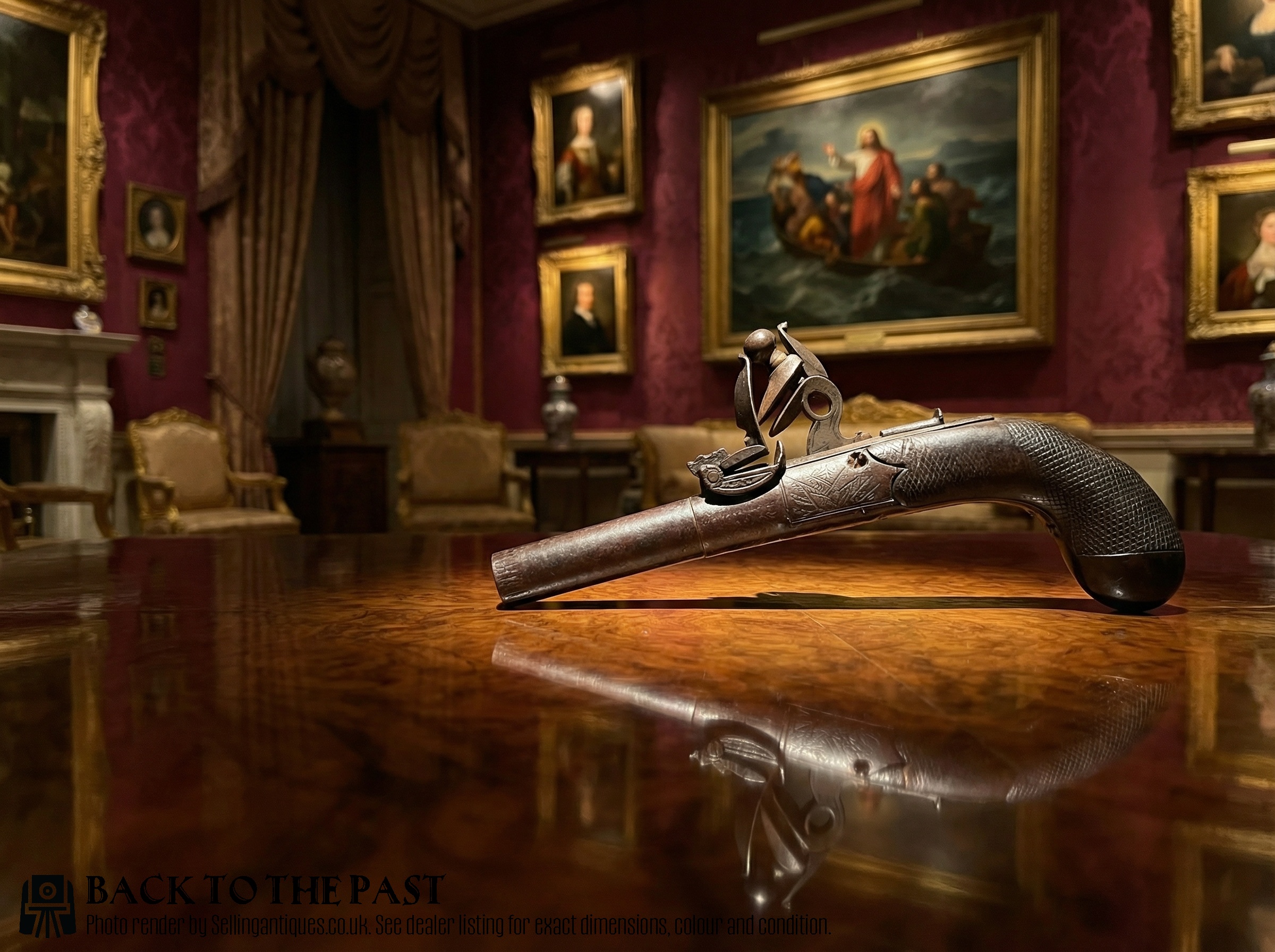
Engraved Steel Handgun
When you search for an engraved steel handgun, you encounter pieces spanning from the seventeenth century through the Victorian period, encompassing flintlock, percussion, and pinfire systems.
Origins stretch across British, American, French, and Ottoman workshops, with regional variants like Balkan snaphaunce mechanisms and Scottish scroll-butt designs appearing among the listings.
Materials and construction
Makers shaped barrels and actions from steel and iron, pairing metal components with stocks carved from walnut, ebony, and general hardwood.
Surfaces received intricate engraving alongside applied details such as silver wire inlay, brass mounts, and mother-of-pearl panels.
Ignition systems evolved from early flintlock mechanisms through percussion caps to pinfire and rimfire technology.
Materials span iron, steel, walnut, ebony, brass, and silver wire.
Judging quality and execution
Superior examples display crisp, deep chisel engraving across the steel lock plates and mounts, whereas lesser pieces show shallow or worn surface work.
The integration of precious metals like silver wire inlay or well-fitted wood stocks indicates higher workshop standards during production.
Overall balance and the precision of mechanical action distinguish standard military issue from bespoke officer or presentation grade pieces.
John Campbell of Doune·Auguste Francotte·Meyer and Mortimer·Barber of Newark·A.W Spires
The Engraved Steel Handgun Glossary
- Flintlock
- An ignition mechanism utilising a piece of flint held in a cock to strike a steel frizzen and create sparks. This system dominated firearm production for centuries.
- Percussion
- A later ignition system employing a small priming cap struck by a hammer to detonate the powder charge. It replaced the flintlock for improved reliability in damp conditions.
- Pinfire
- A cartridge system where a small pin protrudes radially from the base of the cartridge to be struck by the hammer. It represents an early self-contained metallic cartridge design.
- Snaphaunce
- An early flintlock variant using a sliding steel pan cover linked to the dog. It marks a transitional phase in firearm ignition history.
- Muff pistol
- A small, easily concealed firearm designed to fit inside a muff or pocket for personal defence during travel. These pieces often feature collapsible triggers.
Engraved Steel Handgun: Frequently Asked Questions
How do I date an engraved steel handgun?
Dating relies on identifying the ignition mechanism, such as flintlock, percussion, or pinfire, combined with stylistic cues from the mountings and stock design. Maker signatures and proof marks also provide direct chronological anchors.
Comparing the form against documented regional styles helps narrow the period of manufacture further across the seventeenth, eighteenth, and nineteenth centuries.
Were these handguns used for military or civilian defence?
The pieces span both categories, with officers purchasing private purchase sidearms for campaign use, while travellers relied on pocket and muff pistols for personal protection.
Matching pairs served for duelling or high-status defence, whereas single pocket pieces catered to daily urban wear.
What is the difference between a flintlock and a percussion pistol?
A flintlock relies on a flint striking a steel frizzen to generate sparks into an external priming pan, which ignites the main powder charge inside the barrel.
In contrast, the percussion system uses an enclosed nipple holding a chemical priming cap that detonates directly when struck by the hammer.
How should I display an antique handgun at home?
Display requires secure cabinet placement with stable humidity levels to protect both the steel components and the wooden stocks from environmental damage.
Keeping the piece away from direct sunlight preserves the original finish of the metal engraving and wood grain.