




Walnut Grip Revolver
These walnut grip revolver examples offer robust nineteenth-century engineering paired with tactile wooden stocks.
Walnut Grip Revolver
A walnut grip revolver brings together mid-nineteenth-century martial and civilian sidearms, anchored by wooden handle panels. Most options visible on this page belong to the nineteenth century, specifically the Victorian era and the decades surrounding the American Civil War.
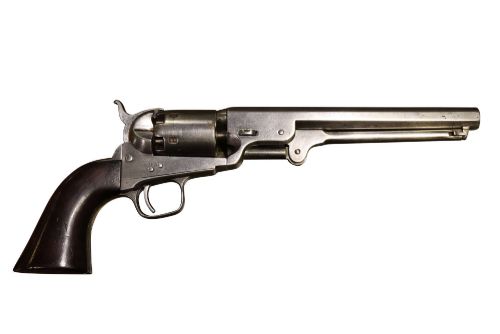
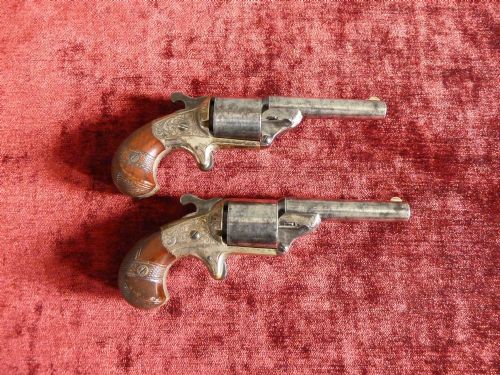
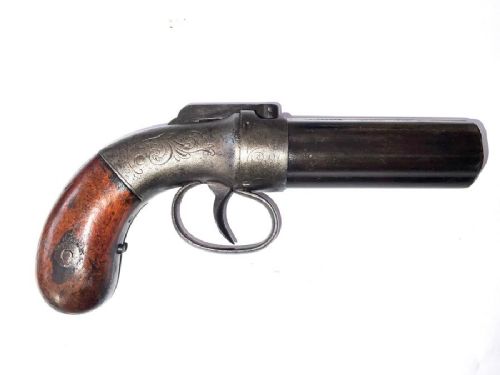
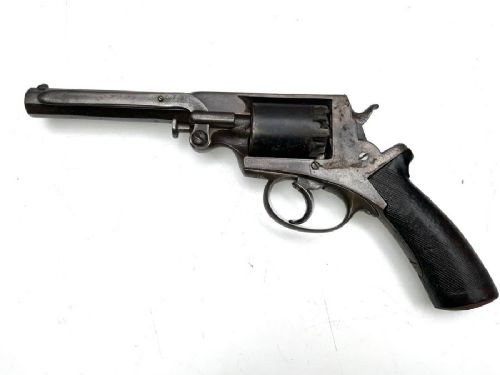
The inventory covers a varied selection of forms, ranging from percussion pocket pistols and pepperboxes to full-sized military sidearms like the Colt Model 1860 Army and the Beaumont-Adams. Buyers encounter both English percussion arms and American rimfire or cap-and-ball pieces.
Makers represented include prominent transatlantic names such as Colt, Allen & Thurber, and Deane, Adams & Deane. Each piece demonstrates the mechanical ingenuity of an era transitioning from multiple barrels to revolving cylinders.
Materials and construction
Forged steel, iron, and brass form the structural frames, barrels, and cylinders of these firearms. Metals receive varying finishes, including bright steel and nickel plating, designed to withstand the rigours of military service or personal defence.
Stocks and grips utilise dense walnut wood, shaped to fit the hand and secured with screws or pins. This timber provides both durability and a stable platform during recoil.
Walnut Grip Revolver Retail Price Guide 2026
Typical asking prices for walnut grip revolver among the pieces listed under this phrase on Sellingantiques today, from the lower quarter to the upper quarter. They describe what is for sale here now, not the wider market.
Listings span the nineteenth century, including the 1850s and 1860s, featuring American and English origins.
Factors of quality and survival
The degree of original finish remaining on the metalwork dictates much of the standing of an individual piece. Crisp markings on the barrel flats and matching serial numbers across major components indicate careful historical preservation.
The tightness of the mechanical action and the preservation of the walnut grip surfaces determine the overall integrity. Well-defined checkering or smooth, oiled grain on the wood highlights the original maker's standard of finish.
Colt·Allen and Thurber·J R Cooper·Deane Adams and Deane·John Manton
The Walnut Grip Revolver Glossary
- Percussion revolver
- A handgun that uses a percussion cap ignited by a hammer to fire a charge from one of several revolving chambers. This system superseded flintlock mechanisms in the nineteenth century.
- Pepperbox pistol
- A multi-barrel firearm with a revolving cluster of barrels that rotate around a central axis when cocked. This design offers multiple shots without a separate cylinder.
- Matching numbers
- Serial numbers stamped on several component parts of a firearm that correspond to one another. This confirms the pieces remain in their original factory configuration.
- Calibre
- The internal diameter of the firearm barrel, determining the size of the ammunition used. Common nineteenth-century dimensions include thirty-six and forty-four hundredths of an inch.
Walnut Grip Revolver: Frequently Asked Questions
How do I care for a walnut grip revolver?
Keep the metal lightly oiled to prevent active corrosion and store the firearm in a stable, dry environment away from direct heat sources.
Treat the walnut stock with microcrystalline wax or a suitable wood conditioner periodically to maintain the moisture balance of the timber.
Were these revolvers used in combat?
Many nineteenth-century military sidearms saw active service during conflicts such as the American Civil War. Martial issue markings often indicate official government procurement and deployment.
Other pieces served as civilian pocket pistols or gambler's defence weapons, seeing everyday carry rather than battlefield deployment.
What is the difference between a pepperbox and a revolver?
A pepperbox incorporates the ammunition chambers directly into a cluster of rotating barrels. Every barrel fires in turn around the central axis.
A revolver separates the ammunition chambers into a single cylinder that rotates behind a stationary barrel.
How can I tell the date of a percussion revolver?
Examine the barrel addresses, patent dates, and serial numbers stamped into the metal frame. Makers frequently included patent information or city locations that narrow down the production window.
Stylistic indicators such as frame shape and grip geometry also help place the piece within the Victorian period.