



Engraved Silver Milk Jug
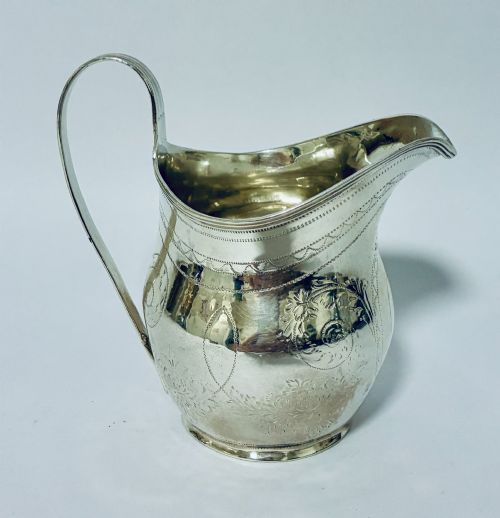
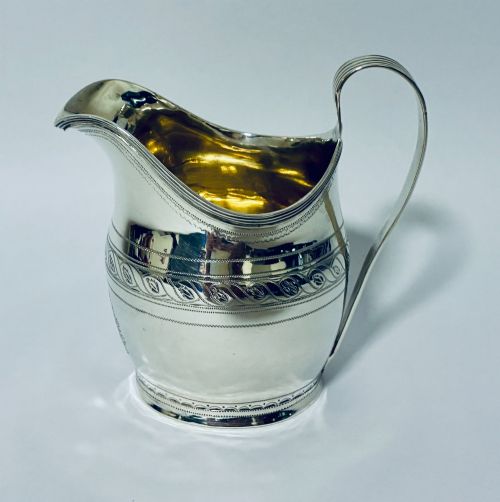
An engraved silver milk jug brings refined tactile detail to the tea service, combining crisp hand-engraved patterns with the gleam of solid metal.
Engraved Silver Milk Jug
When you search for an engraved silver milk jug, you examine small pouring vessels designed for cream or milk during formal tea service. These pieces emerge predominantly from the Georgian and Victorian periods, reflecting shifting domestic habits over two centuries.
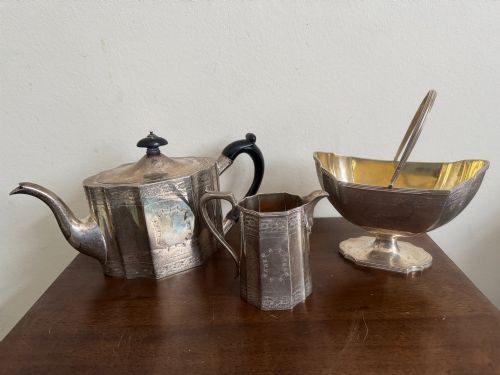
You meet variations ranging from compact cream jugs to larger pedestal forms and pieces paired within broader tea sets. The selection leans heavily towards Georgian and Victorian examples fashioned in sterling silver or silver plate.
The core function remains consistent across eras, serving to temper tea with dairy while displaying the ornamental tastes of the silversmith's workshop.
How they were made
Silversmiths shaped these vessels using sterling silver or silver plate, occasionally incorporating gilt interiors or gold wash for contrast. Handles sometimes feature contrasting materials such as ebony to provide a steady grip.
Decoration relied heavily on hand-engraved floral designs and bright cut engraving to catch the light across the body of the jug. Form varied from simple domestic items to ornate pedestal vessels reflecting Georgian and Victorian aesthetics.
Some Victorian jugs feature woven handles designed to keep fingers cool while pouring hot morning milk.
What varies in quality
The distinction between standard domestic ware and superior production lies in the crispness and depth of the hand-engraving. Crisp floral motifs and clean bright cut lines demonstrate the hand of a skilled artisan.
Weight and structural integrity also separate ordinary pieces from exceptional ones, particularly in the balance of the handle and the stability of pedestal bases. Makers such as Peter & Ann Bateman or John Emes represent high standards of period silversmithing.
John Emes·Peter & Ann Bateman·Robert Hennell
The Engraved Silver Milk Jug Glossary
- Bright cut
- A form of engraving utilising faceted cuts made with a sharp graving tool to create shimmering geometric patterns. This technique was immensely popular on Georgian silver.
- Sterling silver
- An alloy containing a high proportion of pure silver combined with small amounts of other metals to ensure durability. It forms the primary material for better quality tea wares.
- Silver gilt
- Silver objects that have been coated with a thin layer of gold on the surface, often applied to the interior of milk jugs to prevent tarnishing from dairy acids.
- Pedestal cream jug
- A small pouring vessel raised on a distinct foot or stem rather than resting directly on a flat base. This form frequently appears in Victorian silver designs.
- Silver plate
- A base metal coated with a layer of genuine silver, offering the visual appeal of solid silver at a different tier of production.
Engraved Silver Milk Jug: Frequently Asked Questions
How do I date an engraved silver milk jug?
Dating relies primarily on hallmarks stamped into the metal, which indicate the assay office, year of manufacture, and maker. Stylistic clues like bright cut engraving or pedestal bases also point towards Georgian or Victorian periods.
Examining the wear patterns and handle construction helps confirm whether a piece originates from the eighteenth or nineteenth century.
Were these jugs used only for milk?
These vessels were primarily designed for serving cream or milk to accompany tea and coffee. In many households, they formed part of a larger matching tea set or service.
Their small scale suited the precise quantities required for individual servings during formal gatherings.
How do I clean engraved silver safely?
Cleaning requires a soft cloth and a specialised silver polish that will not abrade the fine details of the hand-engraving. Avoid harsh scrubbing that can wear down the crisp edges of bright cut patterns.
Rinse the vessel thoroughly in warm water and dry it immediately with a lint-free cloth to maintain its shine.
What is the difference between sterling and plated jugs?
Sterling silver consists of solid precious metal throughout the body of the jug, carrying official hallmarks that verify its composition. Silver plate involves a base metal core covered by a thin outer layer of silver.
Heft and hallmarks serve as the main indicators to distinguish between the two types.