





Victorian Sterling Creamer
These Victorian sterling creamers are dependable silver milk jugs for the table, offering solid metal work and honest nineteenth-century design.
Victorian Sterling Creamer
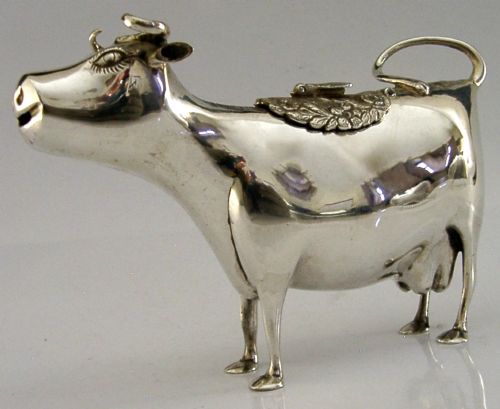
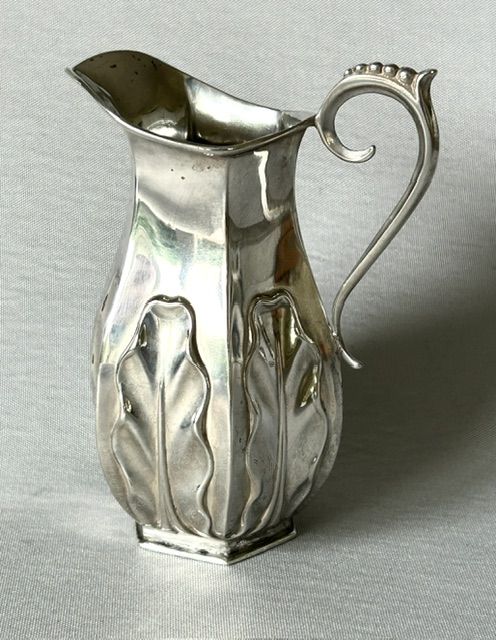
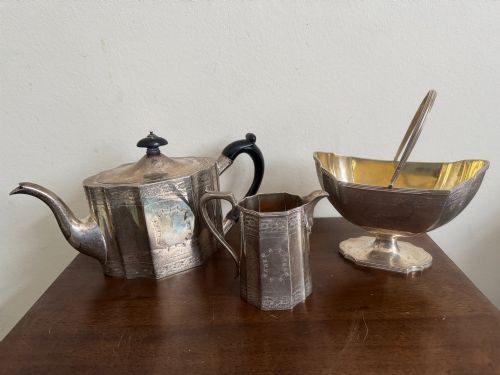
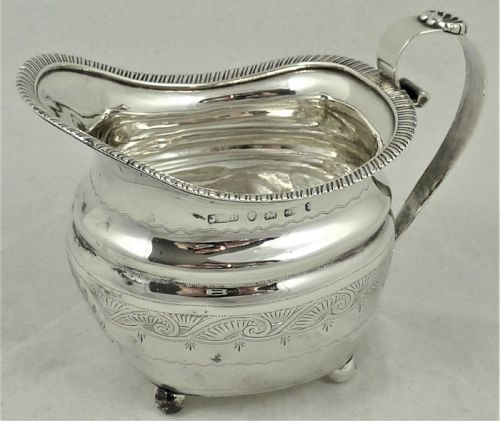
A victorian sterling creamer is a small silver vessel designed for serving milk or cream alongside tea, appearing on this page in forms such as cream jugs, milk jugs, pedestal cream jugs, and occasionally as part of larger tea sets or strawberry sets. Most examples originate from the Victorian period, with dates spanning the decades from the mid to late nineteenth century, alongside a few pieces from later eras.
Buyers will find both plain domestic forms and more decorative iterations. These range from standard silver jugs to naturalist designs and rococo revival pieces, sometimes accompanied by matching sugar bowls and tongs.
How they were made
These creamers are fashioned from sterling silver and solid silver, often featuring internal gold gilding to protect the metal from dairy acids. Certain pieces incorporate contrasting materials such as ebony handles, while storage cases and presentation boxes utilise silk, velvet, and leather.
Silversmiths employed traditional forming and hallmarking techniques, stamping pieces with city marks such as London and Glasgow, alongside maker's marks, to indicate the standard of the metal and the year of production.
Victorian Sterling Creamer Retail Price Guide 2026
Typical asking prices for victorian sterling creamer among the pieces listed under this phrase on Sellingantiques today, from the lower quarter to the upper quarter. They describe what is for sale here now, not the wider market.
Listings feature sterling silver creamers alongside sugar bowls, tea sets, and ebony-handled milk jugs dated across the nineteenth century.
What varies in quality
Quality in these silver creamers rests upon the crispness of the chased or engraved decoration and the weight of the metal itself. Heavier gauge silver and well-defined naturalist or rococo revival detailing distinguish superior examples from simpler, thinner domestic items.
The prominence and clarity of the hallmarks also play a role, as well-struck town marks and maker stamps provide a clearer record of the piece's origin and pedigree.
John Rawlings·Robert Hennel·William Moering·Goldsmiths And Silversmiths
The Victorian Sterling Creamer Glossary
- Sterling silver
- A silver alloy containing 92.5 percent pure silver and 7.5 percent other metals, usually copper, chosen for durability. This is the standard metal composition for the majority of these jugs.
- Hallmark
- An official stamp applied to precious metals to guarantee their purity and origin. These marks typically include maker initials, town marks, and date letters.
- Gilding
- A thin layer of gold applied to the interior surface of the silver jug. This prevents the silver from tarnishing when exposed to milk or cream.
- Pedestal
- A raised foot or base supporting the body of the jug. This form elevates the vessel above the table surface.
Victorian Sterling Creamer: Frequently Asked Questions
How do I clean a silver creamer?
Clean sterling silver creamers using a soft cloth and specialist silver polish, avoiding abrasive pads that can wear away crisp surface details.
Rinse the vessel thoroughly in warm water and dry it completely with a lint-free cloth to prevent water spots.
Are these creamers safe for daily use?
Most nineteenth-century silver cream jugs are structurally sound enough for serving milk or cream at the table.
Hand wash the piece immediately after use and avoid leaving dairy products inside for extended periods to protect the silver and any interior gilding.
How can I date a Victorian creamer?
Examine the hallmarks stamped onto the silver, which usually include a specific date letter corresponding to the assay office's year cycle.
Stylistic cues such as rococo revival curves or naturalist motifs also help narrow down the decade of production.
What is the difference between a milk jug and a cream jug?
Milk jugs were historically made in slightly larger capacities for family tea service, while cream jugs were smaller vessels meant for rich cream.
In practice, antique listings often use these terms interchangeably for similar small pouring vessels.