
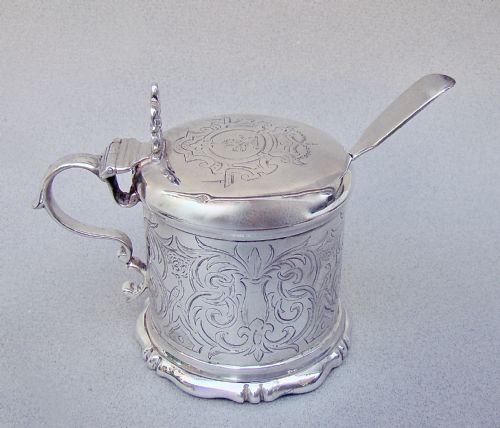


Engraved Silver Condiment Pot
An engraved silver condiment pot brings elegance to the dining table, offering a functional vessel shaped by Victorian and Georgian hands.
Engraved Silver Condiment Pot
Materials and construction
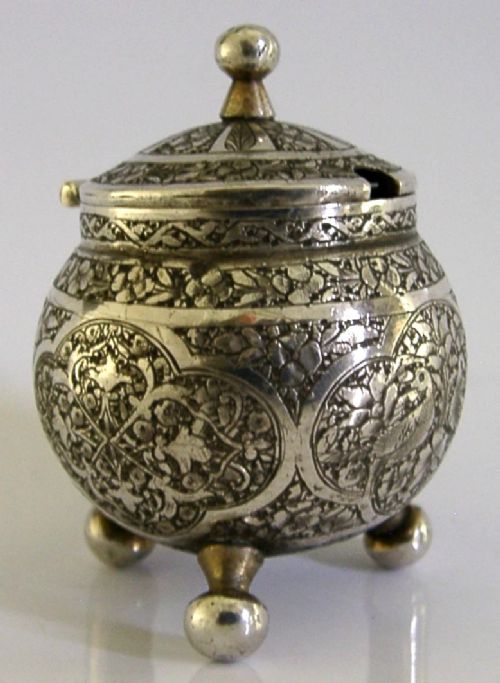
Silversmiths utilised sterling silver and silver plate to form the body of each vessel, employing techniques such as piercing, casting, and hand engraving. The metalwork requires precise soldering and hinge fitting to secure lids on mustard pots and pepper pots.
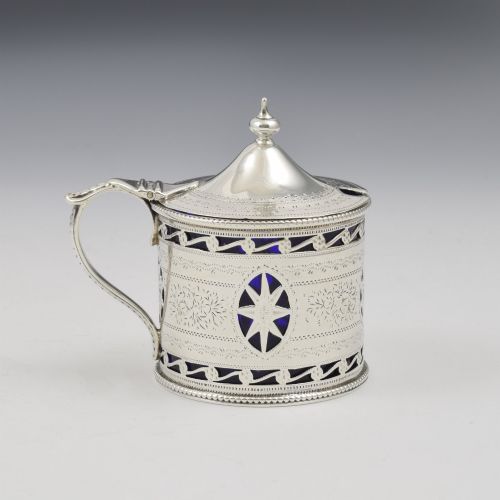
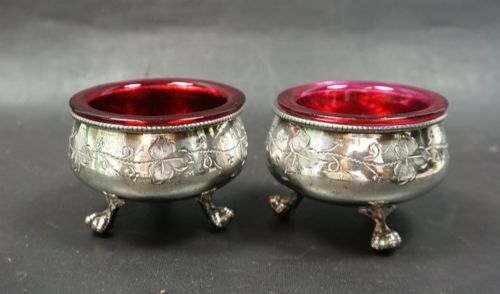
Interiors often rely on blown glass liners in cobalt blue or cranberry hues, tailored to fit snugly within pierced or solid silver walls. These contrasting materials protect the metal from corrosive condiments while adding visual depth.
An inquisitive silver owl stands ready to dispense pepper from its head.
Evaluating the craftsmanship
Quality rests in the crispness of the engraving and the weight of the metal used in the body and the hinged lid. Heavier gauge sterling silver provides a substantial feel and better structural integrity over decades of use.
The integration of the glass liner also signals distinction, particularly where the glass is original to the piece and fits without movement. Maker involvement from recognised silversmiths further elevates the standing of an individual vessel.
Nathan & Hayes·Charles & George Fox·Robert Hennell I·William Neale & Son·Charles Stuart Harris
The Engraved Silver Condiment Pot Glossary
- Sterling silver
- A silver alloy containing 92.5 percent pure silver and 7.5 percent other metals, usually copper, chosen for durability. This standard forms the basis of most high-quality antique tablewares.
- Silver plate
- A base metal coated with a thin layer of silver through electroplating or older fusion methods. It offers the appearance of solid silver at a different cost level.
- Cobalt glass
- Deep blue glass produced by adding cobalt oxide to the molten batch. It is frequently utilised for removable liners inside pierced condiment pots.
- Piercing
- A decorative technique where metal is cut through to create openwork patterns such as lattices or scrolls. This method lightens the visual weight of the object while revealing the coloured glass within.
Engraved Silver Condiment Pot: Frequently Asked Questions
What is an engraved silver condiment pot used for?
These vessels serve to hold table condiments such as prepared mustard, salt, or pepper during meals. They sit on the dining table alongside other cruet items to assist diners.
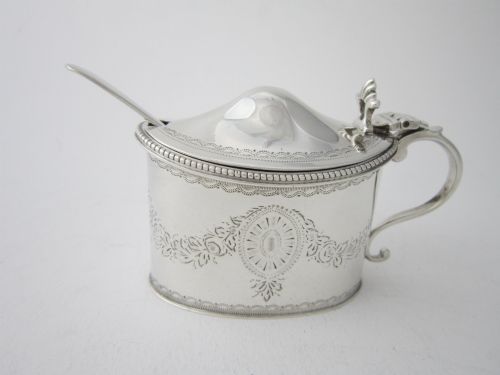
Most include a hinged lid to keep contents fresh and a small cutout to accommodate a matching condiment spoon.
How do I clean antique silver condiment pots?
Maintenance requires a soft cloth and a specialised silver polish formulated to remove tarnish without abrading the engraved details. Harsh dips should be avoided to protect applied patinas and maker marks.
Glass liners ought to be removed and washed separately in warm soapy water before being dried and reinserted.
Are glass liners original to the pots?
Many surviving pieces retain their original cobalt or cranberry glass liners, shaped specifically for the interior dimensions of the silver frame. Replacements occur due to breakage over time, so a tight and correct fit indicates proper pairing.
Examining the rim and base of the glass can reveal manufacturing characteristics consistent with the period of the silver.
How can I tell a Victorian pot from a Georgian one?
Georgian examples often display restrained neoclassical lines or plain surfaces, reflecting the tastes of the eighteenth and early nineteenth centuries. Victorian pieces frequently exhibit heavier ornamentation, including rococo revival scrolls, bird motifs, or elaborate piercing.
Assay office marks and date letters stamped on the silver provide the definitive guide to the exact year of manufacture.