

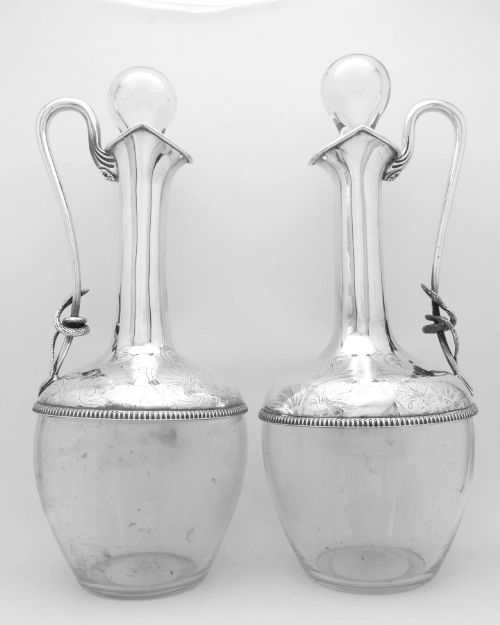


Engraved Silver Claret Pitcher
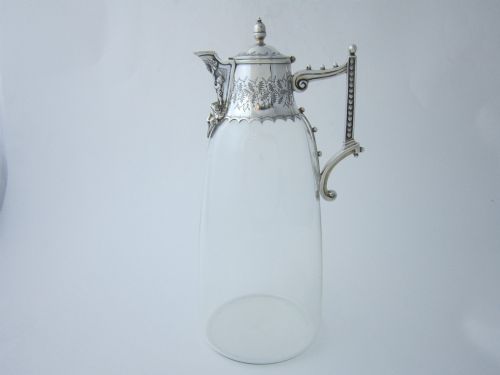
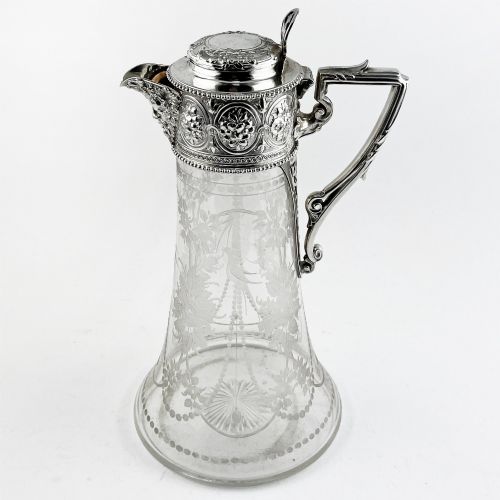
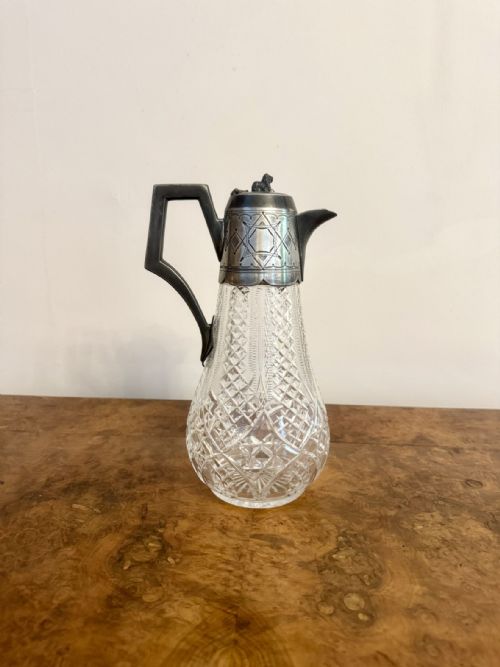
An engraved silver claret pitcher brings Victorian dining ritual directly to the table, pairing cut glass with chased metal.
Engraved Silver Claret Pitcher
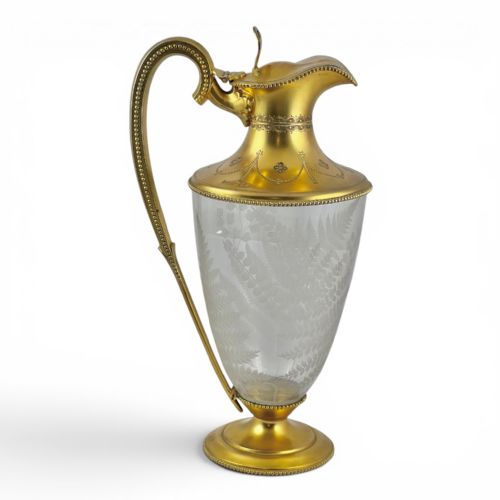
An engraved silver claret pitcher is a serving vessel designed for wine, combining a glass or crystal body with precious or plated metal mounts. These pieces emerge predominantly from the Victorian and Edwardian eras, spanning the nineteenth and early twentieth centuries.
The form frequently pairs wheel-cut or etched glass bodies with hinged silver lids and mounts, occasionally featuring sculptural handles shaped like serpents or Bacchus masks.
Collectors encounter sterling silver examples alongside silver plate and Old Sheffield Plate, often accompanied by matching decanters and ewers.
How they were made
Maker's workshops combined heavy-walled glass bodies, often deeply cut or etched with floral and geometric motifs, with cast and chased silver or silver-plated mounts.
The metalwork required skilled silversmiths to form hinged lids, collars, and handles, sometimes applying silver gilt or intricate engraving by hand.
Engraved Silver Claret Pitcher Retail Price Guide 2026
Typical asking prices for engraved silver claret pitcher among the pieces listed under this phrase on Sellingantiques today, from the lower quarter to the upper quarter. They describe what is for sale here now, not the wider market.
Listings span from the Georgian period through the Victorian and Edwardian eras up to nineteen-sixty, uniting glass and silver plate.
What varies in quality
Quality rests upon the crispness of the glass cutting and the weight of the metal mounts, where solid sterling silver commands greater regard than silver plate.
Design complexity also defines the piece, distinguishing simple collar mounts from sculptural serpent handles and detailed mask spouts.
William Comyns·Asprey and Co. Ltd·William Davenport
The Engraved Silver Claret Pitcher Glossary
- Silver Plate
- A base metal coated with a thin layer of silver, common in nineteenth-century dining wares. This technique allowed makers to produce impressive vessels at a lower cost than solid silver.
- Claret Jug
- A specialised pouring vessel created specifically for serving red table wine. These jugs often feature generous proportions and secure hinged lids.
- Silver Gilt
- Silver that has been coated with a thin layer of gold on the interior or exterior surfaces. This process protected the metal from wine acids.
- Old Sheffield Plate
- An early form of plating created by fusing a sheet of silver to a copper core. The method produces a rich depth of metal that patinates distinctively over time.
Engraved Silver Claret Pitcher: Frequently Asked Questions
How do I date an engraved silver claret pitcher?
Dating relies heavily on British hallmarks stamped into the silver mounts, which indicate the assay office and year of production. stylistic clues such as Victorian floral engraving or Art Nouveau curves also help narrow the decade.
Unmarked silver-plated examples require close inspection of the mounting style, glass type, and manufacturing technique to estimate their age within the nineteenth or early twentieth century.
Were these pitchers used only for claret?
While designed primarily for serving red claret at the Victorian dinner table, these vessels held various table wines and cordials. Their generous capacity made them suitable for any bottled wine needing aeration before pouring.
Households often deployed similar ewers for water or dessert wines, depending on the formality of the meal and the preference of the host.
How should I clean silver mounts on glass?
Cleaning requires careful separation of the metal maintenance from the glass body to avoid damaging either material. Use a gentle silver cloth on the mounts while preventing polish residue from entering the engraved glass cuts.
Warm soapy water and a soft brush safely clear dust from deep glass cuttings without risking the nineteenth-century hinges or handles.
What is the difference between solid silver and plate?
Solid silver pieces bear official hallmarks indicating sterling standard purity throughout the metal mounts. These items hold intrinsic precious metal weight alongside their antique value.
Silver-plated versions utilise a base metal core beneath the silver layer, identified by unmarked surfaces or specific maker trade stamps rather than standard silver hallmarks.