

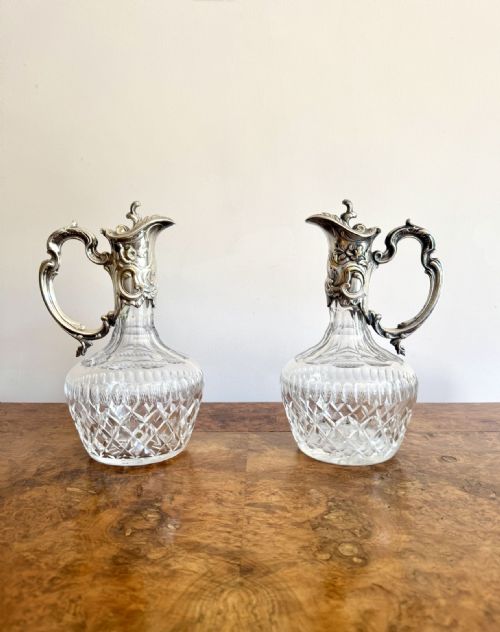
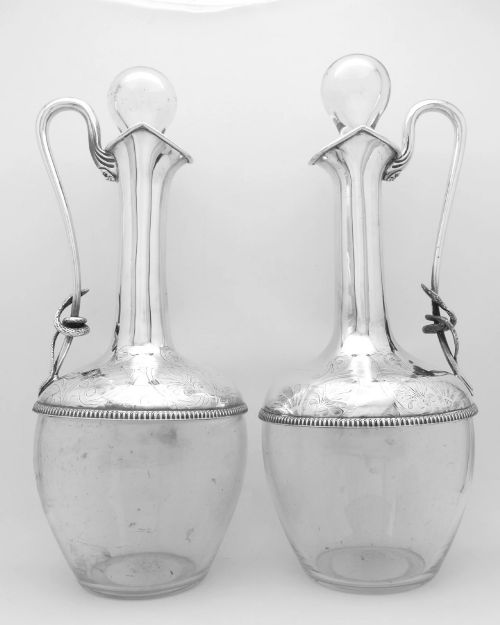


Crystal and Silver Pitcher
These crystal and silver pitchers combine heavy cut glass bodies with gleaming silver mounts for formal dining and entertaining.
Crystal and Silver Pitcher
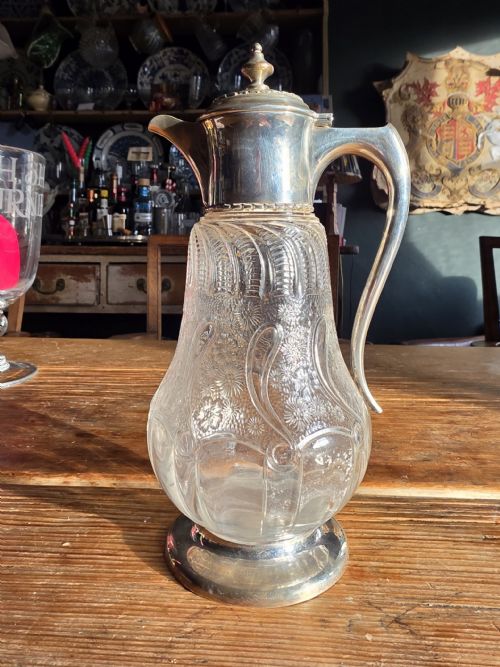
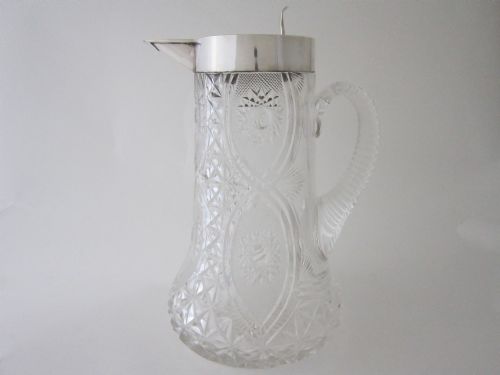
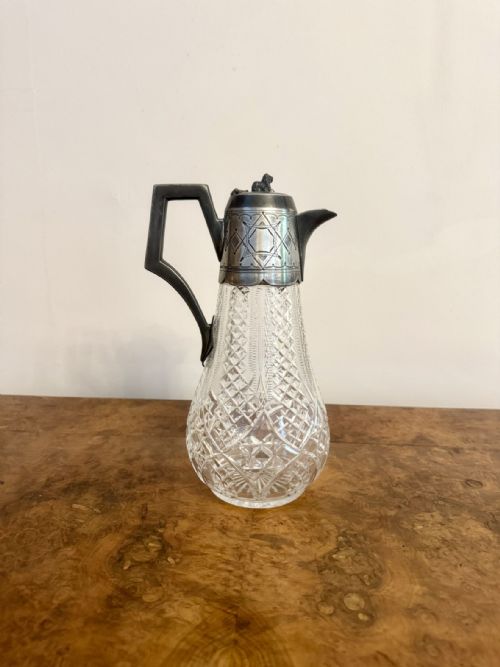
A crystal and silver pitcher typically takes the form of a claret jug, wine ewer, or water jug designed for formal service. The most frequent examples encountered here date from the Victorian and Edwardian periods, alongside later twentieth-century iterations.
Bodies alternate between clear cut glass and deep crystal, paired with either sterling silver or silver-plated mounts, collars, and hinged lids. Makers applied these vessels to claret, dessert wine, whisky, and water.
Materials and construction
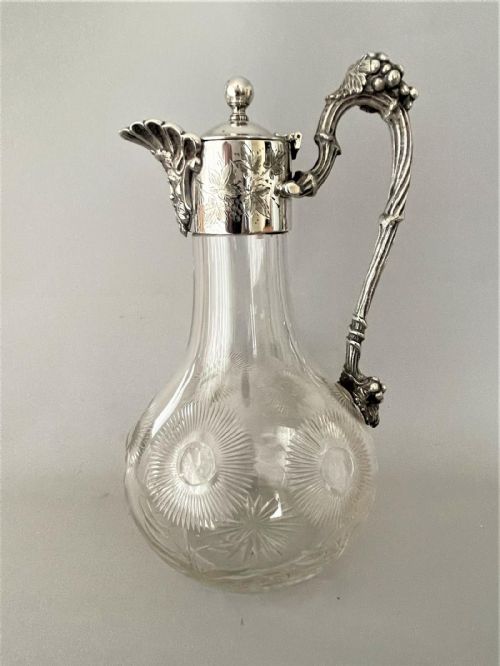
Craftsmen shaped glass and crystal bodies using heavy cutting and etching techniques, producing faceted, hobnail, or smooth surfaces that catch the light. Silversmiths then fitted these vessels with cast and chased mounts, often incorporating spouts shaped as masks, birds, or serpents.
Handles were secured firmly to the silver collars and body rings, whilst hinged lids operated via thumbpieces attached near the rim. Sterling silver components carry hallmarks denoting assay offices and dates, while silver plate relies on a base metal core.
Listings span periods from the Victorian era and 1880 through Edwardian styles up to 1960.
Defining quality
The weight and depth of the glass cutting separate basic vessels from finer examples, as does the clarity and brilliance of the crystal material itself. Heavier gauge silver mounts and crisp, detailed chasing on handles and spouts indicate superior workshop production.
Proportion and balance also govern quality, where the junction between glass body and silver collar appears seamless and secure. Maker marks from established silversmiths elevate the standing of the piece compared to unmarked silver plate.
Asprey and Co. Ltd·Hukin and Heath·Tiffany
The Crystal and Silver Pitcher Glossary
- Claret jug
- A pouring vessel specifically utilised for serving red wine at the dining table. They frequently combine glass bodies with silver mounts.
- Hallmark
- Official stamps impressed into sterling silver indicating the assay office, standard of purity, and year of manufacture. These markings provide secure dating for antique pieces.
- Hobnail cut
- A distinct geometric pattern cut into glass surfaces resembling the head of a hobnail boot. It creates sharp facets that refract light intensely.
- Silver plate
- A layer of real silver fused over a base metal foundation. It offered an accessible alternative to solid sterling silver during the nineteenth and twentieth centuries.
- Ewer
- An ornamental jug with a wide spout and curved handle, often used for water or dessert wine. The form derives from classical antiquity.
Crystal and Silver Pitcher: Frequently Asked Questions
What is a crystal and silver pitcher used for?
These vessels serve claret, dessert wine, whisky, or water during formal dining and entertaining. The pouring lip and hinged lid allow steady service at the table.
Historically, hosts transferred wine from bottles into these jugs to aerate the vintage and present it attractively to guests.
How do I clean a crystal and silver pitcher?
Wash the glass body gently by hand using warm water and mild detergent, avoiding harsh abrasives that scratch the surface. Polish the silver mounts separately with a specialised cloth to maintain their shine.
Keep moisture away from any internal cork or cement linings often found within older silver collar joints.
How do I tell Victorian pieces apart from Edwardian ones?
Victorian pieces often display heavier Rococo Revival flourishes, ornate chasing, and deep hobnail cutting across nineteenth-century forms. Edwardian examples tend toward lighter mounts and refined proportions reflecting changing early twentieth-century tastes.
Examining London hallmarks and date letters provides precise confirmation of the manufacturing era.
Are these pitchers made of sterling silver or silver plate?
Mounts utilise either solid sterling silver or silver-plated base metal, depending on the original commission and maker. Sterling examples carry official hallmarks denoting the metal standard.
Silver-plated versions offer the same decorative visual appeal while remaining more accessible in production cost.