



Engraved Silver Card Box
An engraved silver card box sits in the hand with a distinct weight, offering a tactile glimpse into nineteenth-century social display.
Engraved Silver Card Box
When you search for an engraved silver card box, you encounter a specialised vessel designed to hold visiting cards, cigarettes, or small desk accessories. The pieces on this page span several decades, crossing periods from the Georgian era through the Victorian and Edwardian years into the mid-twentieth century.
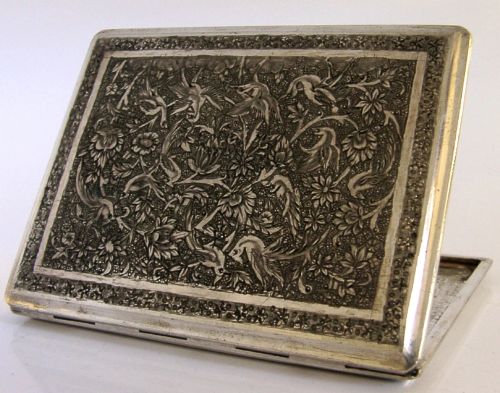
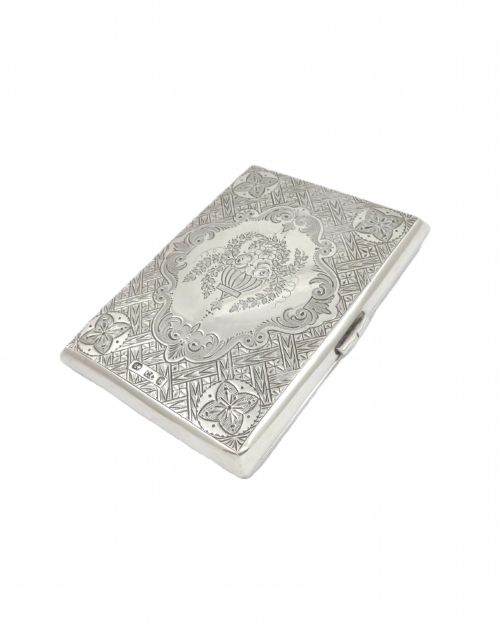
The primary forms take shape as slim card cases, aide-memoires, cigarette cases, and small decorative boxes. Victorian examples frequently appear alongside Edwardian pieces and regional variations from Ottoman, Soviet, and Thai workshops.
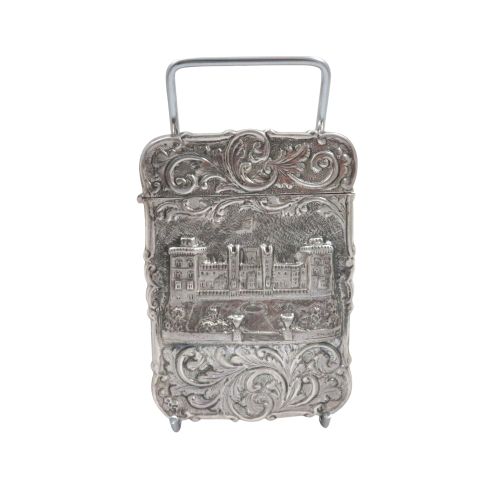
Makers shaped these objects to serve the rigid social protocols of calling and smoking. A buyer meets everything from plain polished silver to highly specific architectural castle top designs.
Materials and Techniques
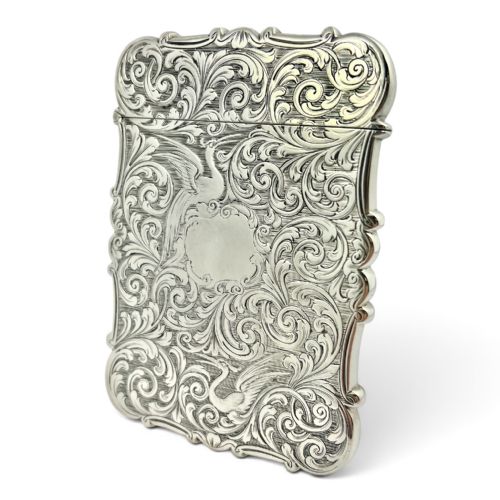
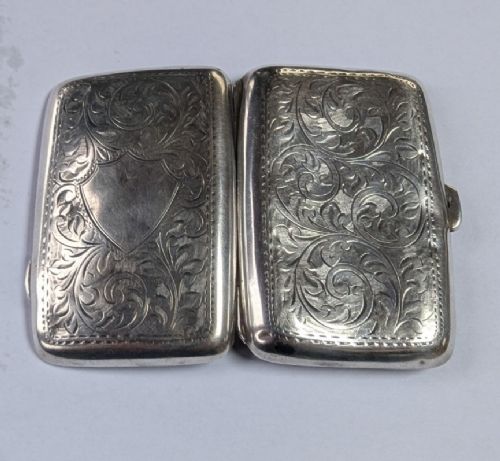
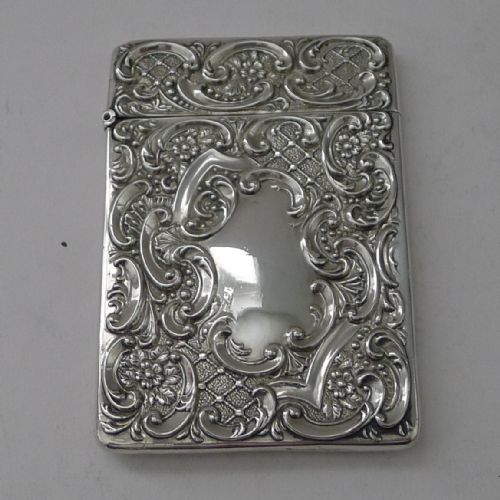
Silversmiths constructed these boxes using sterling silver, solid silver, and silver gilt, occasionally combining the metal with glass, paper, or niello work. Technique relied on meticulous hand engraving, engine turning, and repoussé relief to create pictorial scenes.
Castles, cathedrals, and floral motifs appear sharply delineated across the metal surfaces through chasing and incised lines. Gilt linings add an interior layer of contrast within the silver walls.
Materials include sterling silver, silver gilt, glass, paper, and niello across various global styles.
Distinctions in Craft and Provenance
Quality rests upon the crispness of the engraving and the depth of the architectural relief. Pieces bearing legible maker marks, such as those by Nathaniel Mills, demonstrate superior workshop attribution.
The complexity of the surface design separates standard production from exceptional work. Architectural castle tops and detailed niello inlay demand higher technical skill than simple linear engraving.
Nathaniel Mills·George Unite·Foxall and Co·Edward Edwards
The Engraved Silver Card Box Glossary
- Castle top
- A box lid featuring a high-relief engraving of a specific British landmark or building. Nathaniel Mills produced notable examples depicting Windsor Castle and St Paul's Cathedral.
- Niello
- A black metallic alloy used to fill incised designs on silver. This technique creates high contrast pictorial or geometric patterns on the surface.
- Silver gilt
- Silver covered with a thin layer of gold on the interior or exterior. This treatment protects the metal and provides a rich two-tone appearance.
- Engine turned
- A geometric pattern mechanically engraved into metal using a lathe. This surface decoration provides texture and catches the light.
- Aide-memoire
- A small notebook or card case fitted with a writing tablet or internal compartments. These objects recorded social engagements and calling notes.
Engraved Silver Card Box: Frequently Asked Questions
What fits inside an engraved silver card box?
These boxes accommodated visiting cards, paper notes, or cigarettes depending on their internal depth. Many held stiff paper calling cards exchanged during nineteenth-century social calls.
Card cases feature shallow internal spaces, whereas cigarette and cigar variants provide room for rolled tobacco products.
How do I identify a castle top box?
Castle top boxes display a detailed architectural relief scene stamped or chased onto the lid. They frequently depict recognizable English landmarks like Windsor Castle or St Paul's Cathedral.
Master silversmiths like Nathaniel Mills specialised in this specific form during the Victorian period.
What is the difference between sterling silver and solid silver?
Sterling silver denotes an alloy containing a specific high proportion of pure silver combined with strengthening metals. Solid silver simply indicates the piece is not plated.
British items typically carry full hallmarks confirming the sterling standard and the assay office of origin.
How do I clean an antique silver box?
Antique silver requires gentle maintenance to preserve delicate hand engraving and niello work. Aggressive polishing removes surface detail and wears down high-relief elements.
Use a soft cloth and mild silver cleaner designed for historical pieces, avoiding abrasive pastes that enter engraved crevices.