
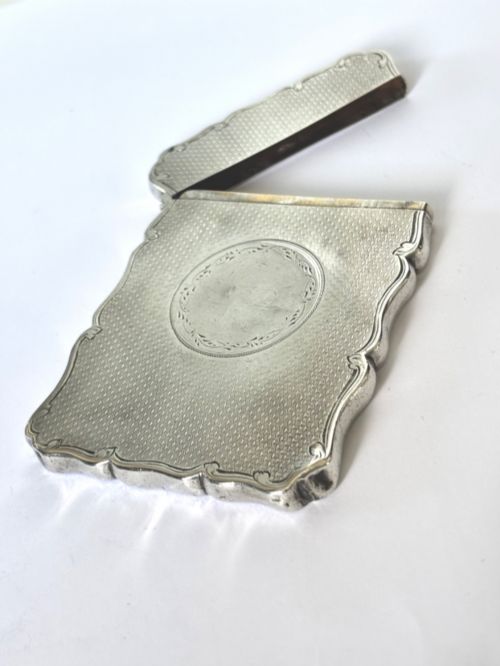

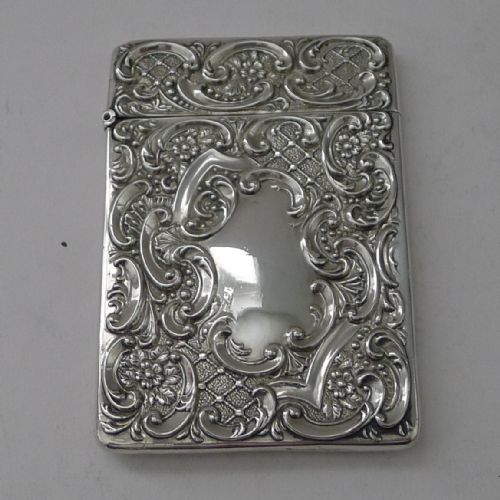


Engraved Silver Calling Card Case
These engraved silver calling card case examples are elegant pocket receptacles from the Victorian and Edwardian eras, prized for their intricate hand-engraved surfaces.
Engraved Silver Calling Card Case
An engraved silver calling card case is a compact pocket container designed to hold delicate visiting cards for social calls during the nineteenth and early twentieth centuries. The pieces met here span the Victorian, Edwardian, and Art Deco periods, encompassing both slim card holders and multi-functional designs that double as aide-memoires or cigarette cases.
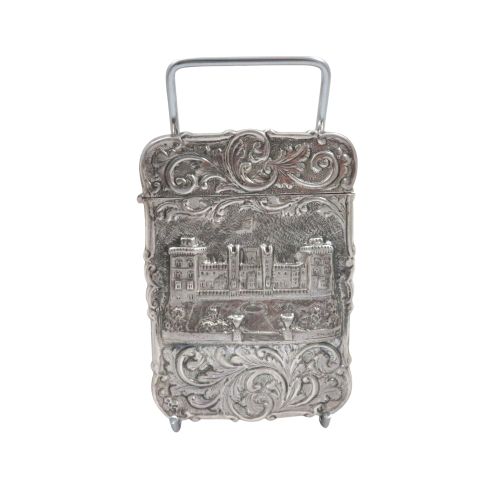
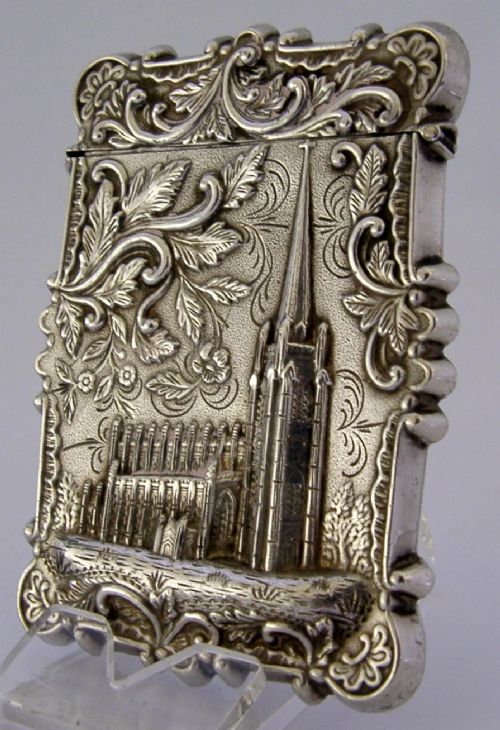
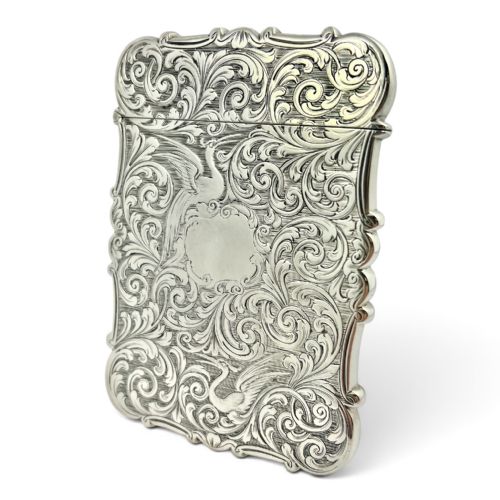
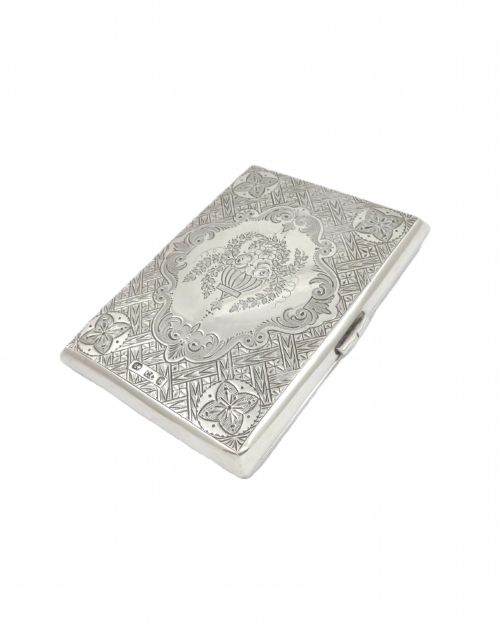
The most sought-after variations on this page include castle top examples depicting landmarks such as Windsor Castle, Trinity Church, and St Paul's Cathedral. Alongside these pictorial reliefs, simpler floral or geometric engravings dominate the standard visiting card cases originating from Birmingham workshops.
Beyond standard card cases, the selection accommodates variations incorporating Connemara marble or silver gilt linings, as well as spring clip novelty folding formats. These diverse forms reflect the shifting social rituals and accessory fashions of the British and international upper classes.
Materials and Craftsmanship
The pieces on this page are fashioned primarily from sterling silver or solid silver, occasionally enhanced with silver gilt interiors or inserts of Connemara marble. Silversmiths utilised sheet silver, pressing or hammering the metal into rigid frames hinged to protect fragile paper cards.
Surface decoration relies heavily on hand engraving and chasing, where artisans cut intricate foliate scrolls or architectural scenes directly into the metal. Notable examples employ high-relief cast lids, particularly the castle top designs associated with prominent silversmiths like Nathaniel Mills.
Markers of Quality
Quality in an engraved silver calling card case rests upon the crispness of the hand engraving and the structural integrity of the hinge and clasp mechanism. Pieces by makers such as Nathaniel Mills or George Unite display superior depth and clarity in their architectural or botanical motifs.
The presence of crisp topographical details, particularly in castle top scenes, elevates an example above standard foliate-engraved stock. Additionally, undamaged silver gilt interiors and fully functional opening mechanisms distinguish finer survivors from heavily worn pieces.
Nathaniel Mills·George Unite·Foxall & Co
The Engraved Silver Calling Card Case Glossary
- Castle top
- A style of card case featuring a high-relief cast depiction of a famous building or landmark on the cover. These architectural scenes are characteristic of mid-nineteenth-century British silversmithing.
- Visiting card
- A small paper card left during social calls as a formal notification of a visit. These cards required dedicated protective cases to prevent bending in pockets or handbags.
- Aide-memoire
- A pocket notebook or case incorporating ivory leaves or paper pads with a small pencil for recording engagements. Several examples combine this memorandum function with a standard card case.
- Silver gilt
- Silver covered with a thin layer of gold on the interior surfaces. This technique protected the metal from tarnishing through frequent handling.
- Birmingham
- A principal English centre for silver manufacturing and assaying during the Victorian era. Many pieces on this page bear hallmarks originating from this Midland city.
Engraved Silver Calling Card Case: Frequently Asked Questions
How do I identify the date of a case?
Dating relies primarily upon the hallmarks stamped into the silver, which include assay office symbols, date letters, and maker's marks.
Stylistic cues such as heavy Victorian scrolls or clean Edwardian lines also help narrow down the period of manufacture.
Were these cases used for cards only?
While primarily manufactured for calling cards, many surviving examples served multiple purposes including holding cigarettes or dance cards.
Some variations incorporate internal clips or writing tablets to accommodate alternative social needs.
How should antique silver cases be cleaned?
Cleaning requires a soft cloth and minimal silver polish, taking care to avoid scrubbing away the delicate hand-engraved details.
Harsh chemical dips should be avoided entirely to preserve the original patination accumulated over the decades.